The price of plywood in India can range from ₹50 to over ₹195 per square foot for an 18 mm sheet, depending on its grade, brand, construction, and quality. A standard MR plywood sheet may cost considerably less than BWR or BWP plywood of the same thickness. Even within a single grade, prices can vary between national brands, regional manufacturers, and local suppliers.
Location also influences what you pay. Plywood prices in Delhi, Dehradun, Mumbai, Bengaluru, and other cities differ because of transportation costs, proximity to manufacturing hubs, dealer margins, and local availability.
At Digna Ply, we believe buyers should know what they are paying for before selecting a sheet. This guide covers the latest indicative plywood prices in India for 2026-27, including MR, BWR, BWP, marine plywood, MDF, and HDHMR. You’ll find thickness-wise rates, brand comparisons, city-wise prices, and the factors that determine the final cost of plywood.
Plywood Price in India 2026-27 at a Glance
Plywood prices in India depend on the grade, thickness, brand, and type of wood used in manufacturing. For example, an 18 mm MR plywood sheet from a local manufacturer may cost around ₹50 per square foot, while premium BWP or marine-grade plywood of the same thickness can cost ₹195 per square foot or more.
The table below compares indicative market prices for commonly purchased 18 mm plywood and engineered boards across different brand categories.
| Plywood or Board Type | Thickness | Price per Sq. Ft. | Price per 8 × 4 Ft. Sheet |
| MR (Commercial) Plywood | 18/19 mm | ₹50–115 | ₹1,600–3,680 |
| BWR Plywood | 18/19 mm | ₹62–138 | ₹1,984–4,416 |
| BWP / Marine Plywood | 18/19 mm | ₹74–195 | ₹2,368–6,240 |
| HDHMR Board | Approx. 18 mm | ₹78–98 | ₹2,496–3,136 |
| Interior MDF Board | Approx. 18 mm | ₹46–56 | ₹1,472–1,792 |
| Note: These are indicative 2026 prices based on data collected within Digna Ply’s network, not verified quotations from every city. Prices exclude 18% GST, transportation, cutting, and installation charges. Actual prices depend on the manufacturer and product specifications. |
How to Calculate Plywood Price Per Sheet
Plywood is commonly sold in standard 8 × 4 ft sheets, covering 32 square feet. To calculate the price of a complete sheet, multiply the quoted price per square foot by 32.
For example, if an 18 mm BWR plywood sheet costs ₹100 per square foot:
- Price per square foot: ₹100
- Total sheet area: 8 × 4 = 32 sq. ft.
- Price per sheet: ₹100 × 32 = ₹3,200
- Price including 18% GST: ₹3,776
Smaller sheet sizes, such as 7 × 4 ft or 8 × 3 ft, will have different total costs. However, the per-square-foot rate may also change depending on sheet availability and the supplier’s pricing policy.
While these ranges provide a starting point for budgeting, comparing plywood prices accurately requires looking at the grade, thickness, and manufacturer together. The following section breaks down prices for MR, BWR, BWP, marine, and calibrated plywood across commonly available thicknesses.
Plywood Prices by Grade and Thickness
Plywood thickness and grade are two of the biggest factors affecting its price. Thicker sheets generally require more wood veneers, adhesives, and manufacturing resources, while higher moisture-resistance grades may involve different bonding systems and production requirements.
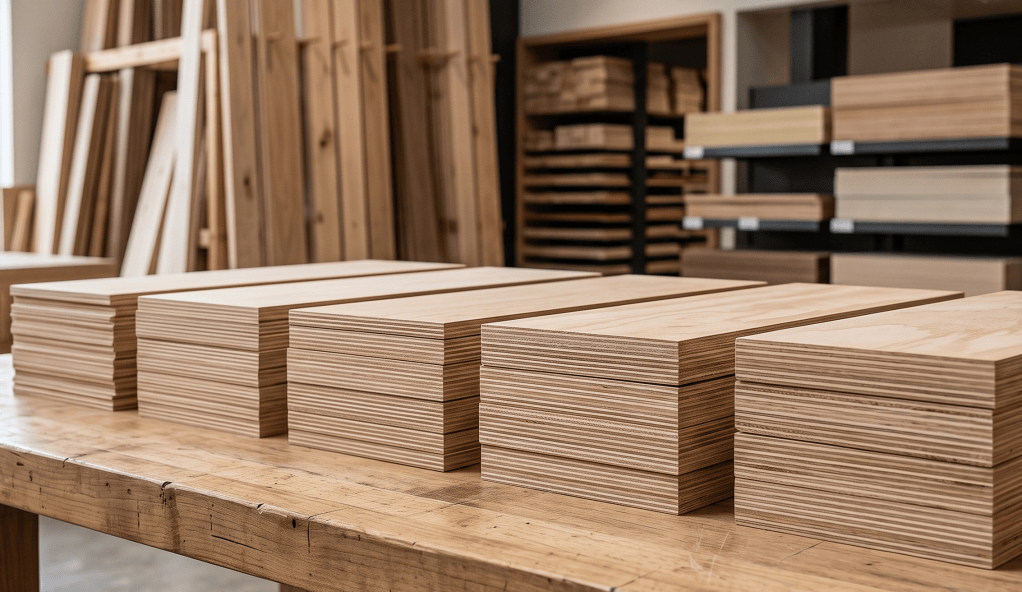
However, two sheets of the same thickness and grade can still have very different prices. Core construction, wood species, manufacturing quality, certification, and brand positioning all influence the final cost.
Below is a thickness-wise comparison of MR, BWR, BWP, marine, and calibrated plywood prices in India.
1. MR Plywood Prices in India
MR (Moisture Resistant) plywood, commonly called commercial plywood, is generally the most affordable plywood grade for indoor furniture. It is manufactured for applications where exposure to water is limited, such as wardrobes, beds, study tables, and storage cabinets in dry rooms.
MR plywood is covered under IS 303 and is available in several thicknesses. National brands typically command higher prices than regional and local manufacturers.
| Thickness | National Brands (Price per sq. ft) | Regional Brands (Price per sq. ft) | Local / Unbranded (Price per sq. ft) |
| 6 mm | ₹48–62 | ₹35–44 | ₹24–30 |
| 9 mm | ₹60–76 | ₹44–54 | ₹32–38 |
| 12 mm | ₹72–90 | ₹52–65 | ₹38–48 |
| 18/19 mm | ₹90–115 | ₹68–82 | ₹50–62 |
| 25 mm | ₹125–155 | ₹95–115 | ₹72–85 |
For an 18 mm sheet, buyers may pay around ₹1,600–1,984 for local MR plywood, compared with ₹2,880–3,680 for national-brand products. The difference reflects the products and manufacturers being compared, not simply the brand name.
2. BWR Plywood Prices in India
BWR (Boiling Water Resistant) plywood offers greater resistance to moisture than MR plywood. It is commonly considered for kitchen cabinets, utility furniture, and other indoor installations that may encounter occasional humidity or moisture.
BWR plywood is also classified under IS 303. Its price is generally higher than MR plywood because of differences in bonding requirements and manufacturing specifications.
| Thickness | National Brands (Price per sq. ft) | Regional Brands (Price per sq. ft) | Local / Unbranded (Price per sq. ft) |
| 6 mm | ₹58–72 | ₹42–52 | ₹30–36 |
| 9 mm | ₹74–92 | ₹54–66 | ₹40–48 |
| 12 mm | ₹88–112 | ₹66–80 | ₹48–58 |
| 18/19 mm | ₹110–138 | ₹84–102 | ₹62–75 |
| 25 mm | ₹148–180 | ₹115–135 | ₹85–105 |
An 18 mm BWR plywood sheet from a national brand may cost approximately ₹3,520–4,416, while regional alternatives may cost ₹2,688–3,264 for the same nominal thickness.
3. BWP Plywood Prices in India
BWP (Boiling Water Proof) plywood is designed for more demanding moisture conditions than MR and BWR grades. It is commonly selected for kitchen sink cabinets, bathroom furniture, and areas where repeated moisture exposure is a concern.
BWP is a performance classification that also appears under IS 303:2024, while marine plywood manufactured under IS 710 follows a separate standard. Buyers should therefore check the standard marked on the product rather than relying on the BWP label alone.
Prices vary considerably between economy products, premium national brands, regional manufacturers, and locally manufactured sheets.
| Thickness | National Economy (Price per sq. ft) | National Premium (Price per sq. ft) | Regional Brands (Price per sq. ft) | Local Products (Price per sq. ft) |
| 6 mm | ₹68–82 | ₹90–115 | ₹50–62 | ₹36–45 |
| 9 mm | ₹82–98 | ₹115–142 | ₹64–76 | ₹46–55 |
| 12 mm | ₹95–118 | ₹135–168 | ₹78–94 | ₹58–70 |
| 18/19 mm | ₹112–132 | ₹155–195 | ₹98–122 | ₹74–88 |
| 25 mm | ₹145–170 | ₹210–260 | ₹130–160 | ₹98–118 |
For example, an 18 mm economy BWP sheet from a national brand may cost ₹3,584–4,224, while a premium product may cost ₹4,960–6,240. The difference may reflect the core veneers, manufacturing process, certification, and warranty.
For a more detailed comparison of their properties, read our guide on BWP vs BWR plywood.
4. Marine Plywood Prices in India
Marine plywood is manufactured for demanding wet conditions and is covered by IS 710. It is frequently marketed as BWP plywood, but not every product labeled BWP necessarily meets the marine plywood standard.
The indicative 18 mm marine-grade prices in the supplied research range from approximately ₹98–122 per sq. ft. for regional products to ₹155–195 per sq. ft. for premium national brands. Actual rates depend on the specific certified product.
Marine plywood should not automatically be treated as more expensive than every other BWP sheet. A premium IS 303 BWP product could cost more than an economy IS 710 marine product, depending on the manufacturer and specifications.
For a detailed explanation, see our article on BWP vs marine plywood.
5. Calibrated Plywood Prices in India
Calibrated plywood is manufactured or processed to maintain more consistent thickness across the sheet. This is particularly useful for CNC cutting, modular furniture manufacturing, edge banding, and installations requiring accurate alignment.
Unlike MR, BWR, and BWP, calibrated is not a moisture-resistance grade. A sheet may be calibrated and also carry an MR, BWR, or BWP classification.
Calibrated plywood may cost more than comparable non-calibrated products because of the additional manufacturing controls and finishing processes. However, the price difference cannot be expressed as a fixed percentage across all manufacturers.
When comparing calibrated plywood quotations, check the nominal thickness, permitted thickness variation, grade, surface finish, and certification. A calibrated sheet with a lower moisture-resistance grade should not be compared directly with a premium marine plywood sheet simply because both are 18 mm thick.
| Note: All figures in this section are indicative ranges from data collected within our Digna Ply’s network. Actual quotations may differ by city, brand, product specifications, GST, and delivery charges. |
MDF, HDHMR, Blockboard, and Other Engineered Board Prices in India
Apart from plywood, engineered wood products such as MDF, HDHMR, blockboard, particle board, and WPC are widely used in furniture and interior construction. Their prices depend on the manufacturing process, density, thickness, moisture resistance, and surface finish.
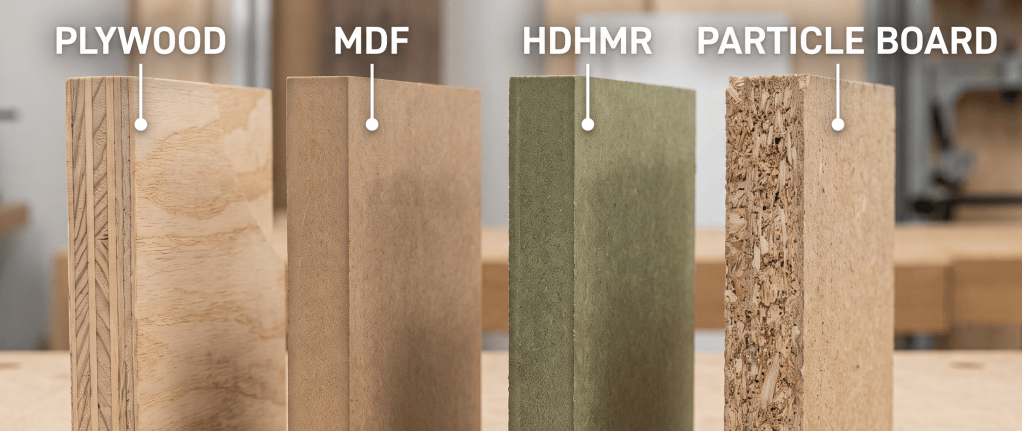
Unlike plywood, which is manufactured by bonding wood veneers, MDF and HDHMR are made from compressed wood fibers. Blockboard uses a core of wooden strips, while particle board is manufactured using wood particles bonded with resin. These differences affect their prices, strength, machining properties, and suitability for different applications.
1. MDF Board Prices in India
MDF (Medium Density Fibreboard) is generally more affordable than premium plywood and HDHMR. Its smooth, uniform surface makes it suitable for painted furniture, decorative panels, cabinet shutters, and interior wall designs.
MDF is available in interior and moisture-resistant grades, with prices increasing according to thickness and product specifications.
| Thickness | Interior MDF | Exterior-Grade MDF |
| 5.5/6 mm | ₹20–25 | ₹26–32 |
| 11/12 mm | ₹34–42 | ₹42–52 |
| 16.5/18 mm | ₹46–56 | ₹58–70 |
| 25 mm | ₹68–82 | ₹85–102 |
Indicative prices per sq. ft., excluding GST. Exterior-grade MDF should not be assumed suitable for continuous water exposure.
2. HDHMR Board Prices in India
HDHMR (High Density High Moisture Resistance) boards are engineered fibreboards manufactured with higher density and moisture-resistant bonding systems. They are commonly used for CNC-cut shutters, decorative grooves, painted cabinet fronts, and modular furniture components.
HDHMR generally costs more than standard MDF because of its density, resin formulation, and manufacturing requirements.
| Thickness | Action TESA HDHMR | Greenpanel / Century HDHMR |
| 5.5/6 mm | ₹38–46 | ₹36–44 |
| 11/12 mm | ₹60–72 | ₹56–68 |
| 16.5/18 mm | ₹82–98 | ₹78–94 |
| 25 mm | ₹120–145 | ₹115–138 |
Indicative prices per sq. ft., excluding GST. Actual thicknesses and product specifications vary by manufacturer.
For example, an approximately 18 mm HDHMR board priced at ₹90 per sq. ft. would cost ₹2,880 for a standard 8 × 4 ft sheet before GST.
3. Blockboard Prices in India
Blockboard consists of a core made from wooden strips placed between veneer layers. It is commonly used for doors, tall cabinet shutters, and furniture components where weight and dimensional stability are important.
Its price depends on the wood species used in the core, strip quality, bonding grade, thickness, and manufacturer. Premium hardwood-core blockboard generally costs more than lower-priced softwood-core products.
Unlike MDF and HDHMR, the supplied research does not provide a verified thickness-wise blockboard price range, so a numerical comparison would require current product quotations.
4. Particle Board Prices in India
Particle board is manufactured from wood particles bonded under heat and pressure. It is commonly available as plain or prelaminated boards for ready-made furniture, office desks, shelves, and modular storage units.
It is generally positioned as a lower-cost alternative to plywood and HDHMR. However, prelaminated particle board may cost more than plain MDF of a similar thickness because the surface finish is already included.
Prices depend on density, thickness, surface lamination, edge quality, and manufacturer. Plain and prelaminated particle boards should be compared separately.
5. WPC and PVC Board Prices in India
WPC (Wood Plastic Composite) and PVC foam boards are alternatives to wood-based panels in applications where resistance to water and termites is a priority.
Their prices depend on density, polymer composition, thickness, and manufacturing quality. Although these boards resist water absorption, they may have different screw-holding and load-bearing properties compared with plywood.
The supplied pricing research does not establish sufficiently comparable WPC and PVC board rates. Buyers should request quotations for the same thickness, density, and board dimensions before comparing them with plywood.
Overall, standard MDF is usually among the more economical engineered board choices, while HDHMR commands a higher price for its density and machining properties. Blockboard, particle board, WPC, and PVC should be evaluated according to their actual specifications rather than price alone.
Pricing note: The MDF and HDHMR figures are indicative 2026 research ranges, not independently verified October 2026 dealer quotations.
Plywood Prices Across Major Indian Cities
Plywood prices vary across Indian cities, even when buyers compare sheets of the same grade and thickness. A product available at a relatively lower price in Delhi may cost more in Mumbai or Bengaluru because of differences in transportation, distribution, warehousing, and local market demand.
Manufacturing locations also influence regional pricing. Cities closer to plywood production centres, such as Yamunanagar in Haryana and Perumbavoor in Kerala, may benefit from lower transportation costs for products sourced from those centres. However, proximity alone does not guarantee lower retail prices, particularly for national brands with established distribution networks.
City-Wise Prices of 18 mm BWP Plywood in India
The following table compares indicative prices for 18 mm economy BWP plywood in the Sainik-class segment across seven Indian cities.
| City | Price per Sq. Ft. | Price per 8 × 4 Ft. Sheet |
| Delhi NCR | ₹110–122 | ₹3,520–3,904 |
| Dehradun | ₹112–125 | ₹3,584–4,000 |
| Lucknow | ₹112–126 | ₹3,584–4,032 |
| Kolkata | ₹108–122 | ₹3,456–3,904 |
| Mumbai | ₹118–134 | ₹3,776–4,288 |
| Bengaluru | ₹120–136 | ₹3,840–4,352 |
| Hyderabad | ₹116–130 | ₹3,712–4,160 |
Based on these estimates, Kolkata and Delhi NCR fall toward the lower end of the comparison, while Mumbai and Bengaluru show relatively higher prices. However, the ranges overlap, meaning a particular product may be available at a similar price in several cities.
For example, the indicative starting price of 18 mm BWP plywood is ₹110 per sq. ft. in Delhi NCR and ₹120 per sq. ft. in Bengaluru. For a standard 32 sq. ft. sheet, this represents a difference of ₹320 before GST. The actual difference may be smaller or larger depending on the manufacturer, dealer, and quantity purchased.
Plywood Prices in Dehradun Compared With Other Cities
Dehradun has access to plywood supplied through North India’s timber and manufacturing markets, particularly Haryana and neighbouring Uttar Pradesh. This gives local dealers access to national brands as well as regional and locally distributed plywood products.
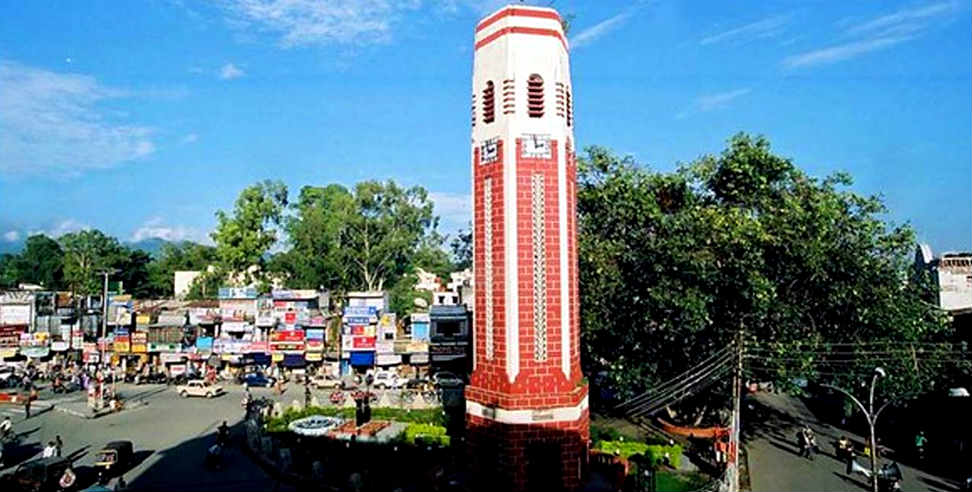
According to the indicative 2026 pricing research, 18 mm economy BWP plywood in Dehradun costs approximately ₹112–125 per sq. ft., compared with ₹110–122 in Delhi NCR and ₹112–126 in Lucknow.
The differences are relatively small within this product segment. However, the supplied research also suggests that locally sourced and unbranded plywood may be priced more competitively in Dehradun than in some metropolitan markets.
For buyers in Dehradun, the important distinction is between the price of a particular certified branded sheet and that of a local product with different construction or specifications. A lower quotation does not necessarily represent a saving on an equivalent product.
At Digna Ply, we recommend comparing the manufacturer’s product name, grade, thickness, sheet dimensions, and certification before evaluating price differences. This helps buyers distinguish genuine cost savings from differences in the materials being quoted.
What Factors Affect Plywood Prices in Different Cities and States?
Plywood prices in India are influenced by more than thickness and grade. Two sheets marked 18 mm BWP may have different prices because of the wood used, adhesive quality, manufacturing process, and certification. The final retail price also depends on how far the product travels from the factory, the number of distributors involved, and local demand.
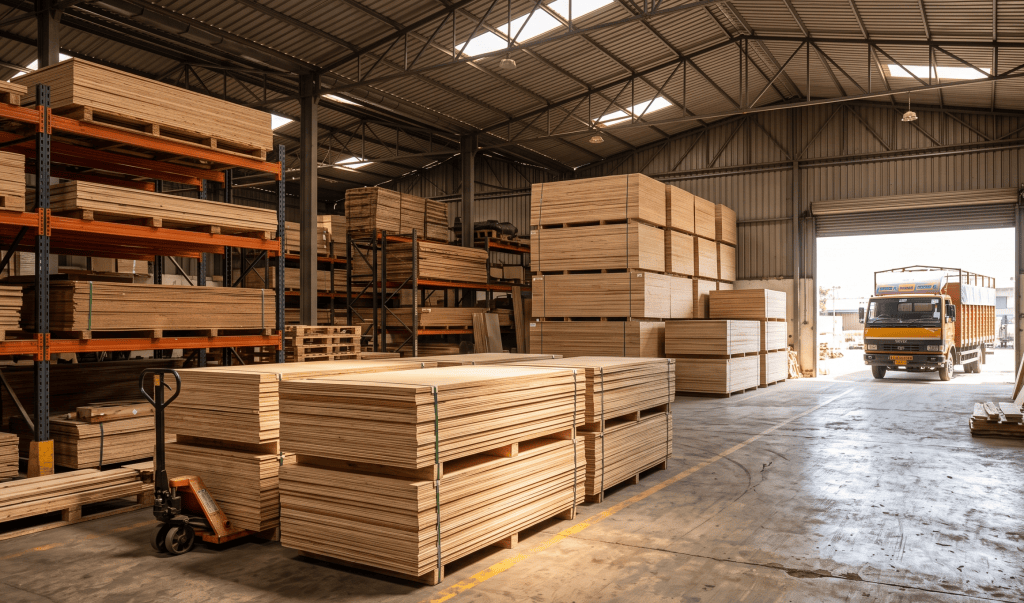
Here are the major factors that determine plywood prices across Indian markets.
1. Raw Materials and Wood Species
The type and quality of wood used in plywood manufacturing directly affect production costs. Poplar and eucalyptus are commonly used in commercial plywood, while selected hardwood veneers may be used in higher-priced products.
Wood species influence the cost of raw materials, veneer availability, and manufacturing requirements. Plywood made with selected hardwood veneers can cost more than products manufactured using locally available plantation timber. However, wood species alone does not establish the finished sheet’s quality.
2. Manufacturing Location and Transportation Costs
India has several plywood manufacturing centers, including Saharanpur in Uttar Pradesh, Yamunanagar in Haryana, and Perumbavoor in Kerala. Manufacturers located near timber sources and established processing facilities may benefit from easier raw material procurement and distribution.
Transportation costs increase with distance, shipment size, fuel expenses, loading, and unloading requirements. For example, plywood supplied from Yamunanagar to Dehradun generally travels a shorter distance than plywood transported to Bengaluru from the same manufacturing center.
However, large distributors may negotiate lower freight rates, so distance does not always translate into proportionately higher retail prices.
3. Adhesives, Manufacturing Quality, and Certification
The adhesive system, veneer preparation, pressing process, and quality control requirements influence plywood manufacturing costs.
MR, BWR, and BWP plywood must meet different performance requirements under their applicable standards. Marine plywood manufactured under IS 710 has additional specifications that buyers should verify when comparing products.
Other manufacturing differences, including core gaps, veneer quality, thickness consistency, and calibration, can also affect pricing. A certified product may command a higher price, but buyers should check the actual BIS license and product details rather than assuming that a higher price guarantees better quality.
4. Dealer Margins and Local Market Demand
Plywood commonly reaches customers through manufacturers, distributors, wholesalers, and retailers. Each stage can add warehousing, handling, financing, and operating costs.
Prices may also differ between cities because of local competition and purchasing volumes. A dealer supplying large quantities to contractors or furniture manufacturers may offer different rates from a retailer selling individual sheets.
Brand availability matters as well. Products distributed through several competing dealers may have more competitive prices than products available through a limited number of local suppliers.
5. GST, Delivery, and Additional Charges
A plywood quotation should specify whether GST, transportation, unloading, and cutting charges are included. Comparing a tax-exclusive wholesale price with a tax-inclusive retail quotation can create a misleading price difference.
For example, an 18 mm plywood sheet quoted at ₹3,200 before 18% GST would cost ₹3,776 after tax, excluding delivery and other charges.
Buyers should also confirm the sheet dimensions, since a 7 × 4 ft sheet contains 28 sq. ft., compared with 32 sq. ft. for an 8 × 4 ft sheet.
How Do Plywood Prices Differ Between National, Regional, and Local Brands?
Plywood prices can vary considerably between national brands, regional manufacturers, and local suppliers, even for sheets of the same thickness and grade. The difference comes from factors such as core material, manufacturing quality, certification, warranty, distribution costs, and brand positioning.
For example, an 18 mm BWP plywood sheet from a premium national brand may cost ₹155–195 per square foot, while a regional manufacturer’s product may be available for ₹98–122 per square foot. However, these prices do not necessarily represent identical products, so buyers should compare their specifications before making a decision.
1. National Plywood Brands
Established manufacturers such as CenturyPly, Greenply, and Duro sell plywood across multiple grades and price segments. Their product ranges may include economy, premium, marine-grade, and calibrated plywood.
National brands generally command higher prices for their premium products because of factors such as manufacturing controls, distribution networks, product testing, and warranty programs. However, economy products from these manufacturers can sometimes be priced close to regional alternatives.
For 18 mm BWP plywood, the supplied market research indicates prices of approximately ₹112–132 per square foot for national economy products and ₹155–195 for premium products.
2. Regional Plywood Manufacturers
Regional manufacturers such as Austin, Sylvan, and Sharon compete with national brands through their product ranges, distribution networks, and pricing.
Their products may be more affordable in markets close to their manufacturing or distribution centres. However, the price difference depends on the particular grade, wood species, construction, and certification.
Indicative prices for 18 mm regional BWP plywood range from ₹98–122 per square foot, compared with ₹84–102 for BWR and ₹68–82 for MR plywood.
3. Local and Unbranded Plywood
Local and unbranded plywood is generally positioned at the lower end of the market. Some manufacturers benefit from locally available timber, shorter distribution channels, and lower branding costs.
According to the supplied research, 18 mm local MR plywood may cost ₹50–62 per square foot, while BWR products range from ₹62–75 and locally marketed BWP products from ₹74–88.
However, a lower price should not be the only consideration. Buyers should verify the manufacturer’s identity, applicable standard, core construction, actual thickness, and product certification. Unbranded plywood is not necessarily poor quality, but the specifications must support the claims made by the seller.
Brand-Wise Plywood Price Comparison
The following table compares indicative prices for 18/19 mm plywood across manufacturer segments.
| Brand Category | MR Price / Sq. Ft. | BWR Price / Sq. Ft. | BWP Price / Sq. Ft. |
| National premium brands | ₹90–115 | ₹110–138 | ₹155–195 |
| National economy BWP ranges | Not separately available | Not separately available | ₹112–132 |
| Regional manufacturers | ₹68–82 | ₹84–102 | ₹98–122 |
| Local / unbranded | ₹50–62 | ₹62–75 | ₹74–88 |
For buyers comparing plywood brands, the best approach is to shortlist products of the same grade and thickness, check their certification and construction, and then compare the final price per sheet. This gives a more meaningful comparison than choosing between manufacturers based on brand reputation or price alone.
What Should You Check Before Comparing Plywood Prices?
A lower plywood quotation does not always mean a better deal. Two sheets advertised as 18 mm BWP plywood may differ in core construction, actual thickness, certification, and warranty. Before comparing prices, make sure the products meet the same requirements.
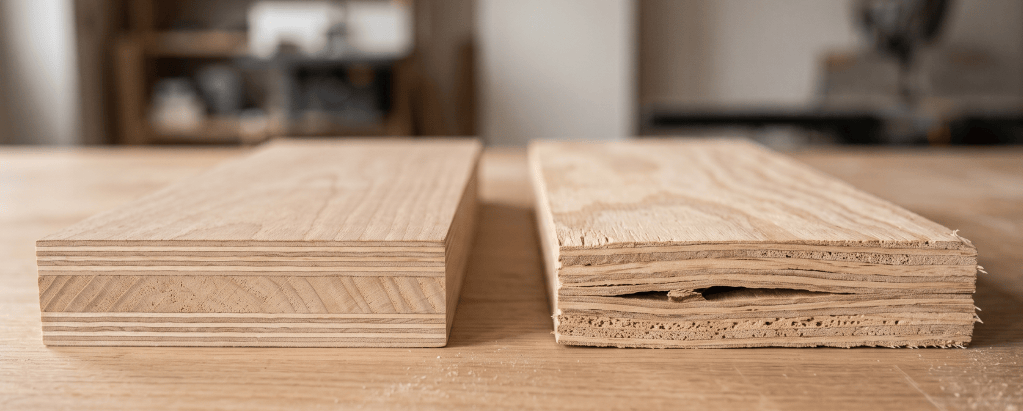
Use the following checklist when reviewing plywood quotations:
1. Verify the plywood grade and BIS certification
Check whether the sheet is marked MR, BWR, or BWP under IS 303, or marine plywood under IS 710. Look for the BIS Standard Mark and license number, and verify the license through the official BIS website.
2. Confirm the manufacturer and product name
Compare specific products rather than brands alone. A manufacturer may sell several plywood ranges at different prices.
3. Check the actual thickness and sheet size
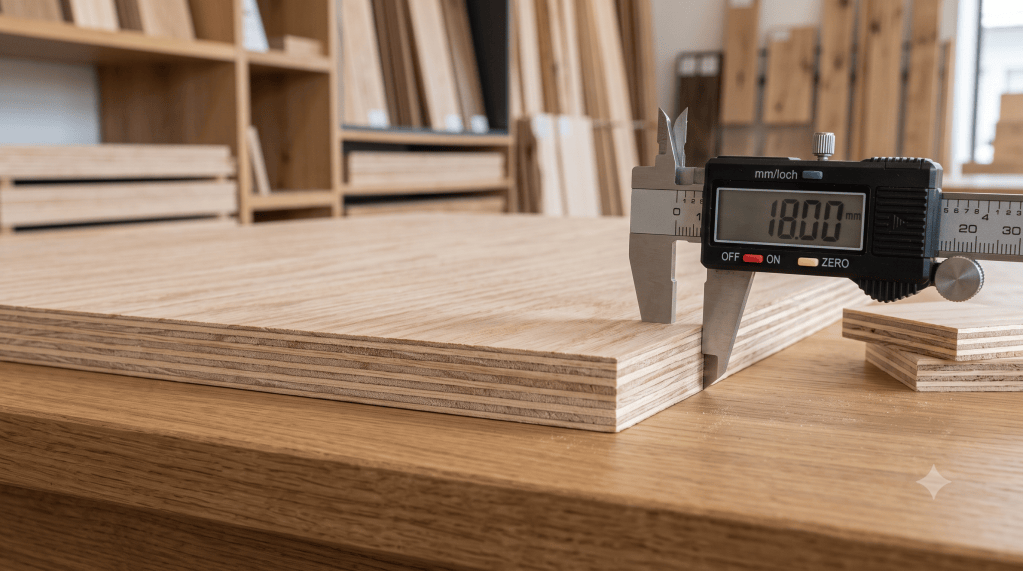
An 18 mm sheet and a 19 mm sheet should not automatically be treated as identical. Confirm whether the quotation covers an 8 × 4 ft, 7 × 4 ft, or another sheet size.
4. Inspect the plywood core and surface
Check exposed edges for visible gaps, overlapping veneers, and inconsistent layers. Surface defects and poor core construction can affect finishing and screw-holding performance.
5. Review certification, emissions, and warranty
Ask for the applicable product standard, formaldehyde emission classification, and written warranty terms. A warranty should identify what defects are covered and any exclusions.
6. Confirm whether the sheet is plain, calibrated, or prelaminated
These are different product specifications and may carry different prices, even when the thickness and moisture-resistance grade are the same.
7. Compare the final price, including GST and delivery
Ask whether the quotation includes applicable taxes, transportation, unloading, and cutting charges.
Example of a Plywood Price Quotation
Suppose two suppliers quote the same 18 mm BWR plywood sheet at ₹100 and ₹108 per square foot, respectively.
| Price Component | Supplier A | Supplier B |
| Price per sq. ft. | ₹100 | ₹108 |
| 8 × 4 ft sheet price | ₹3,200 | ₹3,456 |
| GST at 18% | ₹576 | ₹622.08 |
| Delivery | ₹300 | Free |
| Total payable | ₹4,076 | ₹4,078.08 |
Illustrative quotation for one sheet, assuming both suppliers offer the same product and the stated delivery charges apply.
Although Supplier A initially appears ₹256 cheaper per sheet, the final difference is just ₹2.08 after GST and delivery.
This is why plywood quotations should be compared using the final payable amount for the same product specifications, rather than the advertised price per square foot alone.
Choose Digna Ply for Plywood and Engineered Boards
Choosing plywood involves more than comparing prices. The grade, thickness, core construction, and manufacturer all affect how much you pay and whether the material meets your project requirements.
At Digna Ply, we help customers compare plywood and engineered board options based on their intended use and budget. Whether you’re looking for MR plywood for furniture, BWR or BWP plywood for moisture-prone areas, or MDF and HDHMR for interior work, we can help you identify suitable specifications and review available options.
If you’re planning to purchase plywood, bring your material list or share the required grades, thicknesses, and quantities with us. We can help you compare available products and request a quotation based on your requirements.
Visit Digna Ply or WhatsApp us at 8881306046 to discuss plywood prices, product availability, and your material requirements.
Frequently Asked Questions
1. What is the price of an 18 mm plywood sheet in India?
An 18 mm plywood sheet can cost approximately ₹1,600–6,240 for a standard 8 × 4 ft sheet, depending on its grade, brand, and construction. MR plywood is generally cheaper, while premium BWP and marine-grade products cost more. These are indicative 2026 prices, excluding GST.
2. How much does an 8 × 4 ft plywood sheet cost?
A standard 8 × 4 ft plywood sheet covers 32 square feet. Its price depends on thickness and grade. For example, at ₹100 per sq. ft., a complete sheet costs ₹3,200 before GST. Thicker sheets and higher-grade products generally cost more.
3. Which is cheaper, MR, BWR, or BWP plywood?
MR plywood is generally the cheapest, followed by BWR and BWP. For 18 mm sheets, indicative prices start at approximately ₹50 per sq. ft. for MR, ₹62 for BWR, and ₹74 for locally marketed BWP. Actual prices depend on the manufacturer and specifications.
4. Is marine plywood more expensive than BWP plywood?
Not necessarily. Marine plywood manufactured under IS 710 is often marketed as BWP, but BWP is also a grade under IS 303. A premium IS 303 BWP sheet may cost more than an economy IS 710 marine sheet. Compare the certification, construction, and brand before purchasing.
5. What is the price difference between MDF and HDHMR?
For approximately 18 mm boards, standard interior MDF costs around ₹46–56 per sq. ft., while HDHMR costs approximately ₹78–98 per sq. ft. HDHMR generally costs more because of its higher density, moisture-resistant formulation, and manufacturing requirements.
6. Why does plywood cost more in some Indian cities?
Plywood prices differ because of transportation expenses, proximity to manufacturing centres, warehouse costs, dealer margins, local demand, and brand availability. Even the same product may have different retail prices across cities depending on distribution arrangements and purchase quantities.
7. Is branded plywood always better than local plywood?
Not necessarily. National brands may provide documented specifications, testing, and warranty support, but local manufacturers can also produce good-quality plywood. Compare the applicable BIS certification, core construction, actual thickness, and warranty rather than relying on the brand name alone.
8. Are plywood prices quoted with or without GST?
Both practices are found in the market, so buyers should confirm the quotation terms. The indicative prices in this article exclude GST. For example, a sheet priced at ₹3,000 before 18% GST would cost ₹3,540 after tax, excluding transportation and other charges.


Leave a Reply