BWP stands for Boiling Water Proof plywood. It is designed for spaces where regular plywood may fail due to water exposure or high humidity. Since it is commonly associated with IS 710 marine-grade plywood, buyers often prefer it for kitchen cabinets, bathroom vanities, wash areas, and long-lasting furniture that needs better protection against moisture.
In this guide, we’ll explain what BWP grade plywood means, how it compares with BWR and MR plywood, where it should be used, and how to identify genuine BWP plywood before buying.
What is BWP-grade plywood?
BWP-grade plywood is a high water-resistant plywood made for areas where furniture may come in regular contact with moisture, humidity, or occasional water exposure. The term BWP stands for Boiling Water Proof, which means the plywood is designed to hold its bonding strength even when exposed to boiling water for a specified period.
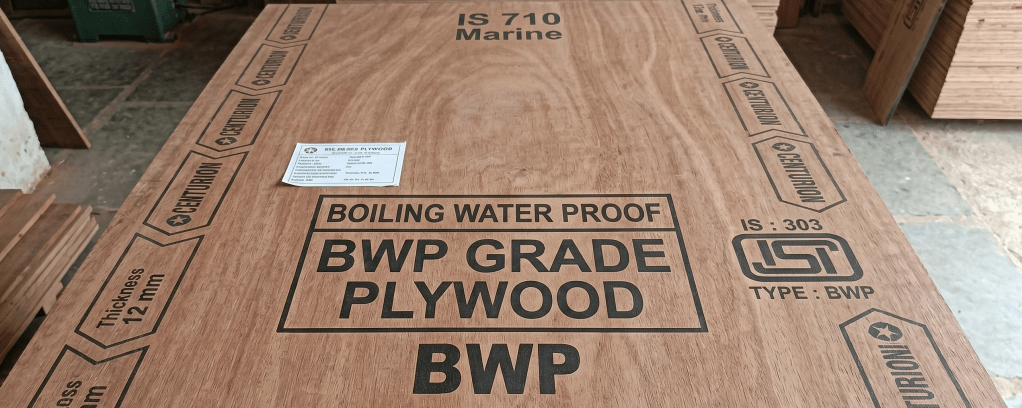
BWP is Boiling Water Proof, but it does not mean the plywood can be left in water forever without any effect. It means the plywood is manufactured using strong waterproof adhesives and selected veneers so that the layers do not separate easily when exposed to water.
That is why BWP-grade plywood is often preferred for kitchen cabinets near sink areas, bathroom vanities, washroom storage units, utility room furniture, semi-outdoor furniture, and high-moisture commercial interiors.
How BWP Plywood is Made?
BWP plywood is made by bonding multiple layers of wood veneer under pressure and heat. These layers are arranged in alternating grain directions, which improves strength and reduces the chances of warping.
The biggest difference lies in the bonding material. BWP plywood usually uses phenolic resin, a strong waterproof adhesive that helps the plywood resist delamination. Delamination happens when the plywood layers start separating due to weak bonding, water exposure, or poor manufacturing quality.
Because of this strong bonding, BWP plywood can perform better than MR and BWR plywood in areas where moisture exposure is higher.
What is IS 710 in BWP plywood?
In India, genuine marine-grade plywood is commonly linked with the IS 710 standard. This standard defines the quality requirements for marine plywood, including bonding strength, water resistance, durability, and performance under wet conditions.
When buying BWP plywood, checking for the IS 710 mark is important. It helps confirm that the plywood meets the expected quality standard for high water-resistant applications.
Buyers should not rely only on labels like “waterproof plywood” or “marine plywood.” Always check the grade, certification, brand details, and supplier credibility before buying.
Common Thickness Options for BWP Plywood
BWP plywood is available in different thicknesses. The right option depends on the furniture type and load requirement.
| Thickness | Common Use |
| 6 mm | Back panels, light partitions, drawer bottoms |
| 9 mm | Light cabinets, wall panels, small storage units |
| 12 mm | Cabinet shutters, shelves, medium-use furniture |
| 16 mm | Modular kitchen cabinets, wardrobes, storage units |
| 18 mm | Heavy cabinets, counters, commercial furniture |
For kitchen cabinets and bathroom furniture, 16 mm and 18 mm are commonly preferred because they offer better strength and screw-holding capacity.
Key Features of BWP-Grade Plywood
BWP-grade plywood is chosen for projects where regular plywood may not offer enough protection against water, humidity, and daily wear. Its strength comes from the quality of veneers, waterproof bonding, and manufacturing standards followed during production.
Here are the key features that make BWP plywood suitable for moisture-prone spaces:-
1. High Water Resistance
The biggest reason to choose BWP-grade plywood is its high resistance to water. It is made to withstand exposure to moisture better than MR and BWR plywood, which makes it useful for kitchens, bathrooms, wash areas, and semi-outdoor furniture.
This is especially important in Indian homes and commercial spaces, where humidity, seepage, spills, and damp walls can affect furniture over time. With regular plywood, prolonged moisture exposure can lead to swelling, surface damage, or layer separation. BWP plywood reduces these risks when it is properly finished and installed.
2. Strong Bonding with Phenolic Resin
BWP plywood is commonly bonded using phenolic resin, which gives it better resistance against water and heat. This strong bonding helps the plywood layers stay intact even when exposed to wet conditions.
This matters because plywood failure often starts from weak bonding. Once the layers begin to separate, the furniture loses strength and shape. Phenolic-resin-bonded plywood lowers the chances of delamination, making it a better choice for long-term furniture.
3. Better Durability for Long-Term Furniture
BWP plywood is water-resistant but also valued for its strength and stability. Since the veneers are bonded under pressure, the plywood can hold screws well, support hardware, and maintain its shape better in demanding spaces.
For modular kitchens, wardrobes near damp walls, bathroom cabinets, and commercial counters, this durability makes a real difference. It helps furniture stay firm, functional, and visually better for a longer time.
4. Termite and Borer Resistance
Good quality BWP plywood is often treated to resist termites and borers. This is useful in Indian conditions, where wood-based furniture can be affected by pests if the material is not properly treated.
Termite and borer resistance adds another layer of protection to the plywood. It helps reduce the risk of internal damage, especially in furniture that is fixed permanently, such as cabinets, storage units, counters, and wall-mounted panels.
BWP vs. BWR vs. MR Plywood: What are the Differences?
All three are used for furniture, but they are not made for the same level of moisture exposure. Here is a simple comparison of MR plywood, BWR plywood, and BWP plywood: –
| Factor | MR Plywood | BWR Plywood | BWP Plywood |
| Full Form | Moisture-Resistant | Boiling-Water Resistant | Boiling Water Proof |
| Water Resistance | Basic | Good | Highest |
| Standard | IS 303 | IS 303 | IS 710 |
| Best For | Dry indoor furniture | Kitchens and semi-wet areas | Kitchens, bathrooms, wash areas, and semi-outdoor furniture |
| Bonding Strength | Moderate | Stronger than MR | Strongest among the three |
| Durability | Suitable for regular use | Better for humid spaces | Better for long-term moisture exposure |
| Cost | Lower | Medium | Higher |
1. MR Plywood
MR stands for Moisture Resistant plywood. It is also called commercial plywood and is commonly used for indoor furniture such as wardrobes, shelves, partitions, wall panels, and study tables. However, MR plywood is not waterproof. It can handle basic humidity but should not be used in wet areas. If used near sinks, bathrooms, or damp walls, it may swell or lose strength over time.
2. BWR Plywood
BWR stands for Boiling Water Resistant plywood. It offers better water resistance than MR plywood and is commonly used in kitchens, cabinets, and areas with moderate moisture exposure. BWR plywood works well when the furniture may face humidity, occasional spills, or damp conditions. However, it is still not as water-resistant as BWP plywood.
3. BWP Plywood
BWP stands for Boiling Water Proof plywood. It offers the highest level of water resistance among these three grades and is commonly associated with IS 710 marine-grade plywood. It is a better choice for kitchen cabinets near sink areas, bathroom vanities, utility spaces, wash areas, and semi-outdoor furniture. If the furniture needs to last in a moisture-prone space, BWP plywood is usually the safer option.
Choose BWP plywood when you know the furniture will be exposed to high moisture, frequent spills, damp walls, or humid conditions. It is especially useful for kitchens, bathrooms, commercial counters, and long-term interior work where replacement costs can be high.
For dry spaces, MR plywood may be enough. For moderately moist areas, BWR plywood can work. But for areas where water resistance is a priority, BWP-grade plywood is the better choice.
Best Uses of BWP Grade Plywood
BWP-grade plywood is best used in areas where furniture needs stronger protection from water, humidity, and damp conditions. It is not always required for every piece of furniture, but it is a smart choice for spaces where moisture damage can lead to swelling, bending, or early replacement.
1. Kitchen Cabinets and Modular Kitchens
Kitchens are one of the most common places where BWP plywood is used. Cabinets near the sink, countertop, dishwasher, or water purifier are exposed to spills, steam, and moisture almost every day.
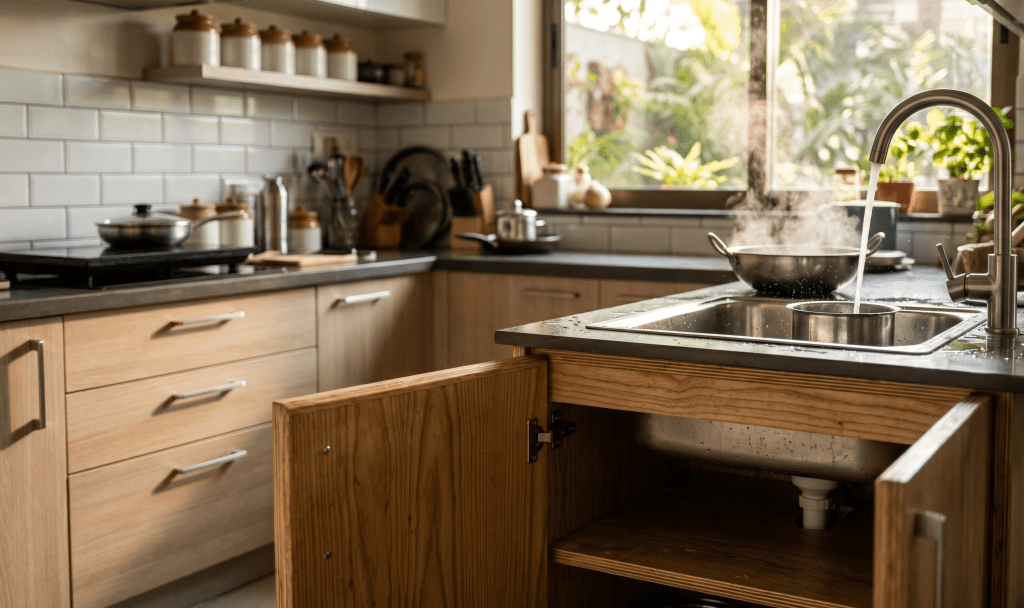
Regular plywood may start swelling or weakening in such areas. BWP plywood handles these conditions better because of its strong waterproof bonding. This makes it suitable for under-sink cabinets, modular kitchen shutters, base cabinets, storage units near wet zones, and kitchen partitions and panels.
For modular kitchens, BWP plywood is often preferred because repairs can be expensive once the cabinets are fixed. Choosing better plywood at the start can help reduce long-term damage.
2. Bathroom Vanities and Wash Areas
Bathroom furniture faces more moisture than most other furniture in a home. Steam, water splashes, damp walls, and poor ventilation can damage ordinary plywood over time.
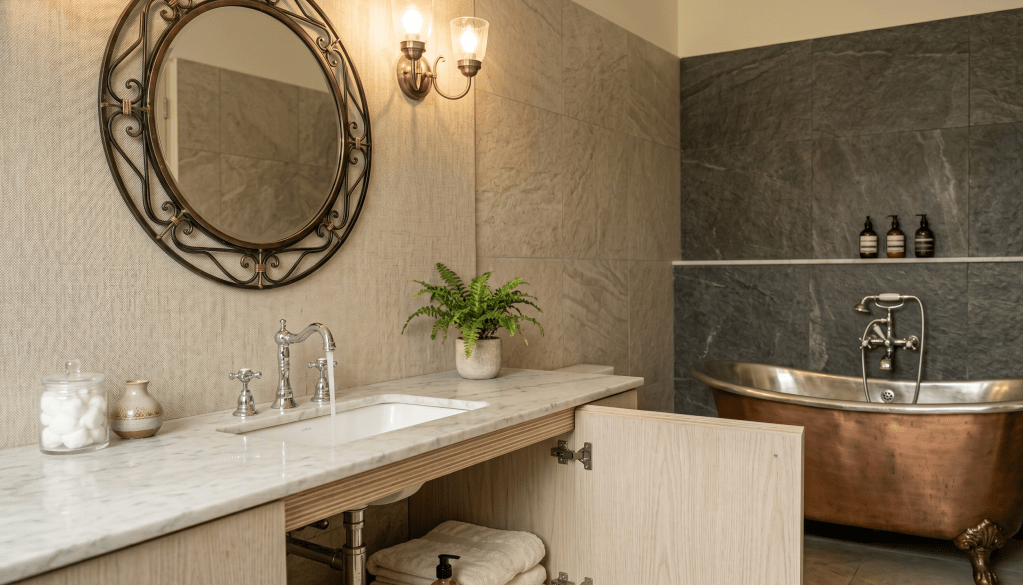
BWP plywood is a better fit for bathroom vanities, mirror cabinets, washbasin counters, and storage units near wash areas. It helps the furniture stay stronger in humid conditions, especially when the edges are properly sealed and the surface is finished with laminate, paint, or polish.
3. Outdoor and Semi-Outdoor Furniture
BWP plywood can also be used in covered outdoor and semi-outdoor areas. These may include balconies, utility areas, terrace storage, garden seating under shade, or furniture placed near open windows.
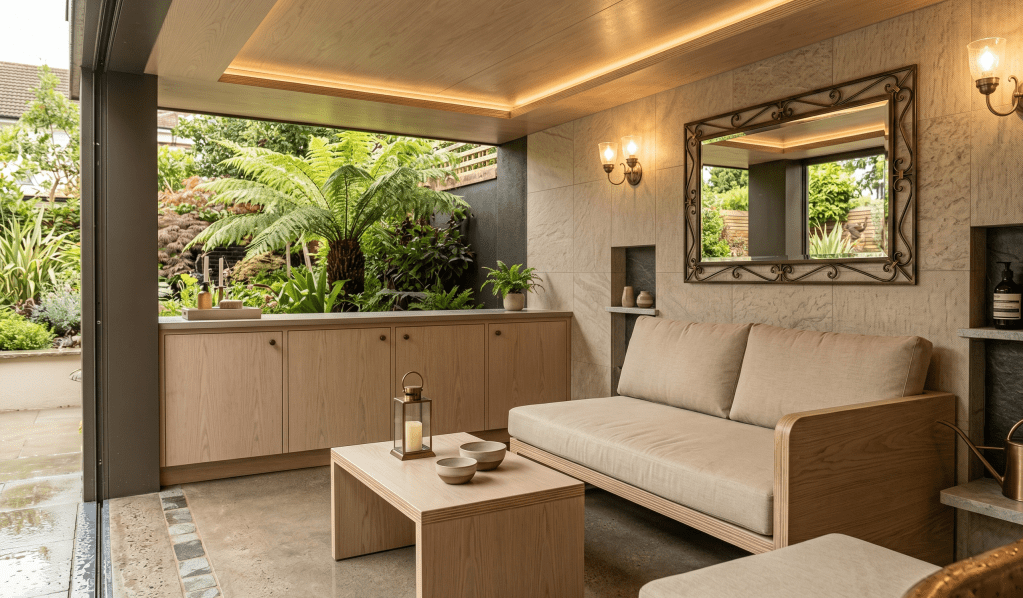
However, even BWP plywood should not be left fully exposed to rain without proper surface protection. For outdoor use, finishing matters as much as plywood quality. Lamination, edge sealing, waterproof coating, and correct installation help improve the life of the furniture.
4. Commercial and High-Usage Interiors
Commercial spaces need plywood that can handle daily use, cleaning, moisture, and load. BWP plywood is suitable for places where durability matters more than just upfront cost.
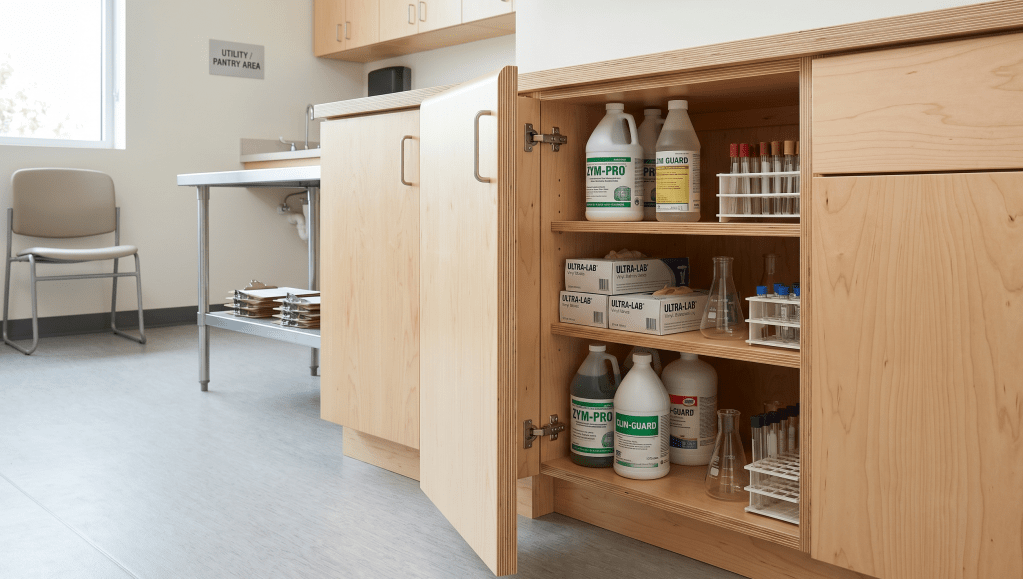
It can be used in office pantry cabinets, restaurant counters, retail display units, hotel bathroom vanities, salon and spa furniture, clinic and laboratory storage, and school and institutional furniture.
How to Identify Genuine BWP Plywood
Since BWP plywood is more expensive than MR and BWR plywood, buyers should know how to check whether they are getting the right grade.
Here are a few practical checklist to identify BWP plywood before buying.
1. Check the IS 710 Mark
The first thing to check is the IS 710 mark on the plywood sheet. IS 710 is the Indian standard commonly associated with marine-grade plywood and high water-resistant plywood.
A genuine BWP plywood sheet should clearly mention the grade, standard, thickness, and manufacturer details. If the sheet does not have proper marking, ask the supplier for clarification before buying.
2. Do Not Rely Only on the Word “Waterproof”
The word “waterproof” is often used loosely in the plywood market. Some sellers may use it for BWR plywood, treated plywood, or regular plywood with a water-resistant claim.
That is why buyers should ask direct questions such as:
- Is this BWP-grade plywood?
- Does it follow IS 710 standards?
- Is it phenolic resin bonded?
- Is it suitable for kitchen or bathroom use?
- Does the brand provide grade details?
These questions help you avoid confusion between BWP, BWR, and MR plywood.
3. Check the Core Quality
The core of the plywood tells you a lot about its quality. A good BWP plywood sheet should have uniform layers, fewer gaps, and proper bonding between veneers.
When checking the sheet, look for:
- Even thickness across the board
- No visible core gaps on the edges
- No overlapping or loose veneer layers
- Smooth surface finish
- Solid weight and feel
Poor core quality can reduce the strength of the furniture, even if the plywood is sold as BWP.
4. Inspect the Edges and Surface
The edges should look clean and compact. If you notice large gaps, loose layers, cracks, or uneven bonding, the plywood may not perform well in moisture-prone areas.
The surface should also be smooth enough for laminate, veneer, paint, or polish. A rough or uneven surface may increase finishing cost and reduce the final look of the furniture.
BWP Plywood Price in India
The price depends on the thickness, brand, core quality, resin quality, and certification. Since BWP grade plywood is made for higher water resistance, it usually costs more than MR and BWR plywood.
However, the higher price should be seen in context. If you are making kitchen cabinets, bathroom vanities, or furniture for moisture-prone areas, the cost of poor plywood can be much higher later. Swelling, bending, loose shutters, and damaged cabinets can lead to repair or replacement expenses.
What Affects BWP Plywood Price Per Sq Ft?
BWP plywood price per sq ft can vary based on several factors.
| Factor | How It Affects Price |
| Thickness | Thicker plywood costs more because it uses more material and offers better strength. |
| Brand | Established brands usually charge more due to quality control and certification. |
| Core Quality | Gap-free and uniform cores increase strength and cost. |
| Resin Quality | Phenolic resin bonded plywood generally costs more than lower-grade bonding. |
| Certification | IS 710 marked plywood may cost more but offers better quality assurance. |
| Location | Prices can vary by city, transport cost, and local availability. |
BWP plywood is worth the higher price when the furniture is used in wet, humid, or high-usage areas. It gives better protection against moisture-related damage and helps furniture last longer when properly finished.
For dry indoor furniture, BWP may not always be necessary. MR or BWR plywood can be enough for wardrobes, study tables, shelves, and partitions. But for kitchens, bathrooms, wash areas, and commercial interiors, BWP plywood is often a safer investment.
Get the Right BWP Grade Plywood from Digna Ply
At Digna Ply, you can get guidance on selecting the right plywood based on your actual use case. Whether you are comparing MR, BWR, and BWP plywood or checking if IS 710 plywood is required for your project, the right recommendation can help you avoid overspending or choosing a weaker grade.
For long-term furniture, the right plywood grade matters as much as the design and finish. If the space is exposed to moisture, humidity, spills, or daily cleaning, BWP grade plywood can be a better choice than regular commercial plywood.
For BWP grade plywood inquiries, WhatsApp Digna Ply at 8881306046.
Frequently Asked Questions
Is BWP plywood the same as marine plywood?
BWP plywood is commonly associated with marine-grade plywood, especially when it follows the IS 710 standard. However, buyers should not rely only on the words “marine” or “waterproof.” Always check the IS 710 marking, brand details, and plywood grade before buying.
Is BWP plywood good for kitchen cabinets?
Yes, BWP plywood is a good choice for kitchen cabinets, especially for areas near the sink, water purifier, dishwasher, or countertop. These areas face regular moisture, spills, and humidity, so regular plywood may not last as well.
Which is better, BWP or BWR plywood?
BWP plywood offers higher water resistance than BWR plywood. BWR plywood is suitable for moderate moisture exposure, while BWP plywood is better for kitchens, bathrooms, wash areas, and semi-outdoor furniture.
Can BWP plywood be used in bathrooms?
Yes, BWP plywood can be used for bathroom vanities, washbasin counters, mirror cabinets, and storage units. For better life, the plywood should be properly finished, laminated, and edge-sealed.
What is the price of BWP plywood per sq ft?
BWP plywood price per sq ft depends on thickness, brand, core quality, certification, resin quality, and location. Since genuine BWP plywood offers higher water resistance, it usually costs more than MR and BWR plywood.
How do I check if plywood is genuine BWP?
Check for the IS 710 mark, manufacturer details, grade information, thickness, and core quality. A genuine BWP plywood sheet should have uniform layers, clean edges, proper bonding, and no visible core gaps.
Is BWP plywood fully waterproof?
BWP plywood has strong water resistance, but it still needs proper finishing and installation. For long-term use, edges should be sealed and the surface should be protected with laminate, veneer, paint, or polish.
Should I use BWP plywood for wardrobes?
For regular wardrobes in dry rooms, MR or BWR plywood may be enough. But if the wardrobe is placed near a damp wall, bathroom, or humid area, BWP plywood can offer better protection.


Leave a Reply