HDHMR plywood or HDHMR board is a popular choice for modular kitchens, wardrobes, wall panels, and interior furniture. The term stands for “High Density High Moisture Resistant.” It is denser than regular MDF and handles moisture better, making it useful for areas where furniture may face humidity, occasional splashes, or regular cleaning.
In this guide, we will look at what HDHMR plywood means, how it compares with BWP plywood and MDF, where it should be used, what thickness works best, and how to choose the right board for your home interiors.
What Is HDHMR Plywood?
HDHMR is an engineered wood board made by compressing wood fibers, chips, and resin under high pressure. This process gives the board a dense, compact structure that performs better than regular MDF in areas where furniture may face humidity or occasional moisture.
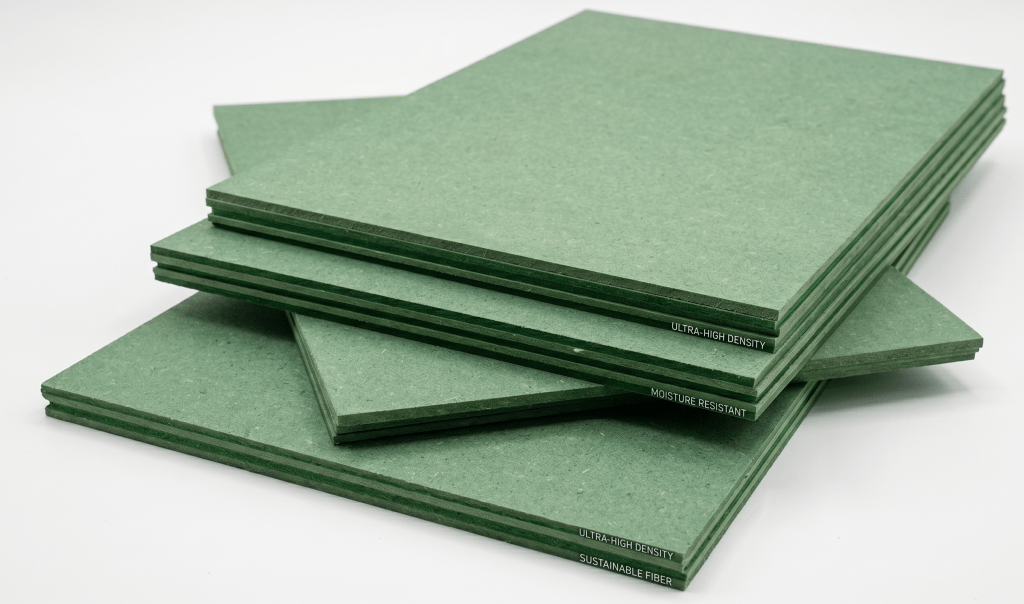
Although many people call it HDHMR plywood, it is technically not plywood. Traditional plywood is made by bonding thin layers of wood veneer together. HDHMR, on the other hand, is made from wood fibres and particles. That is why it has a smoother surface, more uniform structure, and better finish quality for modular furniture.
The biggest reason HDHMR is popular is its balance of strength, moisture resistance, and finish. It can be used for kitchen shutters, wardrobes, drawers, wall panels, and furniture parts where regular MDF may not be strong enough. It is also easier to machine, cut, route, and finish, which makes it useful for modern interior work.
However, HDHMR is not fully waterproof plywood. It can handle moisture better than MDF, but it is not meant for constant water exposure. For areas where furniture may come in direct contact with water for long periods, BWP plywood or marine plywood is usually a better choice.
Key Features of HDHMR Boards
HDHMR looks clean after finishing, handles daily use, and does not get damaged easily in slightly damp conditions. fits this requirement better than regular MDF in many interior projects. Here are some of the key characteristics of HDHMR boards:-
1. High Density for Better Strength
The dense structure of HDHMR gives it better strength than standard MDF. This helps when the board is used for kitchen shutters, wardrobe doors, drawers, and cabinets that are opened and closed every day.
A denser board also gives better grip to screws and fittings. This matters because hinges, channels, handles, and other hardware need a firm base. If the board is too weak, screws may loosen over time.
2. Moisture Resistance for Interior Use
HDHMR is designed to handle moisture better than regular MDF. It can deal with humidity, occasional splashes, and damp cleaning better than many basic engineered boards.
This makes it suitable for modular kitchens, wardrobes near attached bathrooms, utility storage, and other indoor spaces where furniture may not stay completely dry all the time. However, it still needs proper edge sealing to perform well.
3. Smooth Surface for Better Finish
One of the biggest advantages of HDHMR is its smooth and uniform surface. It works well with laminates, veneers, acrylic sheets, membrane finishes, and PU paint.
This is one reason many modular furniture manufacturers prefer HDHMR for shutters and visible panels. The final finish looks neat because the surface does not have the natural grain variation found in plywood.
4. Termite and Borer Resistance
Many branded HDHMR boards are treated to resist termites and borers. The compact structure also leaves less empty space inside the board, which helps reduce the chances of pest damage.
Still, buyers should always check the product specifications before purchasing. Termite resistance can vary from brand to brand and from one grade to another.
5. Easy Machining for Modular Furniture
HDHMR is easier to cut, route, shape, and machine compared to many traditional boards. This makes it useful for CNC work, grooves, decorative shutters, panel designs, and custom furniture.
For homes with modular kitchens and wardrobes, this is a practical benefit. It allows cleaner designs, smoother edges, and better finishing when the work is done by a skilled carpenter or manufacturer.
Best Uses of HDHMR Plywood in Home Interiors
HDHMR boards are mainly used for indoor furniture where the surface finish, moisture resistance, and design flexibility matter. They are especially useful in modular interiors because they can be cut, shaped, laminated, and painted with a clean finish.
1. Modular Kitchens
HDHMR is widely used in modular kitchens for shutters, drawers, cabinets, and storage units. Kitchen furniture often faces humidity, steam, oil stains, and occasional water splashes. HDHMR handles these conditions better than regular MDF when the edges are sealed properly.
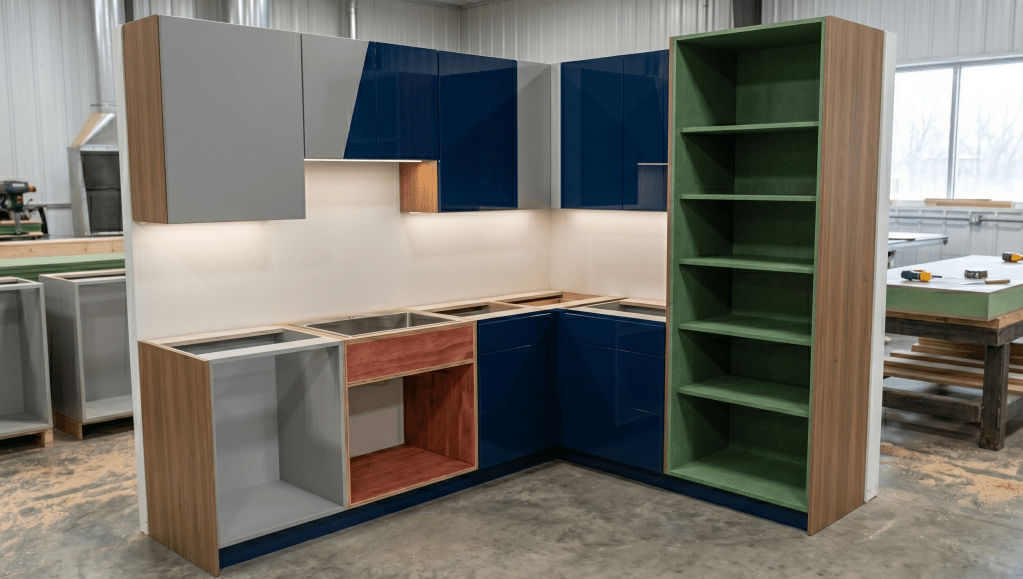
It is also a good option for kitchen shutters because it gives a smooth base for laminates, acrylic finishes, and PU paint. HDHMR should not be used carelessly near sink areas where water leakage is common. For sink cabinets or areas with regular water exposure, BWP plywood is usually a safer option.
2. Wardrobes
HDHMR works well for wardrobe shutters, internal partitions, loft storage, and sliding doors. Its smooth surface makes it suitable for laminate and veneer finishes, which are common in bedroom furniture.
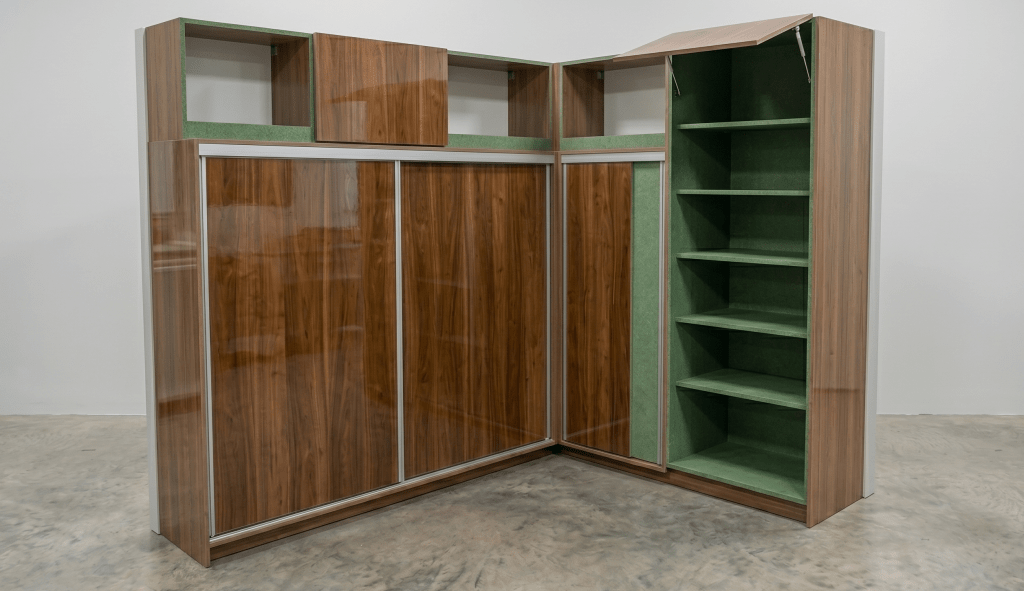
Wardrobes also need stable shutters that do not bend easily. Since HDHMR has a dense structure, it performs well when the right thickness and hardware are used.
3. Wall Panels and Decorative Units
HDHMR is a good material for TV units, wall panels, display shelves, decorative partitions, and back panels. It is easy to machine, which helps in creating grooves, patterns, and custom designs.
4. Bathroom Vanities and Utility Areas
HDHMR can be used in bathroom vanities, utility cabinets, and storage units placed in humid indoor areas. But it should be used only when there is no direct and constant water contact.
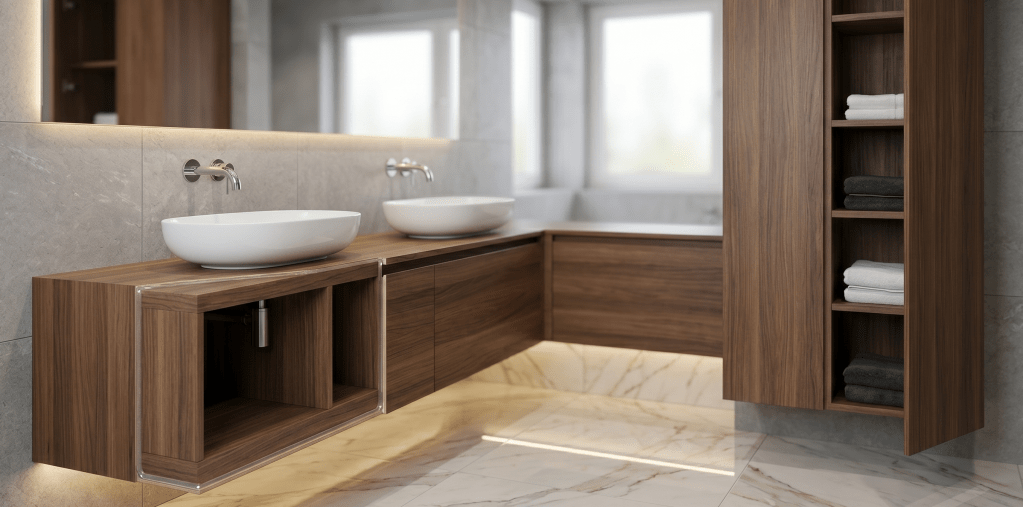
Proper edge sealing is very important in these spaces. If water enters through exposed edges, even moisture-resistant boards can swell over time.
5. Office and Commercial Furniture
HDHMR is also used for office workstations, cabinets, storage units, counters, partitions, and display furniture. It gives a neat finish and supports modern furniture designs at a controlled budget.
What Thickness of HDHMR Board Should You Choose?
HDHMR boards come in different thicknesses, and each thickness has a different purpose. A thinner board may work well for backing or wall panels, but it may not be strong enough for shutters, cabinets, or furniture that carries more load:-
| Use Case | Suggested HDHMR Thickness |
| Drawer bottoms and cabinet backing | 6mm to 8mm |
| Wall panels and decorative panels | 8mm to 12mm |
| Cabinet shutters | 12mm to 18mm |
| Wardrobe shutters | 16mm to 18mm |
| Modular kitchen cabinets | 16mm to 18mm |
| TV units and storage furniture | 16mm to 18mm |
| Heavy furniture parts | 18mm or above |
1. 6mm to 8mm HDHMR Boards
These thinner boards are usually used for drawer bottoms, back panels, and light decorative applications. They are not meant for load-bearing furniture parts.
2. 12mm HDHMR Boards
A 12mm board can be used for light shutters, wall panels, and decorative furniture elements. It works best where the board does not have to carry too much weight.
3. 16mm HDHMR Boards
This is a common choice for wardrobes, cabinets, and modular furniture. It gives better strength than thinner boards and supports regular hardware use more reliably.
4. 18mm HDHMR Boards
An 18mm HDHMR board is commonly preferred for kitchen shutters, wardrobe shutters, TV units, and storage cabinets. It offers better stability and is suitable for furniture that is used daily.
Pros of HDHMR Boards
Let’s look at the advantages of HDHMR boards before choosing it for kitchens, wardrobes, or furniture:
1. It Handles Moisture Better Than Regular MDF
HDHMR is made for spaces where furniture may face humidity, steam, or occasional splashes. This makes it more suitable than regular MDF for modular kitchens, utility cabinets, and wardrobes near damp walls.
It still needs proper edge sealing, but it performs better than basic fibreboards in moisture-prone indoor spaces.
2. It Gives a Smooth Finish
HDHMR has a smooth and uniform surface. This makes it a good base for laminates, acrylic sheets, veneers, membrane finishes, and PU paint.
For visible furniture parts like kitchen shutters, wardrobe doors, TV units, and wall panels, this finish quality can make a clear difference.
3. It Works Well for Modular Furniture
HDHMR is easy to cut, route, and machine. This makes it useful for modular kitchens, decorative shutters, grooves, panels, and custom furniture designs.
Carpenters and furniture manufacturers often prefer it when the design needs clean edges and precise finishing.
4. It Offers Good Screw-Holding Strength
Because HDHMR has a dense structure, it can hold screws and fittings better than regular MDF. This matters for hinges, handles, drawer channels, and sliding systems that are used every day.
For wardrobes and kitchen shutters, this can improve the life of the furniture when the right thickness is selected.
5. It Can Be More Budget-Friendly Than Premium Plywood
In many cases, HDHMR may cost less than high-quality BWP or marine plywood. This makes it a practical choice for homeowners who want good finish and moisture resistance without overspending on every furniture part.
Cons of HDHMR Boards
HDHMR board is a strong option, but it is not the right material for every situation. Here are a few reasons why:-
1. It Is Not Fully Waterproof
HDHMR is moisture-resistant, not waterproof. It can handle humidity and light splashes, but it should not be used in areas with constant water contact.
For sink cabinets, wet bathroom areas, or outdoor furniture, BWP plywood or marine plywood is usually a safer choice.
2. It Needs Proper Edge Sealing
The surface of HDHMR performs well, but exposed edges can absorb moisture if they are not sealed properly. This is especially important in kitchens, bathrooms, and utility areas.
Poor edge banding or careless installation can reduce the life of the board.
3. It Is Heavier Than Regular MDF
HDHMR is denser than MDF, which also makes it heavier. This can affect handling, transportation, installation, and hardware selection.
For large shutters or sliding wardrobes, the carpenter must choose the right hinges, channels, and fittings.
4. It May Not Replace Plywood in Heavy-Duty Areas
HDHMR is strong, but BWP plywood may still perform better in high-load furniture or areas where screw strength and water resistance are top priorities.
For beds, sink cabinets, bathroom storage, and heavy-use commercial furniture, the final choice should depend on the design and usage conditions.
How to Check HDHMR Boards Before Buying
Do not compare HDHMR boards only by price. Two boards may have the same thickness but different density, resin quality, moisture resistance, screw-holding strength, and finish quality.
Before buying, check these points:
| What to Check | Why It Matters |
| Thickness | It should match the furniture use case. |
| Density | Higher density usually means better strength and screw grip. |
| Board grade | Interior, exterior, or moisture-resistant grade changes performance. |
| Surface finish | A smoother surface gives better laminate or paint finish. |
| Edge quality | Poor edges can absorb moisture faster. |
| Brand warranty | It gives more confidence for long-term use. |
| Local availability | Easy availability helps with replacement or extra sheets. |
| Dealer guidance | A good dealer can suggest the right board for kitchens, wardrobes, or panels. |
Get the Right HDHMR Boards from Digna Ply
At Digna Ply, we help you choose the right plywood, board, laminate, and hardware based on your actual furniture requirements. You don’t need to choose only by brand name or price. We help you understand whether HDHMR, BWP plywood, MDF, or another board is better for your project.
For HDHMR boards, BWP plywood, laminates, and furniture hardware, WhatsApp Digna Ply at 8881306046 for pricing and availability.
Frequently Asked Questions
Is HDHMR board better than BWP plywood?
HDHMR is better when you need a smooth finish, clean machining, and good moisture resistance for modular furniture. It works well for kitchen shutters, wardrobes, wall panels, and decorative units.
BWP plywood is better when the furniture may face higher water exposure. For sink cabinets, bathroom furniture, and heavy-use areas, BWP plywood is usually the safer choice.
Can HDHMR plywood be used in modular kitchens?
Yes, HDHMR can be used in modular kitchens, especially for shutters, drawers, panels, and storage units. Its smooth surface makes it suitable for laminates, acrylic sheets, veneers, and PU paint. However, proper edge sealing is important. For areas around the sink or places with regular water contact, BWP plywood may be a better option.
Is HDHMR waterproof?
HDHMR is moisture-resistant, not fully waterproof. It can handle humidity, steam, and occasional splashes better than regular MDF. It should not be used in places where the board stays wet for long periods. Constant water contact can still damage the board over time.
Is HDHMR better than MDF?
Yes, HDHMR is generally better than regular MDF for furniture that needs more strength and moisture resistance. It has a denser structure and better screw-holding capacity.
MDF is suitable for dry-area decorative work. HDHMR is a better option for modular kitchens, wardrobes, shutters, and furniture exposed to humidity.
What is the best thickness for HDHMR wardrobes?
For wardrobes, 16mm to 18mm HDHMR boards are commonly used. These thicknesses give better stability for shutters, partitions, and internal storage.
Can HDHMR be used in bathrooms?
HDHMR can be used in bathroom vanities and humid areas if it is properly sealed. It should only be used where there is no direct and constant water exposure.
For wet bathroom zones or cabinets that may regularly come in contact with water, BWP plywood or marine plywood is usually more suitable.
Is HDHMR termite-resistant?
Many branded HDHMR boards are treated for termite and borer resistance. The dense structure also helps reduce the risk of pest damage. Still, termite resistance can vary by brand and grade. Always check the board specifications before buying.
What is the main disadvantage of HDHMR plywood?
The main disadvantage is that HDHMR is not fully waterproof. It can handle moisture better than MDF, but it cannot replace BWP or marine plywood in high-water areas. It is also heavier than regular MDF and needs proper edge sealing for long-term performance.
Where should HDHMR not be used?
HDHMR should not be used for outdoor furniture, open balconies, wet bathroom zones, or areas with repeated water leakage.
Is HDHMR good for kitchen shutters?
Yes, HDHMR is a good option for kitchen shutters because it has a smooth surface, good density, and better moisture resistance than MDF.


Leave a Reply