MR-grade plywood is often one of the first options suggested when people look for affordable plywood for home or office interiors. It is commonly used for wardrobes, shelves, wall panels, TV units, office desks, and other indoor furniture where direct water exposure is limited. Since it is also known as commercial plywood, many buyers assume it is a basic or low-quality option, but that is not always true.
In this guide, we will explain what MR grade plywood means, where it can be used, how it compares with BWR and BWP plywood, and how to choose the right quality for your furniture work.
What is MR-grade plywood?
MR-grade plywood is a type of plywood made for interior use where the furniture may face mild humidity but not direct water contact. The term “MR” stands for “Moisture Resistant.” This means the plywood can resist moisture in normal indoor conditions, such as seasonal humidity or occasional dampness in the air.
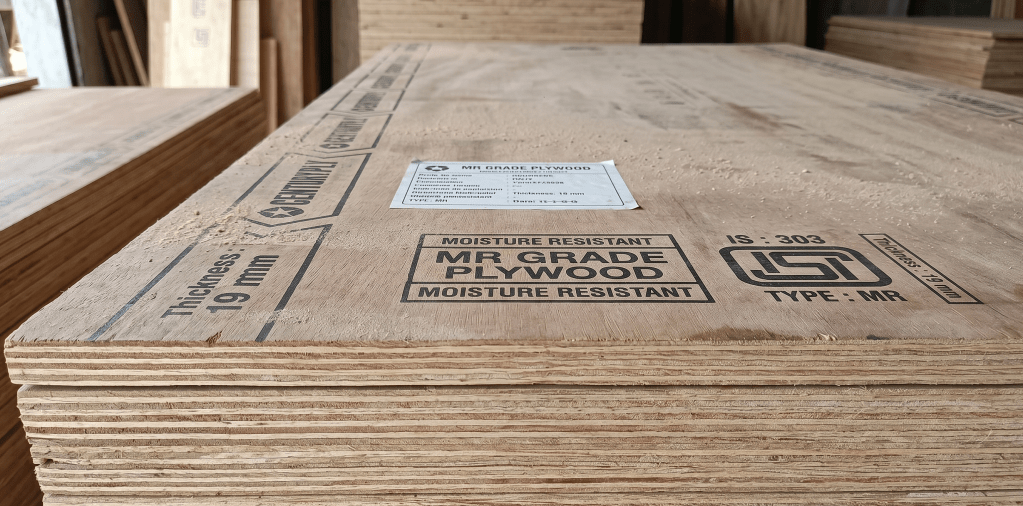
MR-grade plywood is not waterproof. Moisture resistance means the plywood can handle limited moisture better than ordinary wood. It does not mean the plywood can survive regular water spills, seepage, rain, or continuous wet conditions.
MR plywood is also called “commercial plywood” because it is widely used for regular furniture and interior work. In India, good-quality MR plywood is usually made as per the IS 303 standard. This standard defines the basic quality requirements for general-purpose plywood used in interiors.
Key Features of MR-Grade Plywood
MR-grade plywood is popular because it fits the needs of most indoor furniture projects without pushing the budget too high. It may not offer the same water resistance as BWR or BWP plywood, but it works well for dry interior spaces where the furniture is not exposed to regular water contact.
1. Moisture Resistance for Indoor Conditions
MR-grade plywood can handle normal indoor moisture and resist humidity better than ordinary wooden boards, making it suitable for bedrooms, living rooms, offices, and other dry indoor areas. MR plywood can handle mild dampness in the air, but it should not be used in places where water spills, leakage, or seepage are common.
2. Affordable Option for Interior Furniture
MR-grade plywood is usually more affordable than BWR and BWP plywood. This makes it a practical option for buyers who want durable furniture without paying extra for waterproof features they may not need. For wardrobes, TV units, shelves, wall panels, and office furniture, MR plywood often offers the right balance between price and performance.
3. Good Strength for Regular Use
MR plywood offers enough strength for everyday furniture applications. It can be used for cabinets, partitions, desks, shelves, and storage units, provided the right thickness and quality are selected.
4. Available in Multiple Thicknesses
MR-grade plywood is available in common thicknesses such as 6mm, 12mm, 18mm, and 25mm. Each thickness serves a different purpose.
Thin sheets are often used for backing, paneling, and decorative work. Thicker sheets are better for wardrobes, cabinets, tables, and furniture that needs to carry more weight.
5. Easy to Work With
MR-grade plywood is easy to cut, polish, laminate, paint, and finish. This makes it convenient for carpenters and interior contractors.
Its workability also makes it suitable for customized furniture, especially when the design includes shelves, shutters, drawers, panels, or partitions.
MR Grade vs. BWR vs. BWP Plywood
MR, BWR, and BWP plywood are made for different levels of moisture and water exposure. The right choice depends on where the plywood will be used, how much water exposure it may face, and how long you want the furniture to last in that environment.
MR grade plywood works best for dry interiors. BWR plywood is better for areas where occasional water contact is possible. BWP plywood is the strongest option for places that face high moisture, outdoor exposure, or frequent water contact.
| Feature | MR Grade Plywood | BWR Plywood | BWP Plywood |
| Full Form | Moisture Resistant | Boiling Water Resistant | Boiling Water Proof |
| Common Standard | IS 303 | IS 303 | IS 710 |
| Water Resistance | Handles mild indoor moisture | Handles better water exposure than MR | Designed for high water resistance |
| Best Used For | Wardrobes, TV units, shelves, wall panels, partitions | Kitchen cabinets, utility areas, semi-wet spaces | Outdoor furniture, heavy-use kitchen areas, wet zones |
| Price Range | Most budget-friendly | Costlier than MR | Usually the most expensive |
| Ideal Environment | Dry indoor areas | Moisture-prone indoor areas | High-moisture or outdoor areas |
MR vs BWR Plywood
The main difference between MR and BWR plywood is their water resistance. MR plywood is made for indoor furniture where only mild humidity is expected. BWR plywood is made for spaces where the plywood may face occasional water exposure.
For example, MR plywood can work well for bedroom wardrobes, office cabinets, and living room furniture. BWR plywood is a better choice for kitchen cabinets, utility areas, and furniture near water sources.
MR vs BWP Plywood
BWP plywood offers higher water resistance than both MR and BWR plywood. It is used in places where the plywood may face heavy moisture or direct water exposure.
If you are making furniture for outdoor spaces, bathrooms, balconies, or high-moisture kitchens, BWP plywood is usually a safer choice. MR plywood should not be used in these areas because it is not built for such conditions.
Which One Should You Choose from MR, BWP, and BWR plywoods?
Choose MR grade plywood when the furniture will be used in dry indoor areas. It is cost-effective and suitable for most regular interior work.
Choose BWR plywood when the furniture may face occasional water exposure. Choose BWP plywood when the space has high moisture, regular water contact, or outdoor exposure.
Where Should You Use MR-Grade Plywood?
MR-grade plywood is best suited for interior furniture and decorative work where direct water exposure is not a concern. It gives enough strength for regular use, stays within a reasonable budget, and works well with laminates, veneers, polish, and paint.
1. Wardrobes and Closets
MR-grade plywood is commonly used for wardrobes because bedrooms usually have dry indoor conditions. It works well for wardrobe carcases, shutters, shelves, lofts, and closet partitions.
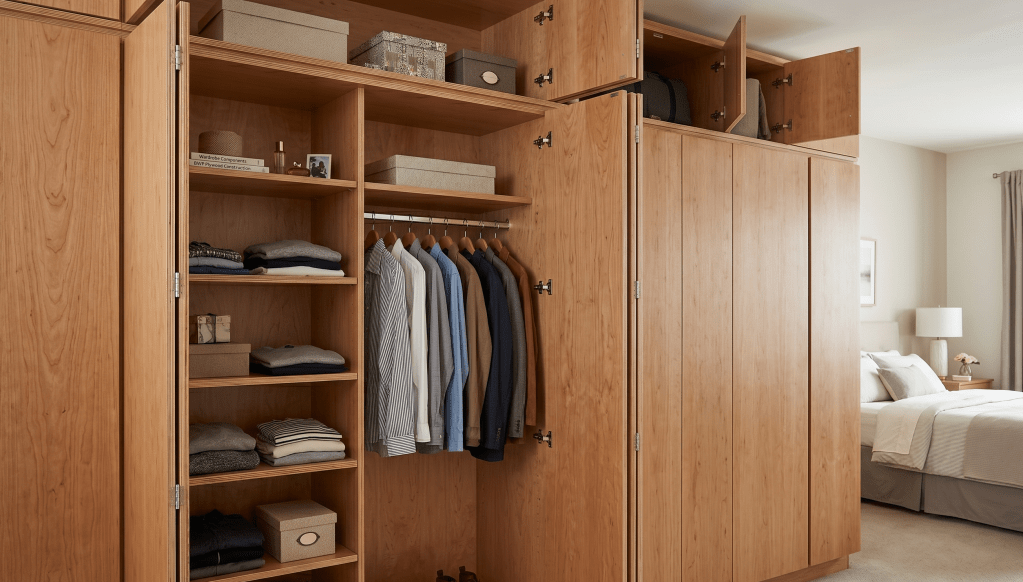
For better durability, choose the right thickness based on the size of the wardrobe. For example, 18mm plywood is commonly preferred for shutters and main structures, while thinner sheets may be used for back panels.
2. TV Units and Living Room Furniture
Living room furniture usually needs plywood that is stable, easy to finish, and strong enough for daily use. MR plywood fits well for TV units, display shelves, wall-mounted storage, side cabinets, and decorative panels.
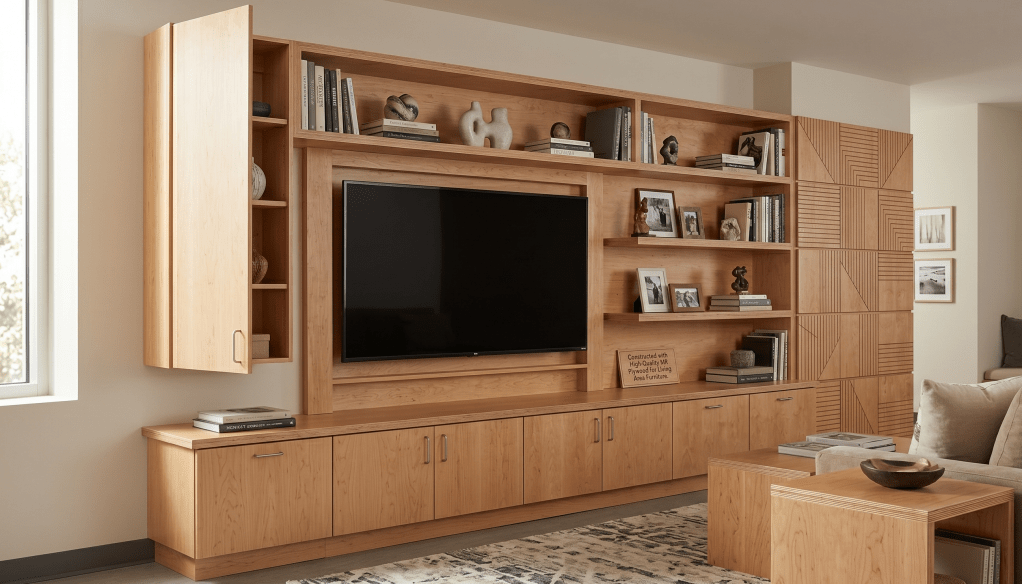
Since these areas do not usually face water exposure, MR-grade plywood can offer good value without the added cost of waterproof grades.
3. Office Furniture and Partitions
MR plywood is also a practical choice for office interiors. It can be used for desks, cabinets, storage units, workstations, wall panels, and partitions.
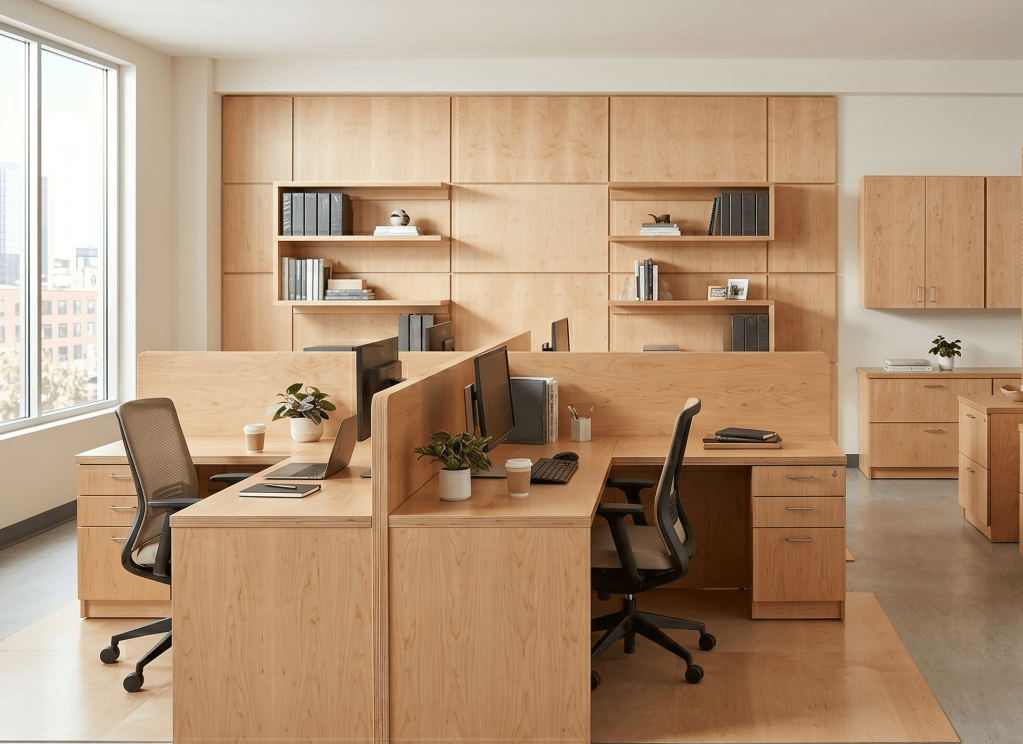
For offices, the final finish matters as much as the plywood. MR plywood can be laminated or finished neatly to create a clean and professional look.
4. Wall Paneling and Interior Decor
MR-grade plywood works well for wall paneling, ceiling panels, decorative partitions, and other interior design elements. These applications usually need a smooth surface and good workability rather than high water resistance.
It is also easy to cut and shape, which helps carpenters create customized designs for homes, offices, showrooms, and commercial interiors.
5. Shelves and Storage Units
MR plywood can be used for bookshelves, shoe racks, storage cabinets, utility shelves in dry spaces, and display units. For shelves that need to carry more weight, thicker plywood should be used to avoid bending over time.
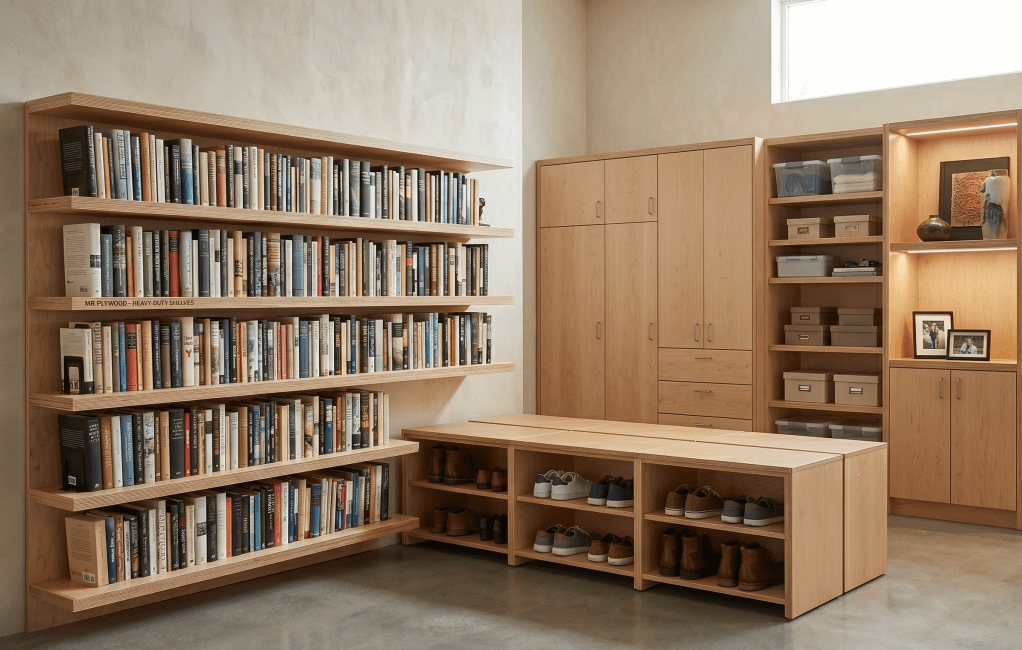
This makes MR plywood a good option for regular storage furniture, as long as it is not placed in damp or wet areas.
Where You Should Not Use MR-Grade Plywood?
Since MR-grade plywood is moisture resistant and not waterproof, it should be avoided in areas where the plywood may come in direct contact with water, leakage, seepage, or outdoor weather.
1. Kitchen Cabinets Near the Sink
MR plywood is not the best choice for cabinets placed near the sink, dishwasher, or water purifier. These areas often face water spills, plumbing leaks, and regular moisture buildup.
For kitchen cabinets, especially the lower cabinets, BWR or BWP plywood is usually a safer option. MR plywood may still be used in dry kitchen areas, but only when there is no regular water exposure.
2. Bathroom Furniture
Bathrooms are high-moisture spaces. Even if the plywood does not touch water directly, it may still be exposed to steam, humidity, and damp walls.
Using MR-grade plywood in bathrooms can reduce the life of the furniture. For bathroom vanities, storage units, and partitions, BWP plywood or other water-resistant materials are better suited.
3. Outdoor Furniture
MR plywood should not be used for outdoor furniture. Rain, sunlight, humidity, and temperature changes can damage the plywood over time.
For balconies, terraces, garden furniture, and exterior fixtures, choose BWP plywood or materials specifically made for outdoor use.
4. Areas With Seepage or Damp Walls
If a wall has seepage, dampness, or recurring moisture issues, MR plywood should not be installed directly over it. The moisture can affect the bonding, surface finish, and long-term stability of the plywood.
Before using any plywood in such areas, the seepage problem should be fixed first. Otherwise, even a better grade of plywood may not perform well.
5. Heavy Water-Use Utility Areas
Utility areas, wash zones, and spaces near washing machines often face water splashes and damp flooring. MR plywood is not designed for these conditions.
For these spaces, BWR plywood can work for moderate exposure, while BWP plywood is better for frequent water contact.
How to Choose Good MR-Grade Plywood
Follow this basic checklist to choose better plywood for your furniture:-
1. Check the ISI Mark
Good MR grade plywood should ideally have an ISI mark. In India, MR grade plywood generally falls under the IS 303 standard, which applies to commercial plywood used for general interior applications.
2. Inspect the Surface Finish
The surface of the plywood should look smooth and even. It should not have major cracks, visible patches, bubbles, or uneven pressing marks. A smooth surface helps during lamination, painting, polishing, or veneer application. If the surface is uneven, the final furniture finish may also look poor.
3. Look for Core Gaps
Core gaps are empty spaces inside the plywood layers. These gaps can reduce strength and affect screw-holding capacity. Check the edges of the sheet to see whether the layers are tightly packed. Good plywood should have a firm, uniform edge without visible gaps or loose layers.
4. Choose the Right Thickness
MR-grade plywood is available in different thicknesses, and each one has a different use. Choosing the wrong thickness can affect the strength and life of the furniture.
For example, thinner plywood may work for back panels or decorative work. For wardrobes, cabinets, tables, and shelves, thicker plywood is usually better because it can carry more weight and hold screws properly.
5. Ask About the Core Material
The core material affects the strength, weight, and durability of plywood. A better-quality core usually gives better stability and screw-holding strength.
Before buying, ask the dealer about the type of wood used in the core. This is especially important for furniture that will be used daily, such as wardrobes, storage units, desks, and cabinets.
Compare Price With Actual Use
MR-grade plywood is affordable, but the cheapest sheet is not always the best option. For light decorative work, a basic grade may be enough. For furniture that will carry weight or be used daily, it is better to choose a stronger and more reliable sheet.
Get the Right MR Grade Plywood from Digna Ply
At Digna Ply, you can get plywood suggestions based on your actual furniture requirement. Whether you are planning bedroom wardrobes, living room units, shelves, partitions, office furniture, or interior paneling, the team can help you choose the right MR-grade plywood for the job.
For MR grade plywood enquiries, furniture planning, or plywood selection support, WhatsApp Digna Ply at 8881306046.
Frequently Asked Questions
What is MR-grade plywood?
MR-grade plywood is moisture-resistant plywood used for interior furniture and dry indoor spaces. It is commonly used for wardrobes, shelves, TV units, wall panels, partitions, and office furniture.
What is the full form of MR plywood?
The full form of MR plywood is Moisture Resistant plywood. It can handle normal indoor humidity but should not be used in areas with direct water exposure.
Is MR-grade plywood waterproof?
No, MR-grade plywood is not waterproof. It is moisture resistant, which means it can handle mild indoor moisture but not regular water spills, seepage, rain, or wet conditions.
Can MR plywood be used in kitchens?
MR plywood can be used in dry kitchen areas, but it is not ideal for cabinets near sinks, dishwashers, water purifiers, or wet counters. For such areas, BWR or BWP plywood is a better option.
Is MR-grade plywood good for wardrobes?
Yes, MR-grade plywood is a good choice for wardrobes because bedrooms usually have dry indoor conditions. For better durability, choose the right thickness and quality.
What is the difference between MR and BWR plywood?
MR plywood is suitable for dry interiors and mild humidity. BWR plywood offers better water resistance and is more suitable for kitchens, utility areas, and moisture-prone spaces.
Which IS standard applies to MR-grade plywood?
MR-grade plywood generally follows the IS 303 standard in India. This standard applies to commercial plywood used for general interior applications.
What is the price of MR-grade plywood?
MR-grade plywood price depends on thickness, brand, core material, sheet size, and quality. Thicker plywood and better-quality core material usually cost more.


Leave a Reply