Your carpenter’s material list says “waterproof plywood.” At the shop, you find BWR, BWP, and marine plywood, each with a different price. When you are buying several sheets for a kitchen or wardrobe, that difference adds up.
Consider a kitchen. The cabinet below the sink sits close to plumbing connections and may face spills or leaks. A wall cabinet holding plates has a different level of water exposure. The same applies to a wardrobe against a damp wall and a study table in a dry room. Your choice should account for these conditions, along with the furniture’s construction and your budget.
At Digna Ply, we help you work through these details when comparing plywood for your project. This guide explains BWP vs BWR plywood, where each grade fits, how to compare prices, and what to check on the sheet before placing your order.
What do BWP and BWR mean on a plywood sheet?
BWP and BWR describe how well the bonds between plywood’s layers withstand water under specified test conditions. These grades help you compare water resistance, while thickness, core quality, and construction also affect the sheet’s performance.
BWP means Boiling Water Proof.
BWP plywood meets a higher level of water-resistance testing than BWR. It is a practical choice for furniture parts with greater moisture exposure, such as under-sink cabinets and bathroom vanities.
The word “proof” still needs context. Plywood contains wood, and the grade does not mean that every exposed edge, joint, or screw hole can remain wet indefinitely. Proper finishing, protected cut edges, and prompt plumbing repairs help the finished furniture last.
BWR means Boiling Water Resistant.
BWR plywood provides water-resistant bonding for furniture that may face humidity and occasional water contact. It can suit wardrobes, office furniture, and kitchen cabinets where exposure is limited, subject to the product’s specifications and installation.
Both BWR and BWP products can use phenolic adhesives. The difference cannot be judged from the glue name alone; the finished plywood must meet the requirements of its stated grade.
Check the standard alongside the grade.
BWP and marine plywood are often used interchangeably in sales conversations, but the printed standard gives you more precise information:
- IS 303:2024 covers general-purpose plywood and includes MR, BWR, and BWP grades.
- IS 710:2024 covers marine plywood.
When comparing sheets, check the product name, grade, and standard together. A sheet marked “BWP” under IS 303 and one certified as marine plywood under IS 710 should be compared using their full specifications.
What is the difference between BWP and BWR plywood?
The main difference is their tested water resistance. BWP provides a higher level of protection against moisture-related bond failure. BWR can suit furniture with lower water exposure. Comparing the complete product specifications helps you decide whether the extra cost of BWP makes sense.
| What to compare | BWP plywood | BWR plywood |
| Water resistance | Meets more demanding water-resistance requirements. | Provides water-resistant bonding with a lower level of resistance than BWP. |
| Typical furniture applications | A practical choice for under-sink cabinets, bathroom vanities, and other parts with greater moisture exposure. | Can suit wardrobes, desks, TV units, and cabinets with limited water exposure. |
| Applicable standard | BWP grade is included under IS 303:2024. Marine plywood is covered separately under IS 710:2024. | BWR grade is included under IS 303:2024. |
| Price | Usually costs more when comparing otherwise similar products. | Usually costs less, allowing savings where its specifications suit the application. |
| Strength and screw holding | Also depend on the core, veneers, thickness, and manufacturing quality. | Also depend on the core, veneers, thickness, and manufacturing quality. |
| Termite and borer protection | Check the specific product’s treatment claims and warranty. | Check the specific product’s treatment claims and warranty. |
| Finishing and installation | Cut edges, plumbing openings, and joints need suitable protection. | Cut edges, plumbing openings, and joints need suitable protection. |
The standards distinguish general-purpose plywood grades from marine plywood, so check the grade and standard together when comparing products.
For example, an under-sink cabinet and a bedroom bookshelf may both use the same thickness of plywood, yet face different moisture conditions. At Digna Ply, we suggest comparing the required grade for each furniture part, then checking quotations for matching thicknesses, sheet sizes, and product specifications.
Which plywood should you choose for each part of your home?
Water exposure can vary within the same room. A kitchen cabinet beside plumbing faces different conditions from a wall cabinet used for dry storage. Choose the grade for each furniture part by checking its position, likely water contact, and the product’s stated uses.
1. Choose kitchen plywood according to the cabinet’s position.
For under-sink cabinets, BWP is generally the more suitable choice because plumbing leaks, splashes, and cleaning water can reach the cabinet. Pay attention to the base panel, pipe openings, and exposed cut edges.
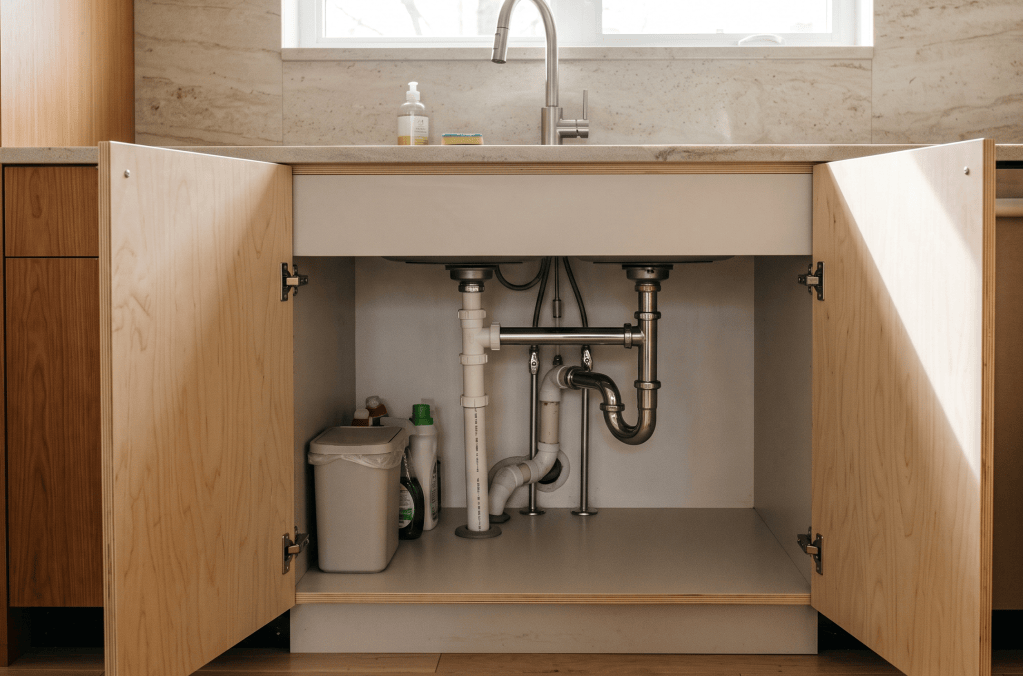
For other base cabinets, check their distance from the sink, dishwasher, and wet floor. BWP may make sense where repeated wetting is likely. A suitable BWR product can be considered for sections with limited water exposure.
For wall cabinets and shutters, assess steam, ventilation, and proximity to water. Also check thickness, hinge fixing, and shutter dimensions when selecting the sheet.
2. Check water exposure before choosing bathroom vanity plywood.
A vanity cabinet close to a basin or shower needs careful material selection. BWP is a practical option where splashes and frequent moisture are expected.
Installation matters here too. Protect plumbing cutouts and joints, provide ventilation, and use a raised base or suitable mounting arrangement to reduce contact with wet floors. Repair dripping connections promptly so water does not collect inside the cabinet.
3. Assess damp walls before choosing wardrobe plywood.
For a wardrobe in a dry bedroom, a suitable BWR product can be a reasonable choice. Check whether the wardrobe backs onto an exterior wall, sits near a bathroom, or will be installed against visible dampness.
Where moisture exposure is greater, compare BWP options and address the source of dampness before installation. Leave suitable ventilation space behind the wardrobe where the design allows. Persistent seepage needs repair regardless of the plywood grade selected.
4. Match living room and office plywood to the furniture design.
For TV units, desks, bookshelves, and storage cabinets with limited water exposure, BWR can be suitable. In consistently dry rooms, an MR-grade product may also be worth comparing against the project’s requirements.
Give equal attention to shelf length, expected loading, support positions, and hardware. A long bookshelf holding heavy books needs an appropriate thickness and construction method, even when moisture exposure is low.
5. Check the full specification for covered outdoor furniture.
A sheltered balcony and a rain-exposed terrace require different assessments. Check the manufacturer’s stated exterior-use suitability, along with finishing requirements, drainage, and protection of exposed edges.
For furniture facing direct rain or standing water, ask for a product specifically suited to those conditions and confirm the installation requirements.
Does BWP or BWR grade decide the thickness you need?
Grade and thickness answer different questions. BWP and BWR describe water-resistant bonding performance. Thickness helps determine whether a panel suits the furniture’s dimensions, loading, and fixing requirements.
1. Cabinet bodies, shutters, shelves, and backs have different requirements.
The cabinet body supports the furniture, shutters carry hinges, and shelves hold stored items. A back panel may simply close the cabinet, depending on its construction.
| Furniture part | Common thickness range | What to confirm |
| Cabinet bodies | 16–19 mm. | Confirm cabinet dimensions, expected loading, joints, and mounting method. |
| Wardrobe shutters | 16–19 mm. | Confirm shutter size, hinge requirements, and the weight of the finished panel. |
| Shelves | 18–19 mm. | Confirm the distance between supports and the weight being stored. |
| Non-load-bearing backs | 6–9 mm. | Confirm how the back is fixed and whether it has any structural role. |
These ranges are starting points. The final thickness should follow the furniture design and the selected product’s specifications.
2. Shelf length and loading also affect the choice.
A short shelf holding folded clothes and a long shelf carrying books place different demands on plywood. Longer spans or heavier loads may require additional supports or a different thickness. Selecting BWP grade alone does not settle that decision.
Before requesting a quotation, have your carpenter specify the grade, thickness, sheet size, and quantity separately. An entry such as “BWP plywood, 19 mm, 8 × 4 ft, six sheets” gives a clearer basis for comparing products and prices.
What should you check before paying for plywood?
Once you have chosen the grade and thickness, check the actual sheets against the quotation. Product markings, licence details, condition, and purchase records help you confirm what is being supplied.
1. Read the sheet label and verify the BIS licence.
Look for the manufacturer, product name, grade, applicable standard, thickness, sheet size, and CM/L licence number.
Use the BIS Care app’s Verify Licence Details feature to check the licence associated with the ISI mark. Compare the result with the manufacturer and product details on the sheet. Ask the seller to clarify any mismatch before proceeding.
Check the grade separately from the standard number. IS 303:2024 includes MR, BWR, and BWP grades, so the number alone does not identify which grade you are buying.
2. Inspect the sheet and its exposed edges.
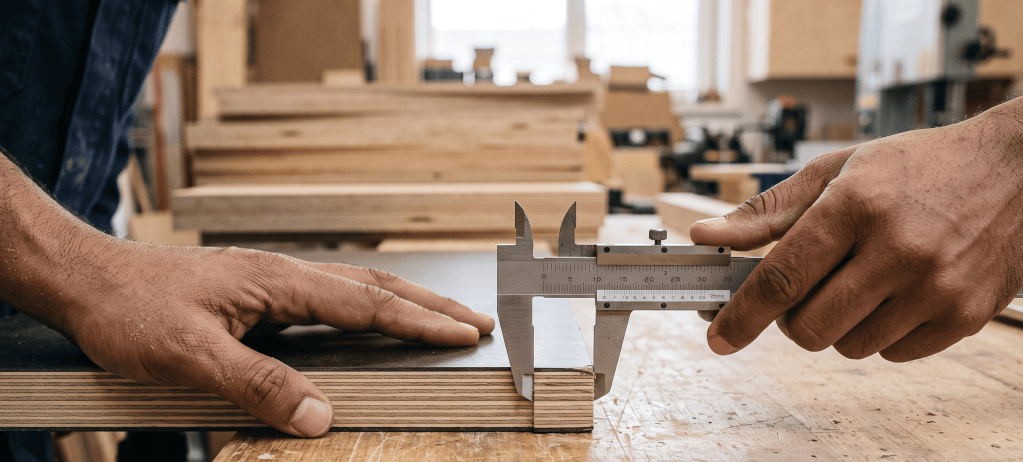
Check for visible layer separation, open gaps, surface blisters, damaged corners, and unevenness. Where possible, examine a sample edge and have the thickness checked with a suitable measuring tool.
Visual inspection can reveal defects, but it provides limited evidence of the sheet’s internal construction and tested performance. Confirm the grade through the product markings, certification, and manufacturer’s specifications.
3. Read the treatment and warranty details.
For termite and borer protection, ask what the specific product claims and obtain the written warranty terms.
Check the warranty period, exclusions, claim procedure, and whether coverage includes replacement plywood, labor, or other expenses. Keep the invoice and any documents needed to register the warranty.
4. Match the quotation, invoice, and delivered sheets.
Before cutting begins, confirm that the delivered product matches the quoted manufacturer, product range, grade, thickness, size, and quantity.
Photograph the sheet labels and retain the invoice. If a different product is proposed during delivery, compare its specifications and revised price before accepting the substitution.
What affects the life of BWP and BWR furniture?
Furniture lifespan depends on the plywood’s quality, its suitability for the location, and how it is built and maintained. BWP’s higher water resistance helps where moisture exposure is greater, while BWR can serve suitable interior applications when installation and upkeep are sound.
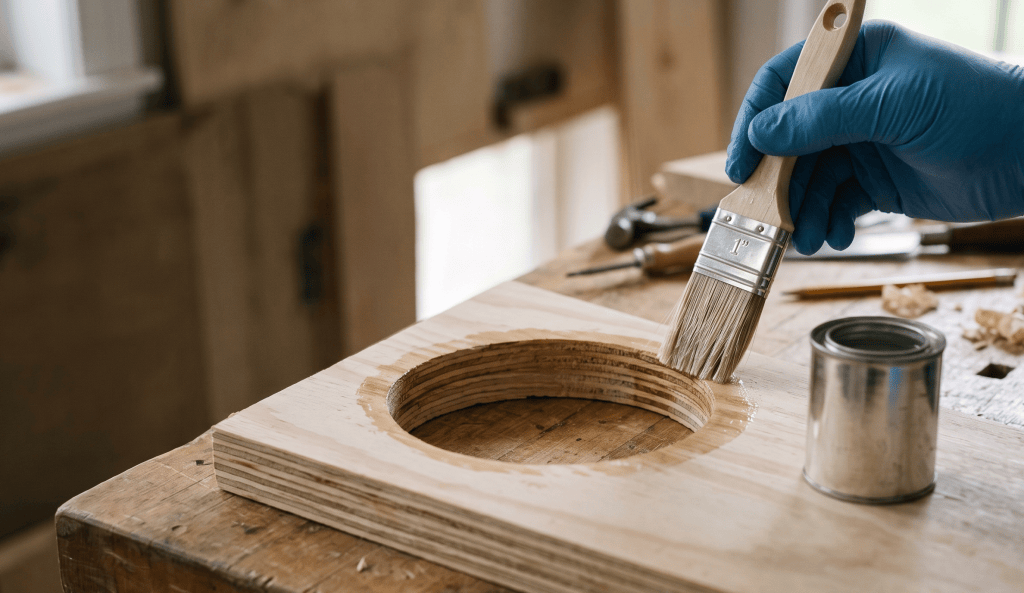
Protect cut edges, joints, and plumbing openings during construction. Shelves need adequate support for their expected load, and hinges and other fittings need secure fixing. Poorly supported shelves or loose hardware can cause problems even when the selected grade suits the room.
During use, wipe up spills, repair leaking connections, and check enclosed cabinets for trapped moisture. Keep bathroom cabinet bases clear of standing water and allow ventilation behind furniture where the design requires it. Damp walls should be repaired at the source.
Also read the warranty terms carefully. A warranty period describes the manufacturer’s stated coverage; the furniture’s actual service life depends on its materials, construction, environment, and care.
Choose Digna Ply for BWP and BWR plywood
At Digna Ply, we help you choose plywood according to the furniture you are building, its exposure to moisture, and your budget. Bring us your carpenter’s material list, and we can help you compare available grades, thicknesses, product specifications, and prices.
We also stock laminates and hardware, making it easier to discuss the panels, finishes, and fittings your project needs together. When requesting a quotation, share the sheet sizes and quantities so we can check availability and provide prices for your requirements.
Visit Digna Ply to discuss your project, or WhatsApp us at 88813 06046 with your material list to request a quotation.
Frequently Asked Questions
Is BWR plywood the same as commercial plywood?
No. “Commercial plywood” commonly refers to MR-grade plywood, while BWR is a separate water-resistance grade. Ask for the exact grade and check the sheet’s markings when ordering.
Can BWP and BWR plywood be used in the same kitchen?
Yes. You can select BWP for parts with greater water exposure and suitable BWR products for drier sections. Have your carpenter specify each grade separately in the material list and cutting plan.
Does applying laminate make BWR plywood waterproof?
No. Laminate helps protect the covered surface, but the plywood retains its original grade. Cut edges, joints, and plumbing openings still need suitable protection because water can enter through these areas.
Can BWP plywood still be damaged by a leaking sink?
Yes. Persistent leaks can expose cut edges, joints, and other cabinet components to water. BWP’s higher water resistance helps, but the leak should be repaired promptly and affected parts checked.
Is BWP plywood automatically termite resistant?
No. BWP describes water-resistant bonding performance. Termite and borer protection depend on the specific product’s treatment and stated coverage. Check the manufacturer’s specifications and written warranty.
Is marine plywood necessary for every furniture project?
No. Suitable MR or BWR products can meet the requirements of many dry interior applications. Choose according to moisture exposure, furniture design, and product specifications. Check for IS 710 certification when marine plywood is specified.


Leave a Reply