BWR stands for Boiling Water Resistant, which means this plywood is made to resist moisture better than regular commercial plywood. It is commonly used for kitchen cabinets, wardrobes, storage units, bathroom vanities with controlled water exposure, and office furniture.
In this article, we will cover what BWR plywood means, where it should be used, how it compares with MR and BWP plywood, what affects BWR plywood price, and how to choose the right sheet for your furniture.
What Is BWR Plywood?
BWR plywood is a type of plywood designed to handle moisture better than regular commercial plywood. It is commonly used in areas where furniture may come in contact with humidity, dampness, or occasional water splashes.
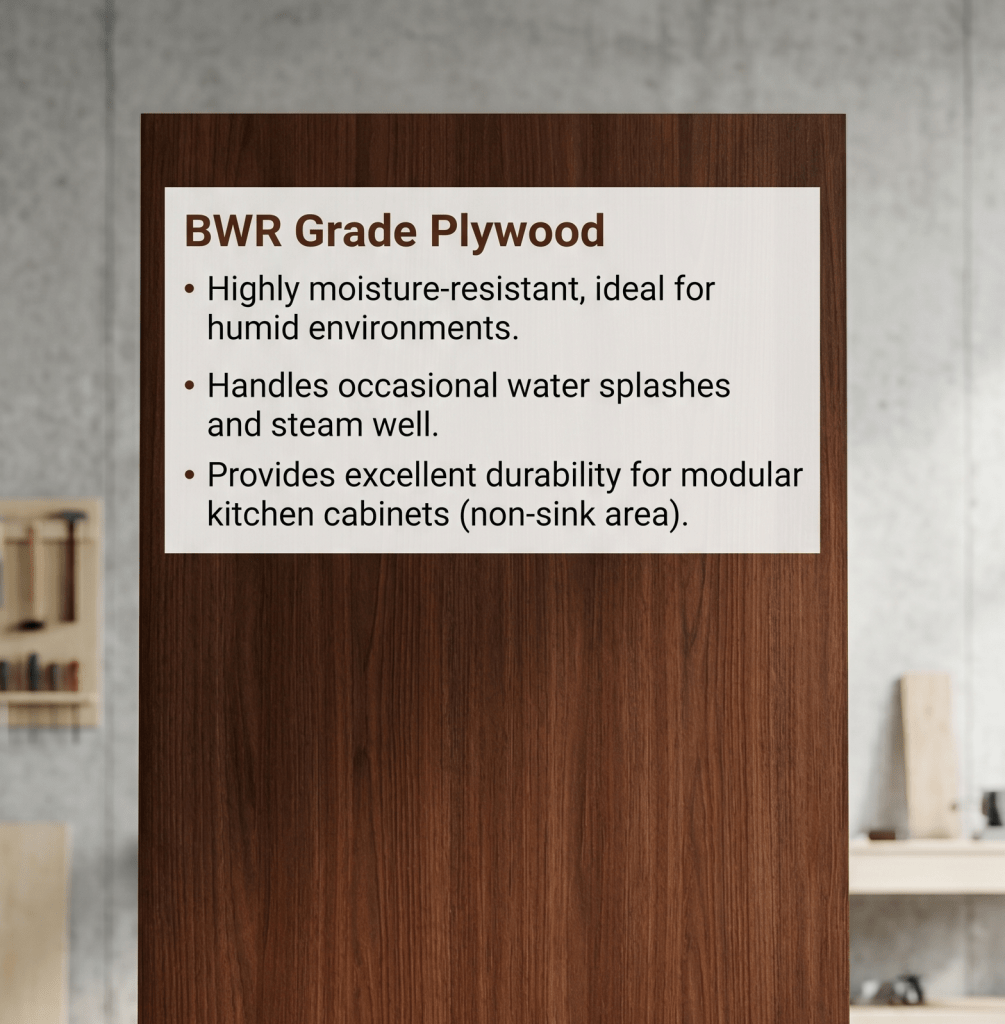
The term BWR stands for Boiling Water Resistant. This means the plywood is made using water-resistant adhesive that helps the layers stay bonded even when exposed to moisture. However, BWR plywood is not the same as fully waterproof plywood. It can resist water better than MR plywood, but it is not meant for places with constant direct water exposure.
BWR plywood is usually manufactured as per IS:303 standards, which define quality and performance requirements for commercial and BWR-grade plywood in India. This makes it a popular choice for kitchens, wardrobes, wall panels, partitions, and storage units where buyers need a balance between strength, water resistance, and cost.
What Makes BWR Plywood Different?
The main difference lies in its bonding quality. BWR plywood is made by bonding multiple layers of wood veneer with water-resistant resin. This helps the plywood hold its shape and strength better in moisture-prone areas.
Good BWR plywood also has a solid core, uniform thickness, fewer gaps, and proper pressing. These factors matter because plywood is not judged only by its outer surface. The internal bonding and core quality decide how well it performs after months or years of use.
For Indian homes, BWR plywood is often preferred because it works well in daily-use interiors. It can handle kitchen humidity, cleaning moisture, seasonal dampness, and occasional spills better than ordinary plywood.
Key Features and Benefits of BWR Plywood
BWR plywood is popular because it gives homeowners a good mix of durability, water resistance, and practical pricing. It is not as expensive as BWP plywood, but it performs better than regular commercial or MR-grade plywood in moisture-prone areas.
i) Better Water Resistance for Daily Use
The biggest benefit of BWR plywood is its ability to resist moisture. It can handle humidity, damp walls, cleaning moisture, and occasional water splashes better than standard plywood.
This makes it useful for kitchens, wardrobes near external walls, storage cabinets, utility areas, and furniture in humid regions. However, it should not be used in places where water exposure is constant or direct.
ii) Stronger Bonding and Longer Furniture Life
BWR plywood is made using water-resistant adhesive, which helps the veneer layers stay bonded for longer. This reduces the chances of swelling, warping, or layer separation when the plywood is exposed to moisture.
For furniture that is used every day, this bonding strength matters. Kitchen cabinets, wardrobes, shelves, and office desks need plywood that can handle weight, movement, and changing room conditions without losing shape.
iii) Suitable for Kitchens and Semi-Wet Areas
BWR plywood is one of the most preferred choices for kitchen cabinets. Kitchens often face steam, spills, oil, cleaning moisture, and humidity. Regular plywood may not perform well in such conditions.
BWR plywood gives better protection in these spaces, especially when it is finished properly with laminate, edge banding, polish, or paint. The finishing is important because even good plywood needs surface protection for long-term performance.
iv) Good Balance Between Price and Performance
BWR plywood offers a practical middle ground. MR plywood may be cheaper, but it is not suitable for areas with higher moisture exposure. BWP plywood offers higher water protection, but it is usually more expensive.
For most indoor furniture needs, BWR plywood gives enough water resistance without pushing the budget too high. This makes it a smart option for homeowners, contractors, interior designers, and modular furniture makers.
BWR vs MR vs BWP Plywood: Which One Should You Choose?
Plywood grades can be confusing because MR, BWR, and BWP are often used for similar furniture applications. But each grade has a different level of water resistance, cost, and suitability. Choosing the right one depends on where the plywood will be used and how much moisture exposure it will face.
Here is a simple comparison of BWR, MR, and BWP plywood:
| Factor | MR Plywood | BWR Plywood | BWP Plywood |
| Nature | Moisture Resistant | Boiling Water Resistant | Boiling Water Proof |
| Standard | IS:303 | IS:303 | IS:710 |
| Water resistance | Basic moisture resistance | Better resistance to water and humidity | High resistance to water exposure |
| Best suited for | Dry indoor furniture | Kitchens, wardrobes, semi-wet areas | Bathrooms, outdoor furniture, high-moisture areas |
| Common uses | Beds, shelves, study tables, living room units | Kitchen cabinets, wardrobes, storage units, office furniture | Bathroom cabinets, outdoor panels, marine-related uses |
| Price range | Lower | Medium | Higher |
When Should You Choose BWR Plywood?
BWR plywood is a good choice when your furniture may face moisture but not constant water contact. It works well for kitchen cabinets, wardrobes, lofts, storage units, wall panels, office tables, and partitions.
It is also useful in cities or regions where humidity is high. If your furniture is placed near external walls, utility areas, or kitchens, BWR plywood gives better protection than MR-grade plywood.
When Should You Choose MR Plywood?
MR plywood is suitable for dry indoor areas where there is no direct moisture exposure. It can be used for beds, study tables, TV units, shelves, and basic living room furniture.
However, MR plywood should not be used in kitchens, bathrooms, or damp areas. It may absorb moisture faster and can swell or weaken over time.
When Should You Choose BWP Plywood?
BWP plywood is a better choice for areas with high or regular water exposure. It is commonly used for bathroom cabinets, outdoor furniture, under-sink units, and places where water contact is more frequent.
BWP plywood costs more than BWR plywood, but the higher price is justified when the furniture needs stronger water protection. For most indoor home furniture, BWR plywood is enough. For high-moisture zones, BWP plywood is safer.
Best Uses of BWR Plywood in Indian Homes
BWR plywood is mainly used in spaces where furniture needs strength and better moisture resistance. It is not limited to kitchens. It can also be used for wardrobes, storage units, wall panels, bathroom vanities, and commercial furniture.
i) Kitchen Cabinets and Modular Kitchens
Kitchen cabinets are one of the most common uses of BWR plywood. Kitchens are exposed to steam, oil, spills, cleaning water, and humidity. Regular plywood may not hold up well in such conditions.
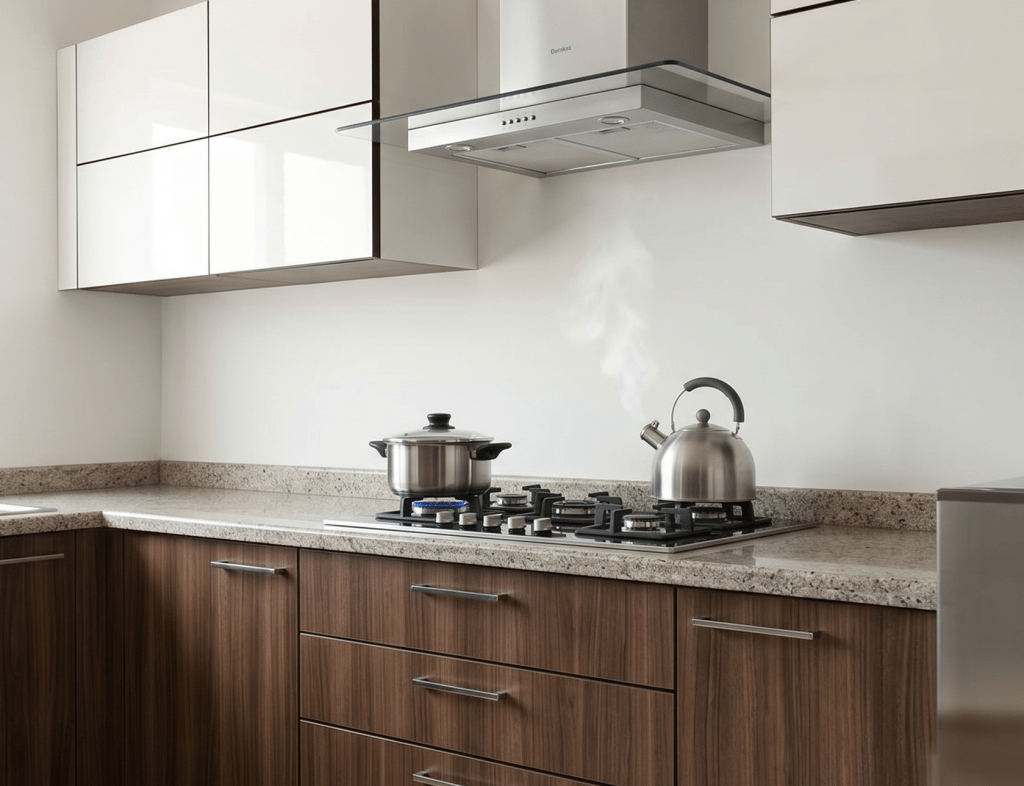
BWR plywood works well for base cabinets, overhead cabinets, shutters, shelves, and storage units. When finished with laminate, edge banding, or proper polish, it offers better protection and a longer life.
ii) Wardrobes and Storage Units
Wardrobes may not face direct water exposure, but they can still get affected by moisture. This is especially true when wardrobes are placed near external walls, bathrooms, or areas with poor ventilation.
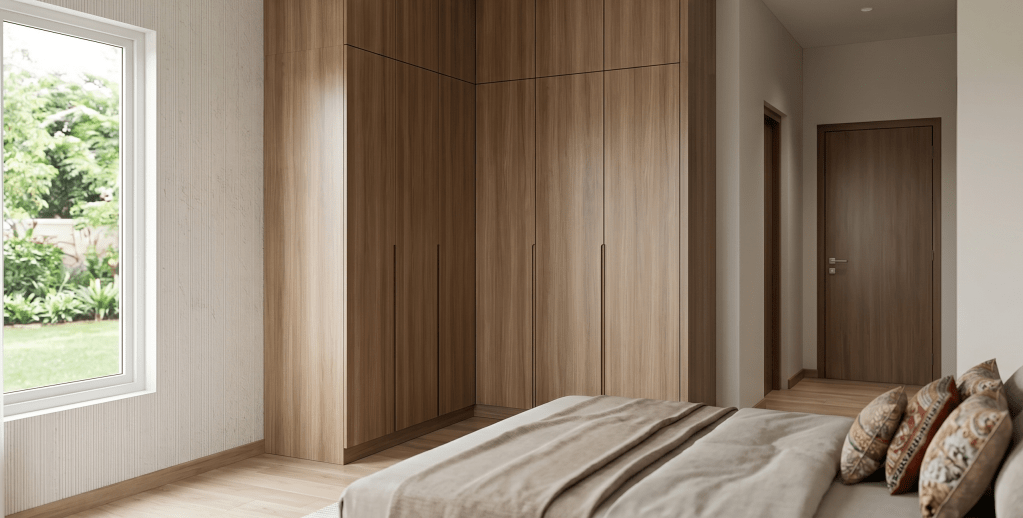
BWR plywood is a good choice for wardrobes because it offers better resistance to dampness than MR plywood. It also helps maintain the shape and strength of the furniture over time.
iii) Bathroom Vanities and Utility Areas
BWR plywood can be used for bathroom vanities only when there is controlled water exposure. For example, it can work for vanity cabinets that are properly laminated and not directly exposed to water every day.
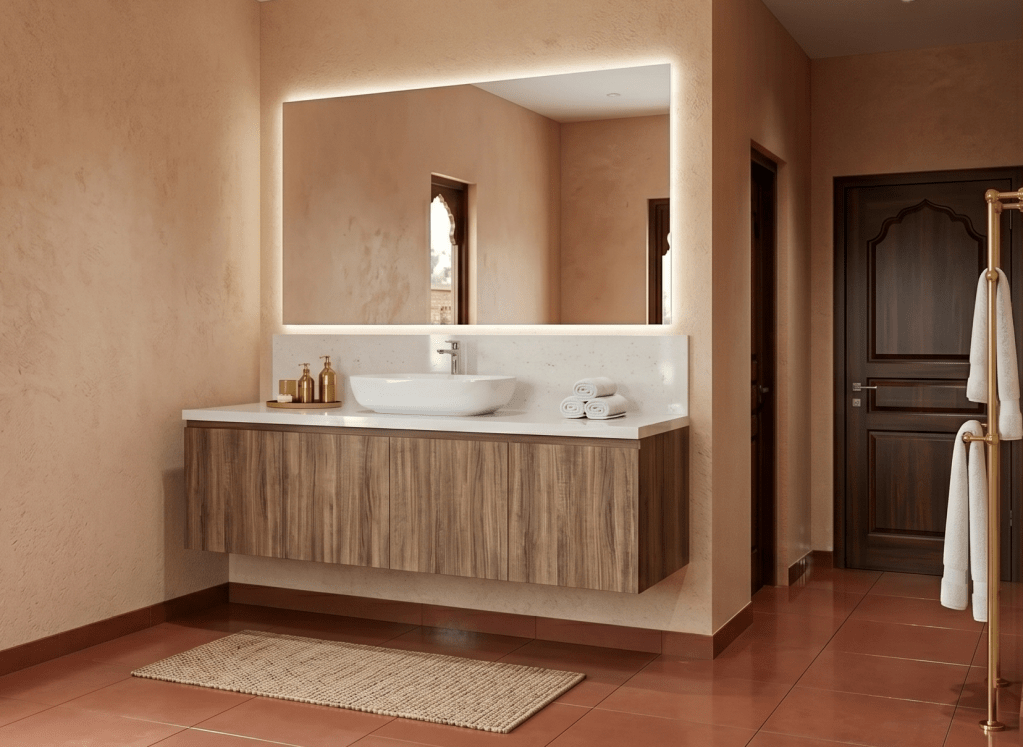
For under-sink cabinets or bathroom furniture that faces regular water contact, BWP plywood is usually a safer option. BWR plywood is better suited for semi-wet areas, not fully wet zones.
iv) Office and Commercial Furniture
BWR plywood is also used in office tables, cabinets, partitions, storage racks, shelves, and reception counters. Commercial furniture needs material that can handle daily usage, load, and movement.
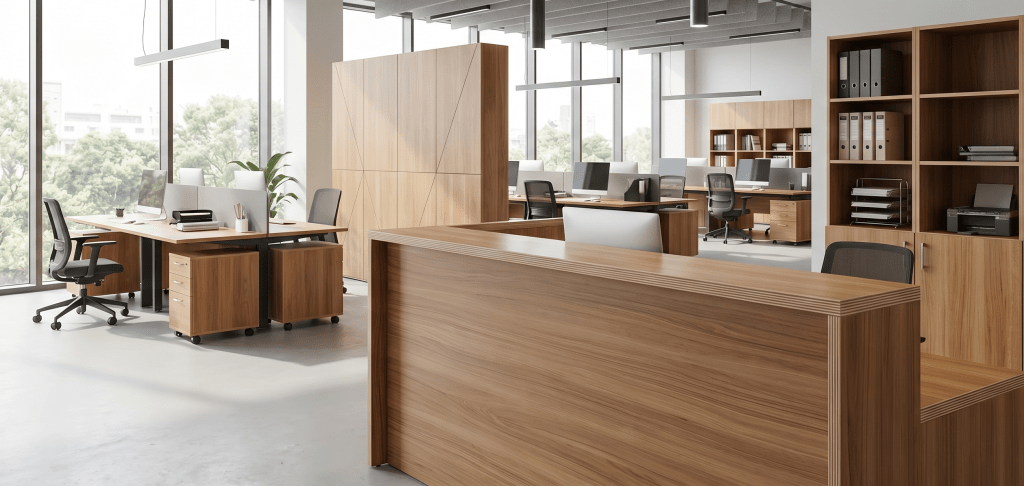
Since BWR plywood offers good strength and better moisture resistance, it works well for offices, shops, clinics, showrooms, and workspaces. It is a practical option where durability matters but full waterproofing is not required.
How to Choose Good-Quality BWR Plywood
Choosing BWR plywood only by price can lead to poor results. Two sheets may look similar from the outside, but their core quality, bonding, thickness, and treatment can be very different. Before buying, check the basic quality markers so your furniture lasts longer and performs well in moisture-prone areas.
i) Check the IS:303 Marking
BWR plywood usually falls under IS:303 standards. This marking helps buyers identify that the plywood follows defined quality requirements for this grade.
Always check whether the sheet carries proper grade marking from the manufacturer. If you are buying for kitchens, wardrobes, or commercial furniture, avoid unmarked plywood or sheets where the grade is unclear.
ii) Ask About Core Material and Bonding Quality
The strength of plywood depends heavily on its core. A good BWR plywood sheet should have a solid core, proper bonding, and fewer internal gaps. If the core has gaps, the sheet may bend, weaken, or fail during cutting, drilling, or long-term use.
Bonding quality also matters because BWR plywood is expected to handle moisture better than regular plywood. Poor bonding can cause layers to separate when exposed to humidity or cleaning moisture.
iii) Check Thickness and Calibration
Thickness matters in furniture making. Common plywood thicknesses include 6mm, 9mm, 12mm, 16mm, 18mm, and 19mm, depending on the application.
For modular furniture, calibrated BWR plywood is often preferred. Calibration means the sheet has uniform thickness across its surface. This helps carpenters and machine-based furniture makers get cleaner cuts, better finishing, and smoother alignment.
iv) Look for Termite and Borer Resistance
Many buyers assume all plywood is termite- and borer-resistant, but that is not always true. Before buying BWR plywood, ask whether the sheet has been treated for termite and borer protection.
This is especially important for wardrobes, kitchen cabinets, storage units, and furniture in humid regions. Moisture and poor ventilation can increase the risk of pest-related damage over time.
v) Compare Prices, But Do Not Buy Only on Price
BWR plywood price per sq ft depends on thickness, brand, core quality, resin quality, calibration, finish, and treatment. A cheaper sheet may look attractive at first, but it may not give the same durability.
Instead of choosing the lowest price, compare the plywood based on application. Kitchen cabinets, wardrobes, and office furniture all need different thickness and performance levels. A reliable dealer can help you choose the right sheet without overspending.
Get Quality BWR Plywood from Digna Ply
At Digna Ply, you can find BWR plywood options suited for Indian homes, modular furniture, office interiors, and moisture-prone areas. Whether you are planning kitchen cabinets, wardrobes, shelves, partitions, or commercial furniture, the team can help you choose plywood based on strength, water resistance, thickness, and budget.
Digna Ply also helps buyers avoid common mistakes, such as using MR plywood in moisture-prone areas or overspending on BWP plywood where BWR plywood is enough. This makes it easier to choose the right plywood without compromising furniture life.
For BWR plywood inquiries, pricing, and availability, WhatsApp Digna Ply at 8881306046.
Frequently Asked Questions
Is BWR plywood waterproof?
No, BWR plywood is not fully waterproof. It is water-resistant, which means it can handle moisture, humidity, and occasional water splashes better than regular plywood. For areas with direct and regular water exposure, BWP plywood is a better choice.
Is BWR plywood good for kitchen cabinets?
Yes, BWR plywood is a good choice for kitchen cabinets. Kitchens are exposed to steam, spills, cleaning moisture, and humidity. BWR plywood performs better than MR plywood in such conditions, especially when it is finished properly with laminate, edge banding, or polish.
What is the difference between BWR and BWP plywood?
BWR stands for Boiling Water Resistant, while BWP stands for Boiling Water Proof. BWR plywood is suitable for kitchens, wardrobes, and semi-wet areas. BWP plywood offers higher water resistance and is better for bathrooms, outdoor furniture, and areas with regular water contact.
Is BWR plywood better than MR plywood?
Yes, BWR plywood is better than MR plywood for moisture-prone areas. MR plywood is suitable for dry indoor furniture, while BWR plywood is better for kitchens, wardrobes near damp walls, storage cabinets, and utility areas.
What affects BWR plywood prices per sq ft?
BWR plywood price per sq ft depends on thickness, brand, core quality, resin quality, calibration, termite treatment, and finish. Thicker and calibrated sheets usually cost more, but they also offer better performance for modular furniture.
Can BWR plywood be used in bathrooms?
BWR plywood can be used for bathroom vanities only when direct water exposure is limited. For under-sink cabinets or bathroom furniture that regularly comes in contact with water, BWP plywood is usually a safer option.


Leave a Reply