Plywood is used in almost every part of a modern home, from beds and wardrobes to modular kitchens, doors, and decorative wall panels. And the type of plywood you choose can make a considerable difference in how well it performs over time.
For instance, MR plywood is generally suitable for furniture in dry indoor spaces, while BWR and BWP grades are designed for applications requiring greater moisture resistance. Marine plywood and specialized shuttering plywood serve different purposes, with manufacturing and performance requirements suited to their intended uses.
At Digna Ply, we recommend choosing plywood based on where it will be installed, how much moisture it may encounter, and the load it needs to support. In this guide, we’ll cover 10 common uses of plywood, the types suitable for each application, and the factors you should consider before buying:-
#1. Beds, Sofas, Tables, and Other Household Furniture
Furniture manufacturing is one of the most common uses of plywood. It is widely used to make bed frames, storage beds, sofa structures, study tables, bookshelves, and television units. Its layered construction provides dimensional stability and makes it suitable for furniture components that need to retain their shape over time.
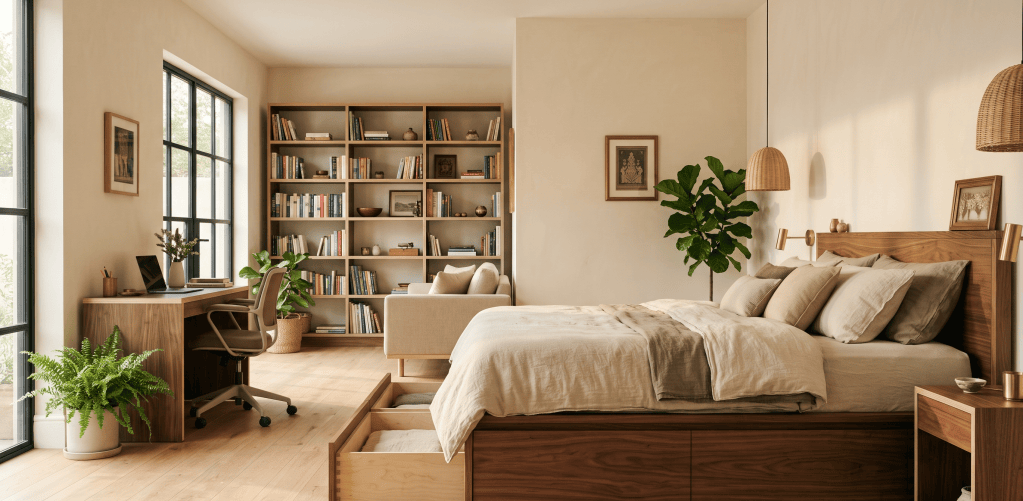
MR (Moisture Resistant) plywood is generally suitable for furniture kept in dry indoor environments, such as bedrooms and living rooms. BWR (Boiling Water Resistant) plywood is worth considering when furniture may encounter occasional moisture or higher humidity.
The thickness of plywood also matters. For example, 18 mm plywood is commonly used for furniture panels, while thinner sheets may be suitable for drawer bottoms, cabinet backs, and other lightly loaded components. The correct thickness depends on the furniture’s design, support structure, and expected load.
For long-lasting furniture, check the plywood’s core quality, thickness consistency, and surface finish before making a purchase.
#2. Modular Kitchens and Kitchen Cabinets
Plywood is widely used in modular kitchens to construct cabinet carcasses, drawers, shutters, shelves, and under-sink storage units. Kitchen cabinets are regularly exposed to humidity, cooking steam, accidental spills, and occasional plumbing leaks, making moisture resistance an important consideration when selecting plywood.
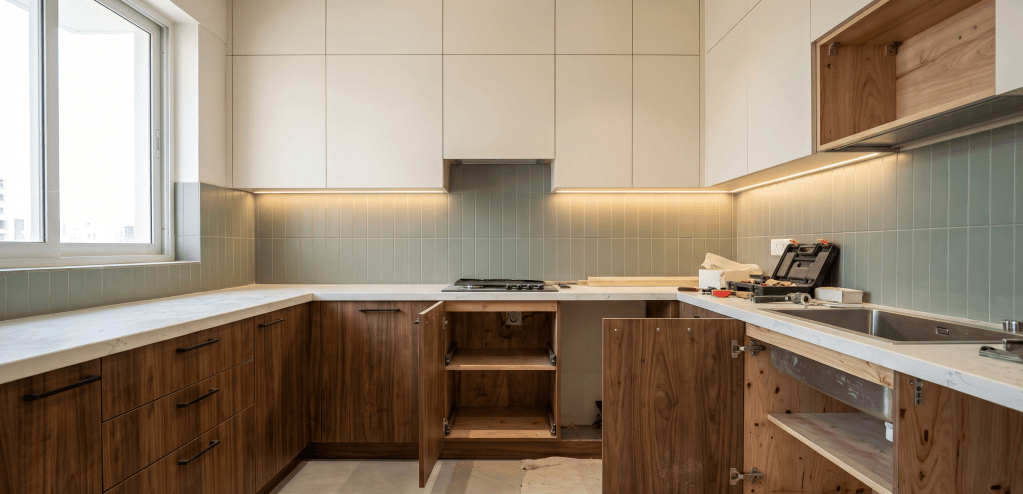
BWR (Boiling Water Resistant) plywood is suitable for kitchen cabinets that experience occasional moisture exposure but remain relatively dry. BWP (Boiling Water Proof) plywood is generally preferred for moisture-prone areas, particularly under-sink cabinets and storage units near water connections.
For kitchen cabinets, 18 mm plywood is commonly used for cabinet bodies and shutters, while thinner sheets may be used for back panels and drawer bottoms, depending on their design and support requirements.
Even when using BWP plywood, proper installation is necessary. Exposed edges, screw holes, and cut surfaces should be sealed to reduce water penetration. Applying suitable laminates or other protective finishes can also help maintain the appearance and durability of kitchen cabinets over time.
#3. Wardrobes, Cupboards, and Storage Units
Plywood is commonly used to manufacture bedroom wardrobes, built-in cupboards, loft storage units, shoe racks, and other household storage furniture. Its dimensional stability and ability to hold screws make it suitable for constructing cabinet frames, shelves, drawers, and shutters.
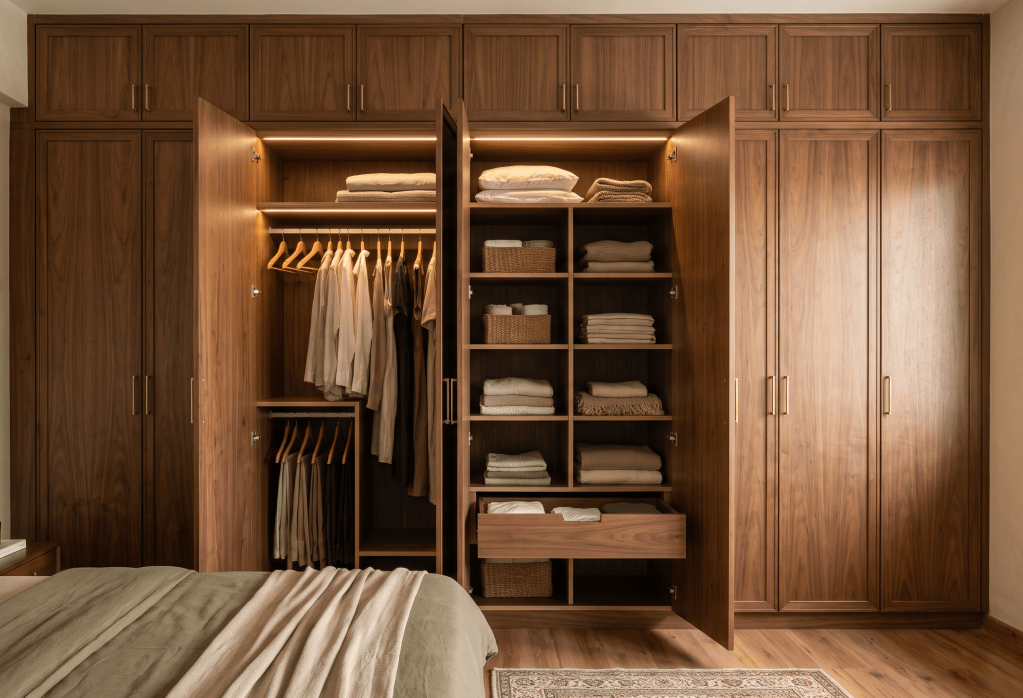
MR (Moisture Resistant) plywood is generally suitable for wardrobes and cupboards installed in dry indoor spaces. BWR (Boiling Water Resistant) plywood is a better option for storage units placed against walls prone to dampness or in rooms with higher humidity. However, the source of persistent dampness should be addressed before installation.
For wardrobe construction, 18 mm plywood is commonly used for side panels, shelves, partitions, and shutters. Thinner sheets, typically 6 mm to 9 mm, may be used for back panels, depending on the cabinet design and support requirements.
When selecting plywood for wardrobes, consider the weight of stored items, shelf spans, and the type of surface finish. Laminates and veneers are popular finishing options, while properly sealed edges help protect the plywood from moisture and everyday wear.
#4. Bathroom Vanities and Washbasin Cabinets
Plywood is commonly used to construct bathroom vanities, washbasin cabinets, wall-mounted storage units, and shelves. Unlike bedroom furniture, these installations are frequently exposed to humidity, water splashes, and occasional plumbing leaks.
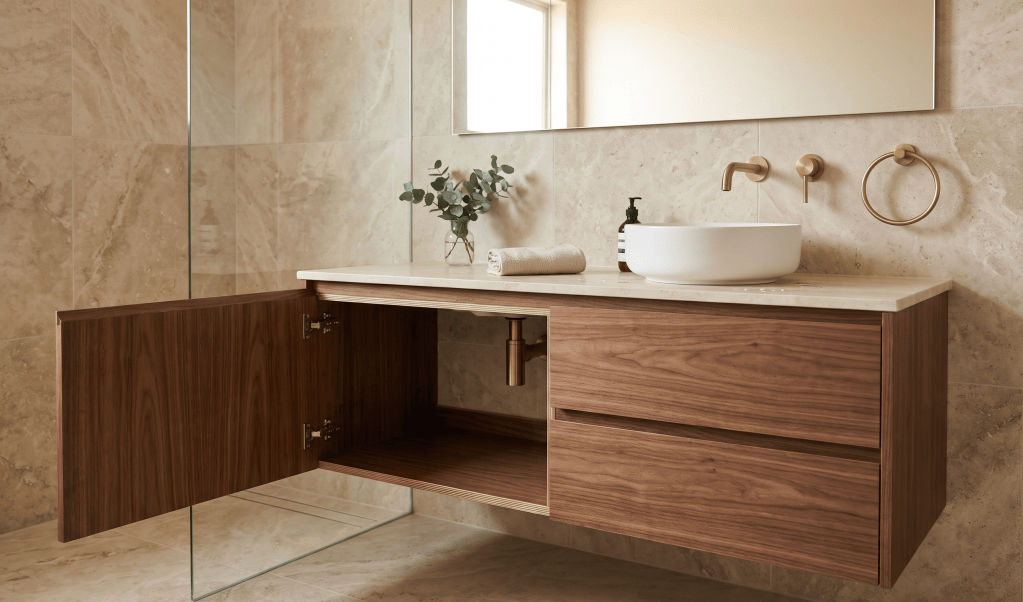
BWP (Boiling Water Proof) plywood is generally recommended for bathroom cabinets because it is designed to withstand demanding moisture conditions. Marine plywood conforming to IS 710 is another option, particularly for installations requiring higher standards of bonding and construction quality.
For bathroom vanity cabinets, 18 mm plywood is commonly used for cabinet bodies, shutters, and shelves. However, the appropriate thickness depends on the cabinet dimensions, mounting arrangement, and weight of the washbasin or countertop.
Even water-resistant plywood requires proper protection. Exposed edges, joints, and cutouts around plumbing fixtures should be sealed with suitable waterproof materials. Laminates or other moisture-resistant finishes, adequate ventilation, and prompt repair of plumbing leaks can help extend the life of bathroom furniture.
#5. Doors, Door Panels, and Partitions
Plywood is widely used in door manufacturing, decorative door panels, room partitions, and office dividers. Its layered construction provides dimensional stability, making it suitable for flat panels that need to retain their shape under normal indoor conditions. Plywood also offers a smooth surface for applying laminates, veneers, and decorative finishes.
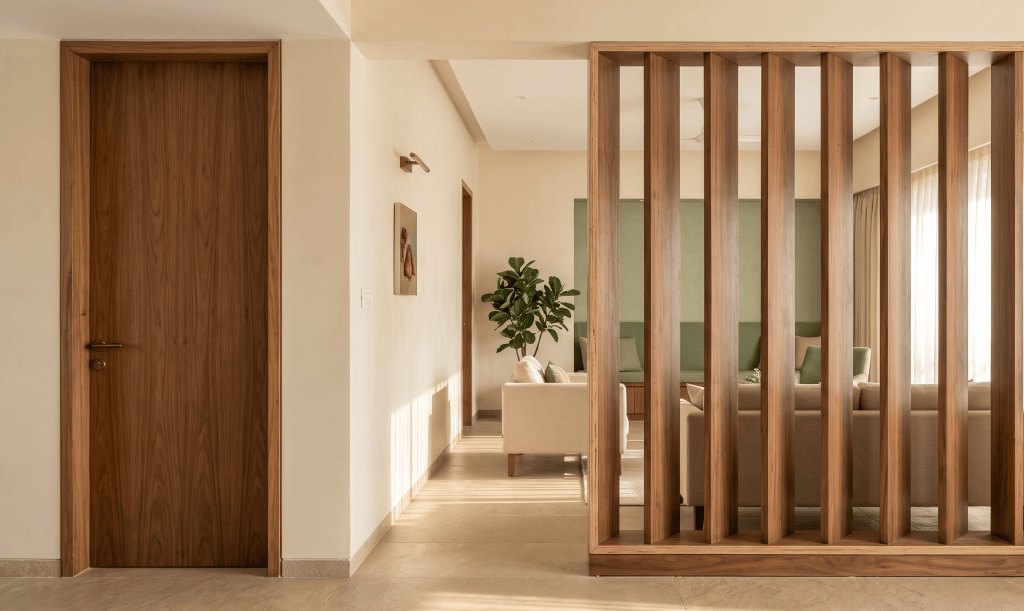
MR (Moisture Resistant) plywood is suitable for interior door panels and partitions in dry spaces. BWR (Boiling Water Resistant) plywood is preferred in areas with occasional moisture exposure, while BWP (Boiling Water Proof) plywood may be considered for more demanding conditions. Fire-retardant plywood can also be specified for certain commercial interiors, subject to applicable fire safety requirements.
For partitions, 12 mm to 18 mm plywood is commonly used, depending on the supporting framework and design. Door construction requires additional consideration because complete flush doors have different construction and performance requirements from ordinary plywood sheets.
When choosing plywood for doors and partitions, check its thickness, surface quality, screw-holding ability, and compatibility with the intended finish. Proper edge sealing and installation help reduce the risk of warping and moisture-related damage.
#6. Wall Panelling and Decorative Interiors
Plywood is commonly used for decorative wall panels, TV unit backdrops, feature walls, headboards, and interior cladding. Its smooth surface makes it suitable for applying laminates, natural wood veneers, paint, and other decorative finishes. It can also be cut into different shapes and sizes to create customized interior designs.
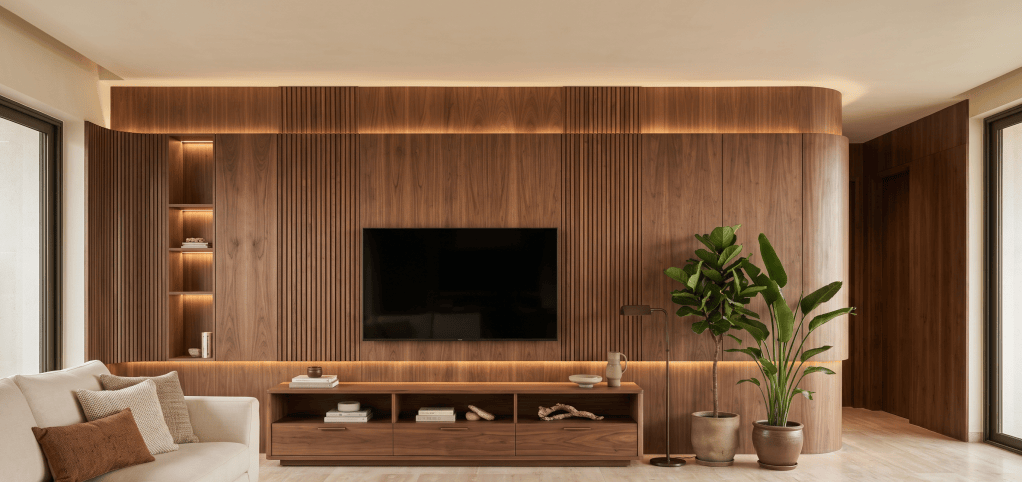
MR (Moisture Resistant) plywood is generally suitable for wall panelling in dry indoor spaces such as bedrooms and living rooms. BWR (Boiling Water Resistant) plywood may be preferred for areas exposed to higher humidity. Flexible plywood is particularly useful for curved wall panels, rounded corners, and decorative structures where conventional rigid plywood would be difficult to shape.
Plywood thickness depends on the design and supporting framework. Sheets ranging from 6 mm to 12 mm are commonly used for decorative wall cladding, while thicker panels may be necessary for structures that require additional support.
Before installation, check the condition of the wall, particularly for dampness or water seepage. Proper surface preparation, secure fixing, and edge sealing can help prevent moisture damage and keep decorative panels in good condition over time.
#7. False Ceilings and Interior Architectural Features
Plywood is used to create decorative false ceilings, ceiling panels, recessed lighting features, and customized architectural elements. Its ability to be cut, shaped, and finished makes it suitable for ceiling designs that require wooden textures, geometric patterns, or curved surfaces.
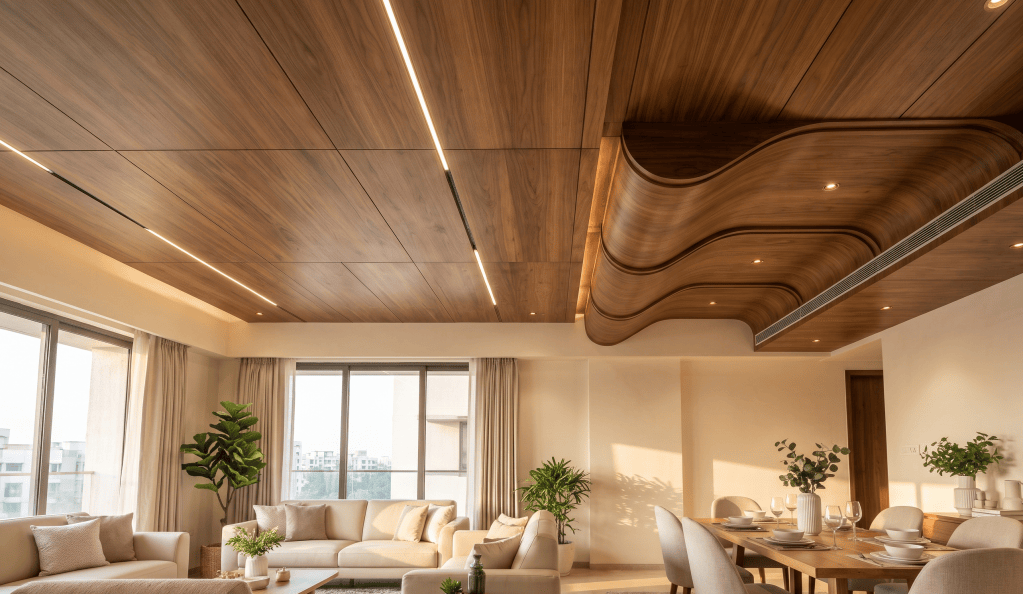
MR (Moisture Resistant) plywood is generally suitable for decorative ceilings in dry indoor spaces, while BWR (Boiling Water Resistant) plywood may be considered in areas with higher humidity. Flexible plywood is useful for curved ceiling features, arches, and rounded decorative elements that are difficult to construct using standard rigid sheets.
For decorative ceiling panels, plywood thicknesses of 6 mm to 12 mm may be used, depending on the design, supporting framework, and fixing method. Lightweight panels are generally preferred to reduce the load on the ceiling structure.
Before installation, check the ceiling’s structural support, ventilation, and moisture conditions. Plywood should be securely fixed to an appropriately designed framework, and its fire performance must meet applicable building requirements, particularly in commercial spaces.
#8. Concrete Shuttering and Construction Formwork
Plywood is widely used in construction to create temporary moulds for concrete slabs, beams, columns, walls, and foundations. These moulds, known as shuttering or formwork, hold freshly poured concrete in the required shape until it develops sufficient strength. Plywood is preferred for many formwork applications because it is available in large panels, can be cut to different dimensions, and provides a relatively smooth concrete finish.
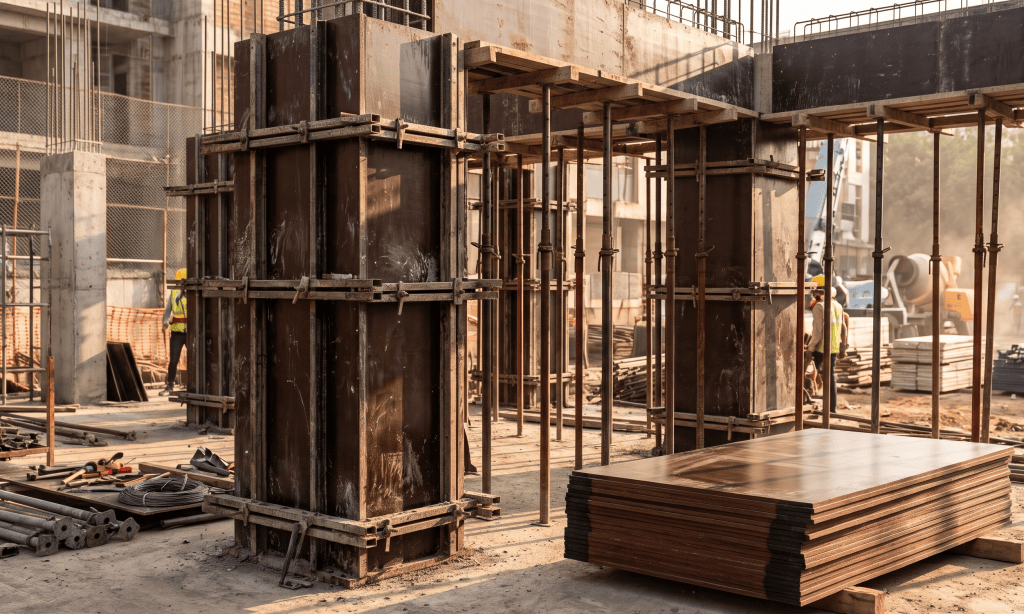
Film-faced shuttering plywood is specifically manufactured for concrete formwork. It typically features a protective resin-impregnated surface that helps resist moisture and reduces concrete adhesion, making it easier to remove panels after the concrete has hardened.
Shuttering plywood is commonly available in thicknesses such as 12 mm, 15 mm, and 18 mm. The appropriate thickness depends on the concrete pressure, supporting framework, panel span, and construction requirements.
The number of times shuttering plywood can be reused depends on its manufacturing quality, handling, cleaning, and storage conditions. Applying suitable release agents and sealing exposed edges can help maintain panel performance across multiple uses. Ordinary furniture-grade plywood should not be substituted for properly specified formwork plywood.
#9. Boats, Marine Interiors, and Water-Exposed Structures
Plywood is used in boat building, marine interiors, deck components, storage compartments, and other structures exposed to frequent moisture. These applications require panels that can withstand demanding wet conditions without experiencing premature bond failure or deterioration.
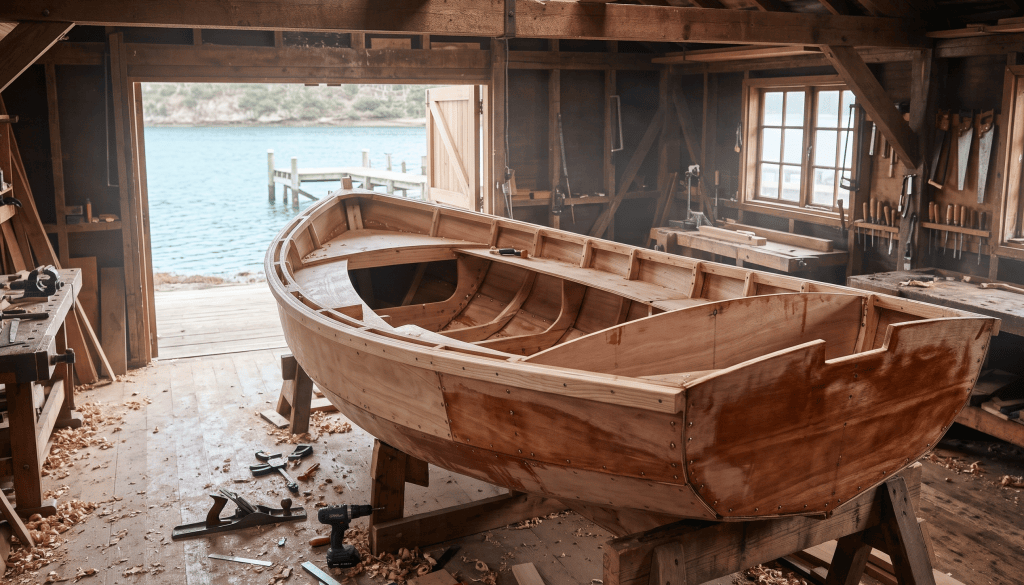
Marine plywood conforming to IS 710 is designed for such applications. It is manufactured using specified veneers and waterproof adhesive bonds, with requirements for construction quality, bonding strength, and resistance to water exposure. Unlike ordinary commercial plywood, marine plywood must meet stricter manufacturing and performance requirements.
Marine plywood is available in different thicknesses, commonly including 6 mm, 9 mm, 12 mm, and 18 mm. The appropriate thickness depends on the boat’s design, panel dimensions, structural requirements, and intended application.
Although marine plywood offers high water resistance, it is not immune to deterioration. Exposed edges, joints, and surfaces should be protected with suitable marine-grade coatings or sealing systems. Proper installation, drainage, and regular maintenance are also necessary, particularly for components exposed to prolonged wet conditions.
#10. Packaging, Transport, and Industrial Applications
Plywood is widely used in industrial packaging, shipping crates, storage boxes, pallets, and protective containers for transporting machinery, electronics, and other goods. Its layered construction provides dimensional stability and resistance to splitting, making it suitable for packaging that must withstand handling, stacking, and transportation.
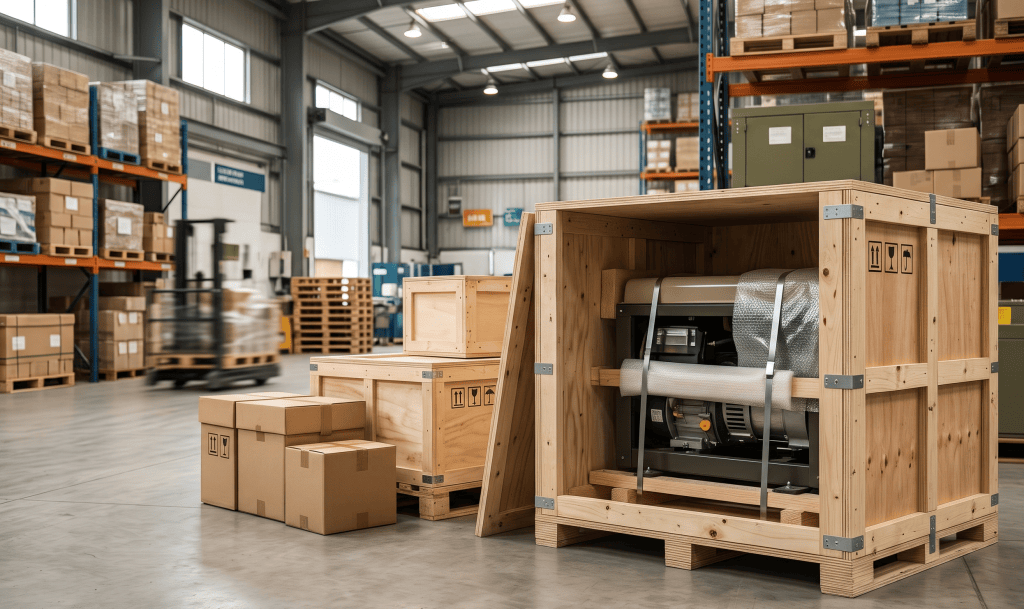
Commercial plywood, MR (Moisture Resistant) plywood, and industrial-grade plywood are commonly used for packaging applications. MR plywood may be suitable for goods transported and stored in dry conditions, while more moisture-resistant grades can be considered when packaging is exposed to humidity or occasional moisture. The choice depends on the weight of the goods, handling requirements, and transportation conditions.
Plywood thicknesses of 6 mm to 18 mm are commonly used for crates and packaging, depending on the load and required strength. Heavy machinery and equipment may require thicker panels, reinforced frames, and additional structural support.
For export packaging, buyers should also check the destination country’s regulations. Plywood made entirely from processed wood may be exempt from certain wood-packaging treatment requirements, but crates containing solid wood components may need to comply with ISPM 15.
Which Type of Plywood Is Best for Each Application?
Different plywood grades are manufactured to meet different requirements for moisture resistance, strength, surface quality, and durability. The table below summarizes the recommended plywood types for 10 common applications:-
| Plywood application | Recommended plywood type |
| Beds, sofas, and tables | MR, BWR |
| Modular kitchens | BWR, BWP |
| Wardrobes and cupboards | MR, BWR |
| Bathroom vanities | BWP, marine plywood |
| Doors and partitions | MR, BWR, BWP, fire-retardant |
| Wall panelling | MR, BWR, flexible plywood |
| False ceilings | MR, BWR, flexible plywood |
| Concrete shuttering | Film-faced shuttering plywood |
| Boats and marine interiors | IS 710 marine plywood |
| Packaging and industrial uses | Commercial, MR, industrial-grade plywood |
These recommendations are general guidelines rather than fixed rules. For example, BWR plywood may be sufficient for a kitchen cabinet in a relatively dry location, while an under-sink unit exposed to frequent moisture may benefit from BWP plywood.
Also, higher water resistance does not automatically mean better plywood for every application. A suitable grade with the right thickness, construction quality, and finish is often a more practical choice than paying extra for specifications your project does not require.
What Should You Check Before Buying Plywood?
Two plywood sheets with the same thickness and moisture-resistance rating can differ in construction quality, durability, and intended applications. Before purchasing, consider the following factors:-
1. Plywood Grade and Certification
Check whether the plywood meets the applicable Indian Standard, such as IS 303 for general-purpose plywood or IS 710 for marine plywood. Verify the grade markings, manufacturer details, and certification where applicable.
2. Plywood Thickness
Choose the thickness based on the intended application, expected load, panel dimensions, and supporting framework. For example, 18 mm plywood is commonly used for furniture, but not every furniture component requires the same thickness.
3. Core Construction and Quality
Examine the sheet edges for visible gaps, overlapping veneers, or other manufacturing defects. A well-constructed core contributes to panel strength, stability, and screw-holding performance.
4. Moisture Resistance
Consider whether the plywood will be installed in a dry bedroom, humid kitchen, bathroom, or outdoor environment. Select MR, BWR, BWP, or marine plywood according to the actual exposure conditions.
5. Surface Quality and Finishing
Check whether the plywood has a suitable surface for laminates, veneers, paint, or other finishes. Also consider how exposed edges and joints will be sealed to reduce moisture penetration.
6. Price and Warranty
Compare plywood sheets with similar grades, thicknesses, core specifications, and certifications. Review the manufacturer’s warranty terms rather than assuming that a higher price guarantees better performance.
At Digna Ply, we recommend discussing your intended application before selecting a plywood sheet. This helps you choose a product suited to your project without spending unnecessarily on specifications you may not need.
Choose Digna Ply for Your Furniture and Construction Plywood Needs
From building a sturdy bed and installing modular kitchen cabinets to constructing wardrobes, doors, and decorative interiors, every project requires plywood that suits its intended application.
At Digna Ply, we help you select plywood based on your specific requirements, budget, and intended use. Whether you need MR plywood for everyday furniture, BWR or BWP plywood for moisture-prone areas, or specialized plywood for construction applications, you can discuss your requirements with us before making a purchase.
If you’re planning a furniture or construction project, visit Digna Ply or contact us on WhatsApp. Share your material list, required dimensions, and quantities, and we’ll help you find suitable plywood options and provide a quotation.
Frequently Asked Questions
What are the most common uses of plywood?
Plywood is commonly used to manufacture beds, sofas, wardrobes, modular kitchen cabinets, doors, partitions, and decorative wall panels. It is also used in concrete shuttering, false ceilings, industrial packaging, and boat construction. The appropriate plywood type depends on the application, moisture exposure, and structural requirements.
Which plywood is best for home furniture?
MR (Moisture Resistant) plywood is generally suitable for furniture in dry indoor spaces, such as bedrooms and living rooms. BWR (Boiling Water Resistant) plywood is a better choice for furniture exposed to occasional moisture or higher humidity. Thickness and core quality are also important when selecting furniture plywood.
Can BWR plywood be used in kitchens and bathrooms?
BWR plywood can be used in kitchen cabinets and other areas exposed to occasional moisture. However, BWP plywood is generally preferred for bathroom vanities, under-sink cabinets, and locations with frequent water exposure. Proper edge sealing and protective finishes are necessary regardless of the plywood grade.
Is marine plywood better than BWP plywood?
Not necessarily. BWP refers to a boiling-water-proof performance grade, while marine plywood manufactured under IS 710 must meet specific requirements for veneers, bonding, and construction quality. BWP plywood conforming to IS 303 may be suitable for moisture-prone furniture, while IS 710 marine plywood is intended for more demanding applications.
Can plywood be used for outdoor furniture?
Yes, but not every plywood type is suitable for outdoor use. Marine-grade or appropriately specified exterior plywood may be considered for outdoor furniture. However, prolonged exposure to sunlight, rain, and temperature changes can damage unprotected sheets. Suitable coatings, sealed edges, drainage, and regular maintenance are important.
What is the difference between commercial plywood and shuttering plywood?
Commercial plywood is generally used for indoor furniture, cabinets, and partitions. Shuttering plywood is manufactured for concrete formwork and is designed to withstand construction-related loads and moisture exposure. Film-faced shuttering plywood also has a protective surface that helps with concrete release and repeated use.
How long does plywood furniture last?
The lifespan of plywood furniture depends on the plywood grade, core construction, thickness, installation quality, and exposure to moisture. Well-made furniture using suitable plywood can last for many years with proper maintenance. Preventing water damage, avoiding excessive loads, and maintaining protective finishes can help extend its service life.


Leave a Reply