Plywood is available in different dimensions, thicknesses, and grades, so buyers often get confused between what is commonly available and what is right for their project. This guide will help you understand standard plywood sizes, common thickness options, project-wise usage, and how to choose the right sheet before placing an order.
What Are the Standard Plywood Sizes Available in the Market?
Plywood comes in different sheet sizes, but a few standard dimensions are used more often in furniture, interiors, and construction. These sizes make it easier for carpenters, contractors, and interior designers to plan cutting, reduce wastage, and maintain clean finishing across the project.
The most commonly used plywood size is 8 ft × 4 ft. It is widely preferred because it covers a larger area and works well for wardrobes, beds, cabinets, partitions, doors, and wall panels. However, smaller and narrower sheet sizes are also available for compact furniture, repair work, and project-specific requirements.
| Plywood Size | Common Use |
| 8 ft × 4 ft | Wardrobes, beds, modular kitchens, cabinets, partitions, interiors |
| 7 ft × 4 ft | Doors, wall panels, wardrobes, furniture panels |
| 6 ft × 4 ft | Small furniture, shelves, compact interior work |
| 8 ft × 3 ft | Doors, narrow panels, custom furniture sections |
| 6 ft × 3 ft | Small panels, repair work, light furniture applications |
An 8 ft × 4 ft plywood sheet is suitable for larger furniture and interior work because it offers better coverage with fewer joints. A 7 ft × 4 ft sheet is often used where the height requirement is slightly lower, such as doors, panels, and wardrobes. A 6 ft × 4 ft sheet works well for smaller furniture or compact projects where a full 8 ft sheet may lead to extra wastage. Narrower sheets like 8 ft × 3 ft and 6 ft × 3 ft are useful for doors, side panels, repair work, and custom furniture sections where width requirements are limited.
Why 8 ft × 4 ft Is the Most Common Plywood Size
An 8 ft × 4 ft plywood sheet is widely used because it gives better coverage and reduces the number of joints in furniture and interior work. For large items like wardrobes, beds, kitchen cabinets, and wall panels, bigger sheets help create a cleaner finish with fewer visible breaks.
It also makes cutting and planning easier. Since many furniture and interior layouts are designed around standard measurements, using 8×4 plywood helps carpenters use the sheet more efficiently and reduce leftover pieces.
Plywood Thickness Chart
Plywood size tells you the length and width of the sheet, but thickness decides how strong and suitable it is for a specific application. A thin plywood sheet may work well for drawer bottoms or back panels, but it may bend or weaken if used for beds, wardrobes, or kitchen cabinets. Similarly, very thick plywood may be strong, but it can increase the cost and weight of the furniture.
That is why plywood thickness should be selected based on where the sheet will be used, how much load it will carry, and how long you expect the furniture or structure to last.
| Plywood Thickness | Best Used For |
| 4 mm | Drawer bottoms, cabinet backs, light decorative panels |
| 6 mm | Back panels, wall paneling, false ceilings, lightweight partitions |
| 9 mm | Shelves, paneling, small furniture, door skins |
| 12 mm | Cabinets, wardrobes, partitions, furniture components |
| 16 mm | Strong furniture, shelves, wardrobes, work tables |
| 18 mm | Modular kitchens, beds, wardrobes, tables, heavy-use furniture |
| 25 mm | Heavy-duty furniture, tabletops, structural and commercial use |
A 4 mm plywood sheet is usually used where the panel does not need to carry much weight, such as drawer bottoms or cabinet backs. 6 mm plywood is slightly stronger and works well for wall paneling, ceilings, and light partitions. 9 mm plywood is useful for light furniture, shelves, and decorative applications where moderate support is needed.
For regular furniture, 12 mm plywood is a common choice because it offers a balance between strength and cost. 16 mm and 18 mm plywood are better suited for wardrobes, beds, modular kitchens, and furniture that needs to handle daily use. 25 mm plywood is used when extra strength is required, such as heavy tabletops, commercial furniture, and load-bearing applications.
How Plywood Thickness Affects Strength and Cost
Thicker plywood generally offers better strength, screw-holding capacity, and stability. This makes it more suitable for furniture that carries weight or is used frequently. For example, a bed frame, wardrobe shutter, or kitchen cabinet will usually need thicker plywood than a drawer base or back panel.
However, thicker plywood also costs more and adds more weight to the final product. Choosing the thickest sheet is not always necessary. The better approach is to match the plywood thickness with the actual use. This helps you avoid overspending while still getting the strength your project needs.
How to Choose the Right Plywood Size for Different Projects
The right plywood size depends on what you are building, how much surface area needs to be covered, and how the sheet will be cut. A large sheet may work better for wardrobes and wall panels, while a smaller sheet may be enough for shelves, repairs, or compact furniture.
Apart from the length and width, thickness also matters. Two projects may use the same plywood sheet size, but the thickness can change based on load, moisture exposure, and daily usage.
i) Plywood Sizes for Furniture
For furniture like beds, wardrobes, tables, and cabinets, 8 ft × 4 ft plywood sheets are commonly preferred. They offer enough surface area for larger panels and help reduce the number of joints in the final furniture.
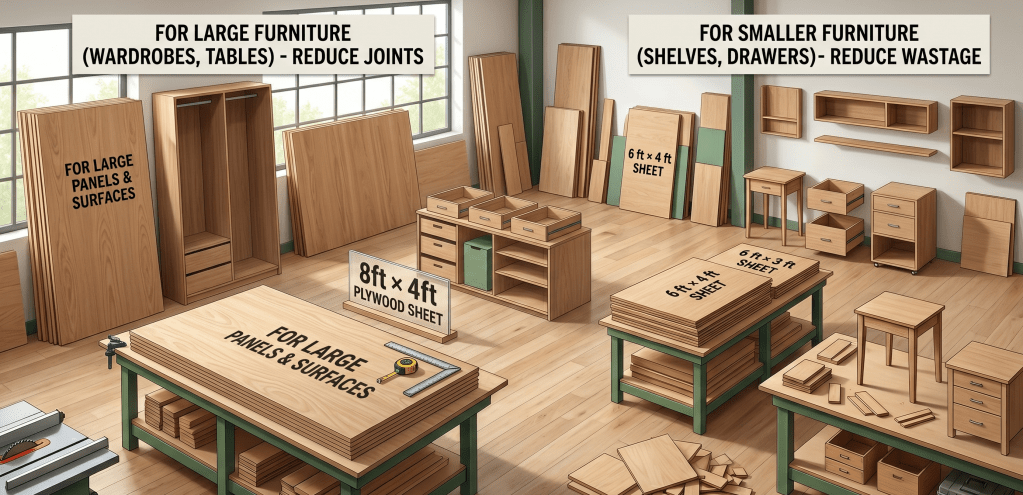
For smaller furniture such as side tables, shelves, drawers, and compact storage units, 6 ft × 4 ft or 6 ft × 3 ft sheets may also work well. These sizes help reduce wastage when the project does not need a full-size sheet.
ii) Plywood Sizes for Cabinets and Wardrobes
Cabinets and wardrobes usually need plywood that can handle weight, hinges, shutters, shelves, and regular opening and closing. For this reason, 8 ft × 4 ft sheets are widely used for wardrobe sides, shelves, shutters, and internal partitions.
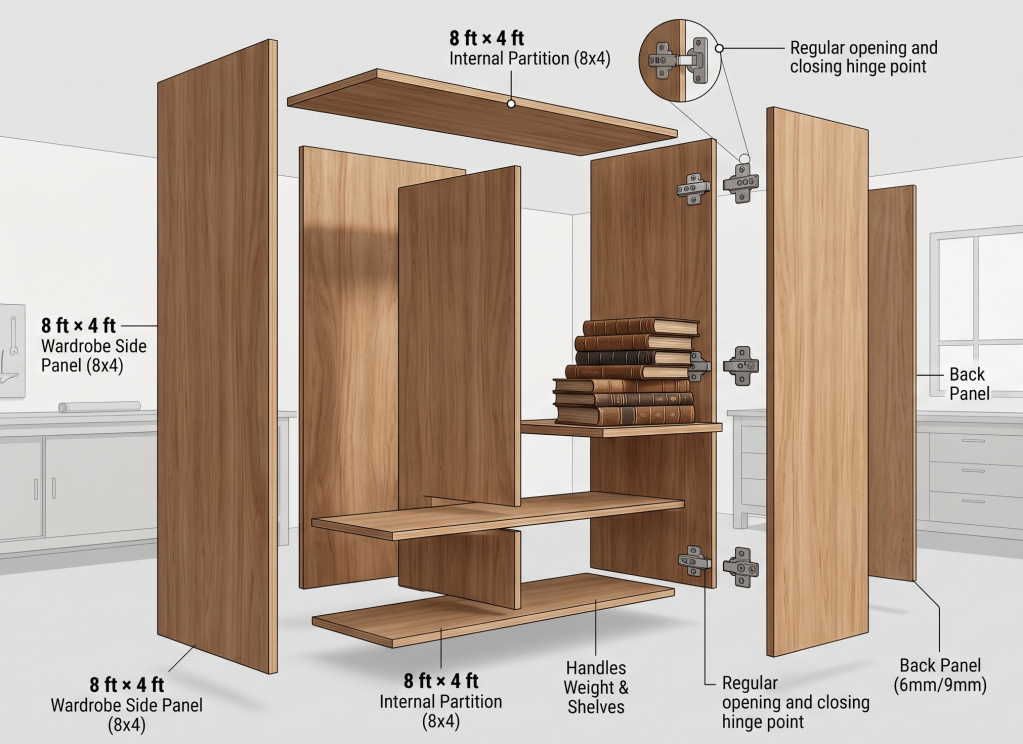
In terms of thickness, 16 mm and 18 mm plywood are commonly used for wardrobes and modular cabinets. For back panels, thinner plywood such as 6 mm or 9 mm may be enough, depending on the design and quality requirement.
iii) Plywood Sizes for Doors and Wall Panels
For doors, wall panels, and partitions, larger sheets help create a cleaner finish. An 8 ft × 4 ft or 7 ft × 4 ft plywood sheet can cover more area and reduce visible joints.
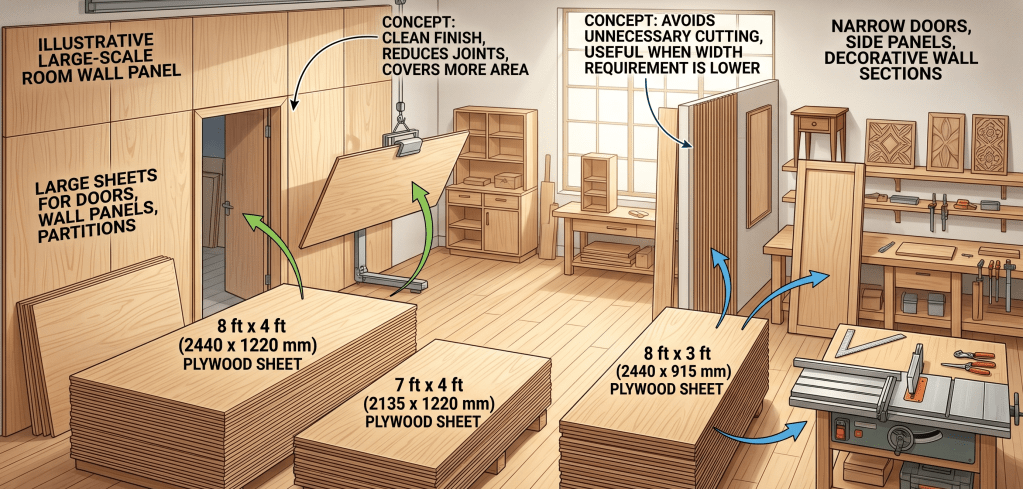
For narrow doors, side panels, and decorative wall sections, 8 ft × 3 ft sheets may also be useful. These sheets work well when the width requirement is lower and you want to avoid unnecessary cutting.
iv) Plywood Sizes for Flooring and Structural Work
Flooring and structural applications need plywood with better strength and stability. Here, thickness becomes more important than just sheet size. A larger sheet can cover more area, but it must also be strong enough to handle load and movement.
For these uses, buyers usually prefer thicker plywood such as 18 mm or 25 mm, depending on the project requirement. It is always better to choose plywood based on load-bearing needs instead of selecting only by price.
Important Things to Check Before Buying Plywood Sheets
Buying plywood is not just about choosing the right size. Two sheets may look similar from the outside, but their strength, durability, finish, and moisture resistance can be very different. Before placing an order, check the grade, thickness, core quality, and overall suitability for your project.
This is especially important for furniture, kitchens, wardrobes, doors, and commercial interiors where plywood has to handle regular use. A wrong selection may look cost-effective at first, but it can lead to bending, swelling, weak screw holding, or early repairs later.
i) Check the Grade of Plywood
Plywood is available in different grades based on usage and moisture resistance. MR grade plywood is suitable for dry areas and regular interior furniture. BWR grade plywood offers better water resistance and is commonly used in kitchens, cabinets, and moisture-prone areas. BWP or marine plywood is made for higher moisture exposure and is preferred for heavy-duty applications.
Choosing the right grade is important because every area has different conditions. For example, bedroom furniture may not need the same level of water resistance as kitchen cabinets or bathroom storage units.
ii) Check Whether the Sheet Is Calibrated
Calibrated plywood has uniform thickness across the sheet. This helps during machine cutting, edge banding, modular furniture work, and laminate pressing. If the plywood thickness is uneven, the final furniture may not align properly.
For modular kitchens, wardrobes, cabinets, and factory-made furniture, calibrated plywood is often a better choice. It gives a cleaner finish and makes the installation process smoother.
iii) Check Core Quality and Bonding
The core of the plywood decides its strength. A good plywood sheet should have proper bonding, minimal gaps, and a stable structure. If the core has gaps or weak bonding, the sheet may bend, split, or fail to hold screws properly.
Before buying, check whether the plywood feels solid and balanced. Poor-quality plywood may look fine from the surface, but it can create problems once it is cut, drilled, or used in furniture.
iv) Check Wastage Before Finalizing Size
The right plywood size can reduce material wastage and control project costs. For example, using a full 8 ft × 4 ft sheet for a small repair job may leave too many unused pieces. On the other hand, using smaller sheets for a large wardrobe may create extra joints and affect the finish.
Before buying, plan the cutting layout with your carpenter or contractor. This helps you choose the right sheet size, estimate the number of sheets needed, and avoid unnecessary spending.
Why Choose Digna Ply for the Right Plywood Sizes?
Digna Ply helps homeowners, carpenters, contractors, architects, and interior designers choose plywood that fits their actual project needs. Whether you need plywood for modular kitchens, wardrobes, beds, cabinets, wall panels, doors, partitions, or commercial interiors, you can get support in selecting the right size and thickness.
With Digna Ply, you can enquire about commonly used plywood sizes, available grades, thickness options, and project-wise recommendations before making a purchase. This helps reduce confusion, avoid wrong selection, and control wastage during cutting and installation.
Need help choosing the right plywood size for your project? WhatsApp Digna Ply at 8881306046 for enquiries, size guidance, and pricing details.
Frequently Asked Questions
What is the standard plywood size?
The most commonly used plywood size is 8 ft × 4 ft. This size is widely used for wardrobes, cabinets, beds, modular kitchens, wall panels, and interior work because it offers better coverage and reduces joints.
Which plywood thickness is best for furniture?
For most furniture, 16 mm and 18 mm plywood are commonly preferred. These thicknesses offer good strength for wardrobes, beds, tables, shelves, and cabinets. For lighter use, such as drawer bottoms or cabinet backs, thinner plywood like 4 mm, 6 mm, or 9 mm may be enough.
What is the best plywood size for wardrobes?
An 8 ft × 4 ft plywood sheet is usually preferred for wardrobes because it can cover larger sections with fewer cuts. It also helps create a cleaner finish and reduces wastage when planned properly.
Is 12 mm plywood strong enough?
12 mm plywood can be strong enough for cabinets, shelves, partitions, and light furniture. However, for heavy-use furniture like beds, wardrobes, and kitchen cabinets, 16 mm or 18 mm plywood is usually a better choice.
Which plywood is best for kitchens?
For kitchens, BWR or BWP grade plywood is generally preferred because kitchens are exposed to moisture, spills, and humidity. These grades offer better water resistance than regular MR grade plywood.
Can I get custom plywood sizes?
Plywood usually comes in standard sheet sizes, but it can be cut into custom dimensions based on your project. You can plan the cutting layout with your carpenter to reduce wastage and get the required panel sizes.
How do I reduce plywood wastage?
Choose the sheet size based on your cutting requirements, not just availability. For large furniture, 8 ft × 4 ft sheets can reduce joints, while smaller sheets may work better for repairs or compact furniture. Planning the layout before buying helps save material and cost.


Leave a Reply