Medium-density fibreboard (MDF) is widely used in modern furniture, from wardrobes and kitchen cabinet shutters to TV units and decorative wall panels. Its smooth surface, uniform composition, and ability to accommodate detailed designs make it a popular choice for furniture manufacturers, carpenters, and homeowners.
However, not every MDF board is suitable for every application. Standard MDF works well in dry indoor environments, while moisture-resistant variants are designed for areas with higher humidity. Factors such as thickness, density, surface finish, and load requirements also determine where an MDF board should be used.
What Is Medium-Density Fibreboard (MDF)?
Medium-density fibreboard (MDF) is an engineered wood product made by combining fine wood fibres with resin binders and compressing them under high temperature and pressure. Unlike natural wood, MDF does not have visible grain patterns, knots, or irregularities. Instead, it has a smooth, uniform surface that makes it suitable for furniture manufacturing, painting, laminating, and decorative applications.
MDF is commonly available in different thicknesses, densities, and finishes. Its consistent composition also allows carpenters to cut, shape, and create detailed designs without dealing with the grain direction found in natural wood.
What Is MDF Made Of?
MDF primarily consists of three components:
- Wood fibres: Fine fibres obtained from wood chips and other suitable wood raw materials form the main structure of the board.
- Resin binders: Adhesives hold the wood fibres together and provide the board with strength and stability.
- Wax and additives: These help control moisture absorption and improve certain manufacturing or performance characteristics.
The proportions and types of these materials vary depending on the manufacturer and the intended MDF grade.
How Is MDF Manufactured?
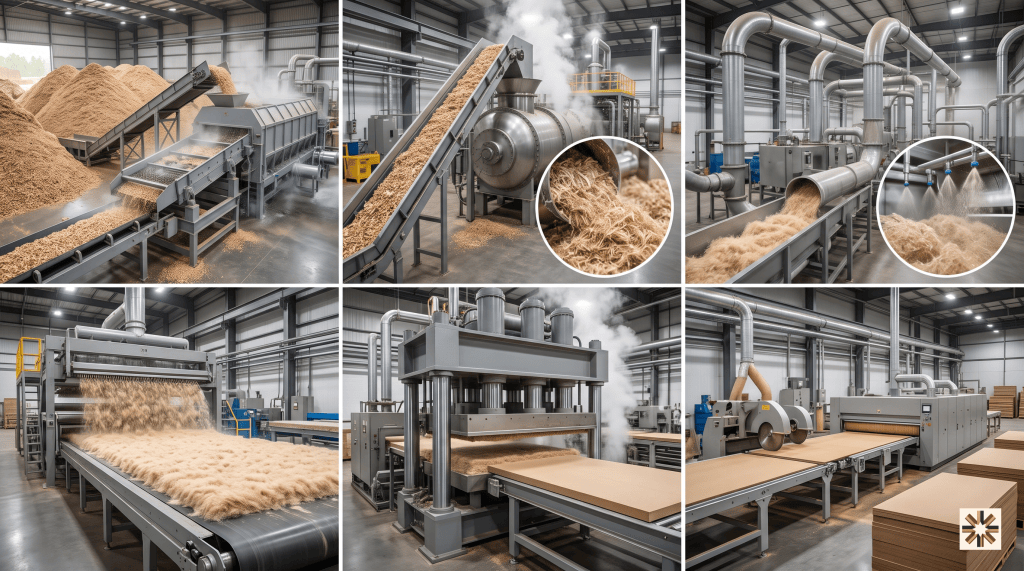
MDF boards are manufactured through a series of industrial processes.
- Wood preparation: Wood chips are cleaned and processed into fine fibres.
- Fibre treatment: The fibres are dried and mixed with resin binders, wax, and other additives.
- Mat formation: The treated fibres are distributed evenly to form a continuous mat.
- Hot pressing: The mat is compressed under controlled heat and pressure to create a dense, solid board.
- Sanding and finishing: The board is trimmed, sanded to the required thickness, and prepared for further finishing or distribution.
The result is a board with relatively uniform density and a smooth surface on both sides. These properties make MDF particularly suitable for painted furniture, decorative panels, and applications requiring precise cutting or routing.
What Are the Different Types of MDF Boards?
MDF boards are available in different grades, densities, and surface finishes to suit various furniture and interior applications. While standard MDF is commonly used for furniture in dry indoor spaces, specialised variants offer additional properties such as improved moisture resistance, reduced weight, or fire resistance.
Here are common types of MDF boards:-
1. Standard MDF
Standard MDF, also called general-purpose MDF, is commonly used for indoor furniture and decorative applications where direct exposure to moisture is unlikely.
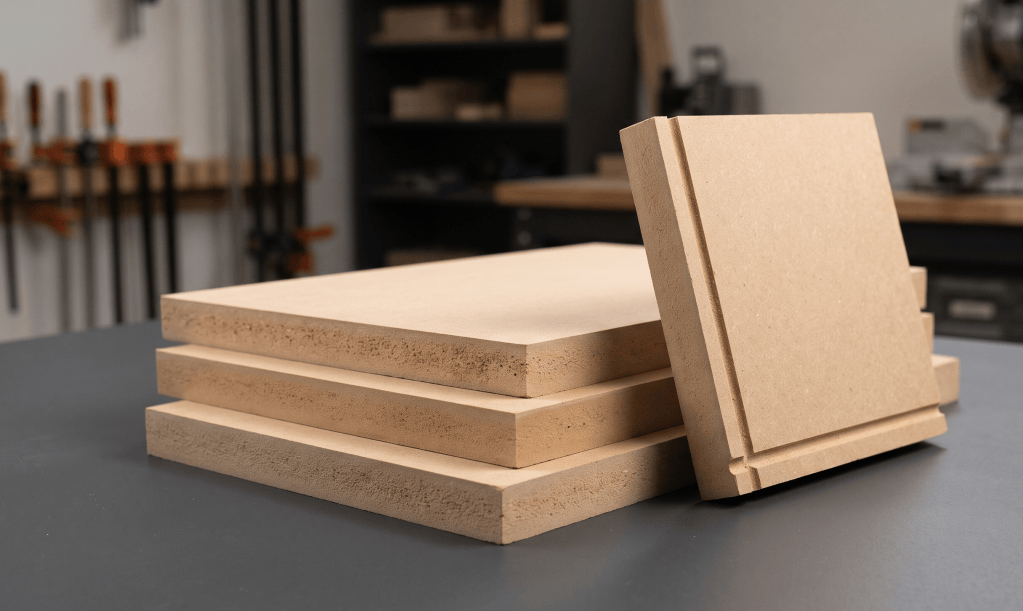
Its smooth, uniform surface makes it suitable for painting, laminating, and creating detailed decorative designs.
Common applications: Wardrobes, TV units, bookshelves, cabinet shutters, decorative wall panels, and furniture components in dry areas.
2. Moisture-Resistant MDF
Moisture-resistant MDF is manufactured using specially formulated binders and additives that improve its resistance to moisture compared with standard MDF.
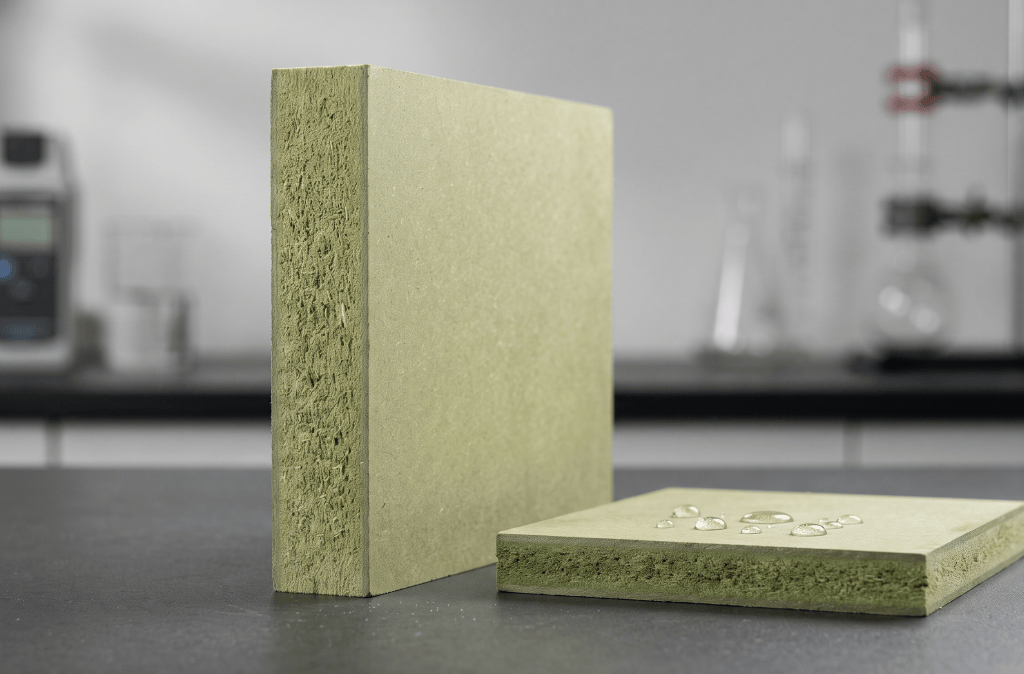
It is designed for applications where occasional humidity or limited moisture exposure is expected. However, moisture-resistant MDF is not waterproof and can still swell or deteriorate when exposed to prolonged water contact.
Common applications: Kitchen cabinet components, furniture in humid environments, and interior panels where moisture resistance is required.
3. High-Density High Moisture Resistance (HDHMR) Boards
HDHMR boards are engineered wood panels manufactured for higher density and improved moisture resistance. Although frequently compared with MDF, HDHMR is generally marketed as a separate product category with its own performance specifications.
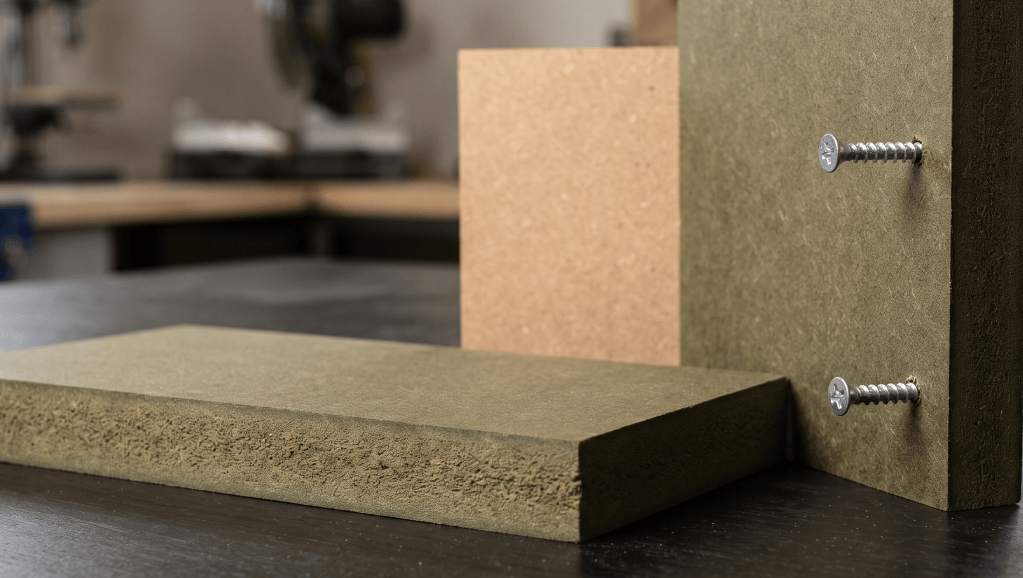
These boards are commonly selected for furniture applications requiring improved screw-holding capacity, dimensional stability, and moisture resistance. Actual performance varies by manufacturer and product grade.
Common applications: Kitchen cabinets, wardrobe shutters, bathroom vanity components, and furniture in areas with higher humidity, provided the product is suitable for the intended exposure.
4. Fire-Retardant MDF
Fire-retardant MDF contains additives or treatments designed to improve its reaction-to-fire performance.
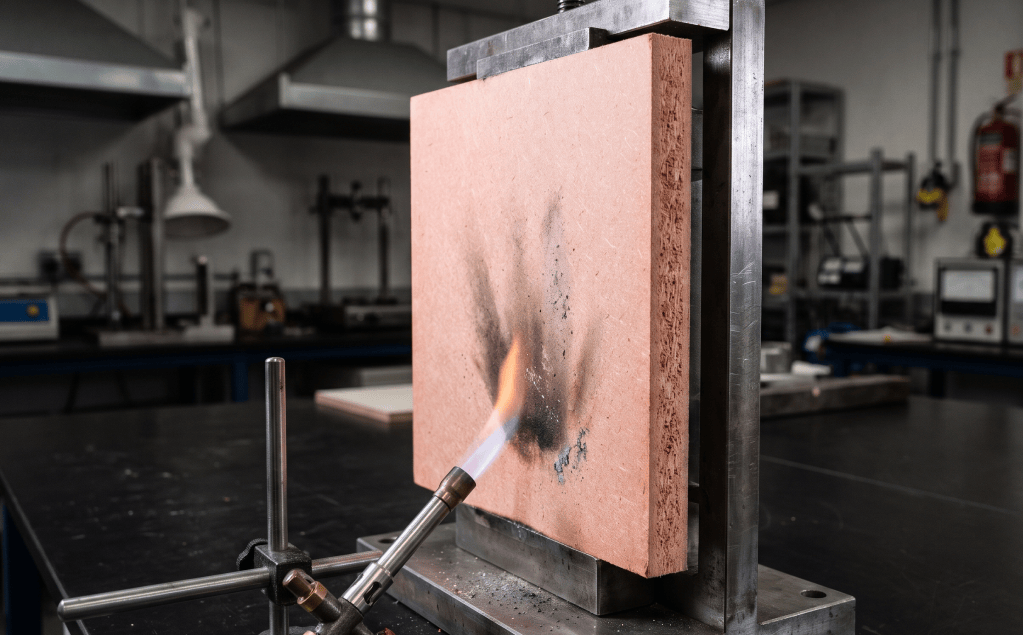
These boards are used in projects where specified fire-performance requirements apply. They may slow flame spread under particular test conditions, but they are not fireproof.
Common applications: Commercial interiors, office partitions, wall panels, and furniture components in buildings with applicable fire-safety requirements.
5. Pre-Laminated MDF
Pre-laminated MDF comes with a decorative surface applied during manufacturing, eliminating the need for separate surface lamination for many applications.
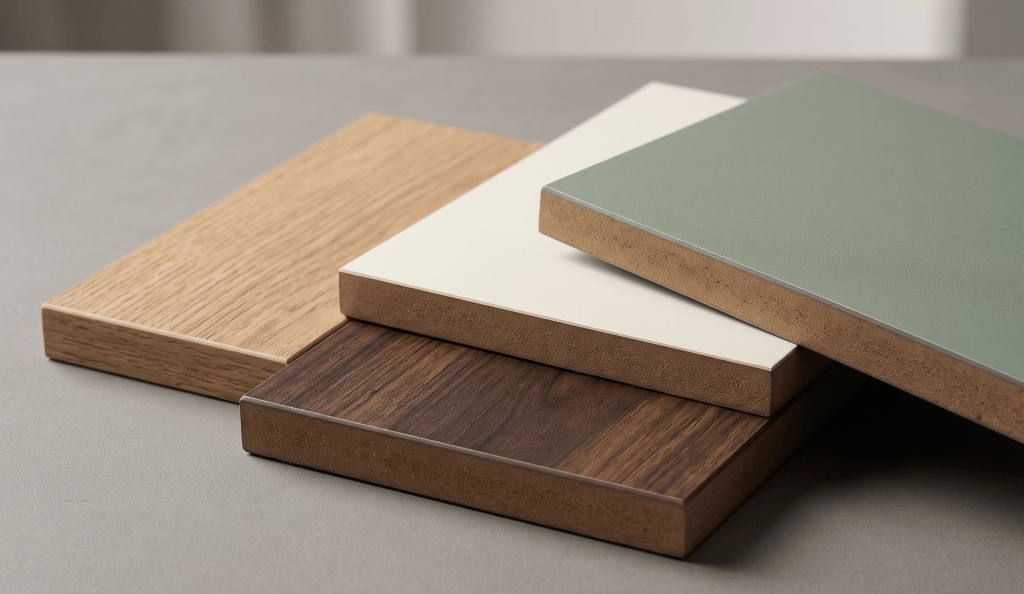
It is available in different colors, textures, and finishes, including wood-grain patterns and solid colors. Depending on the product, the decorative surface may be applied to one or both sides.
Common applications: Modular furniture, wardrobes, office desks, cabinets, shelving, and decorative furniture panels.
6. Lightweight MDF
Lightweight MDF is manufactured with a lower density than conventional MDF, making it easier to transport, handle, and install.
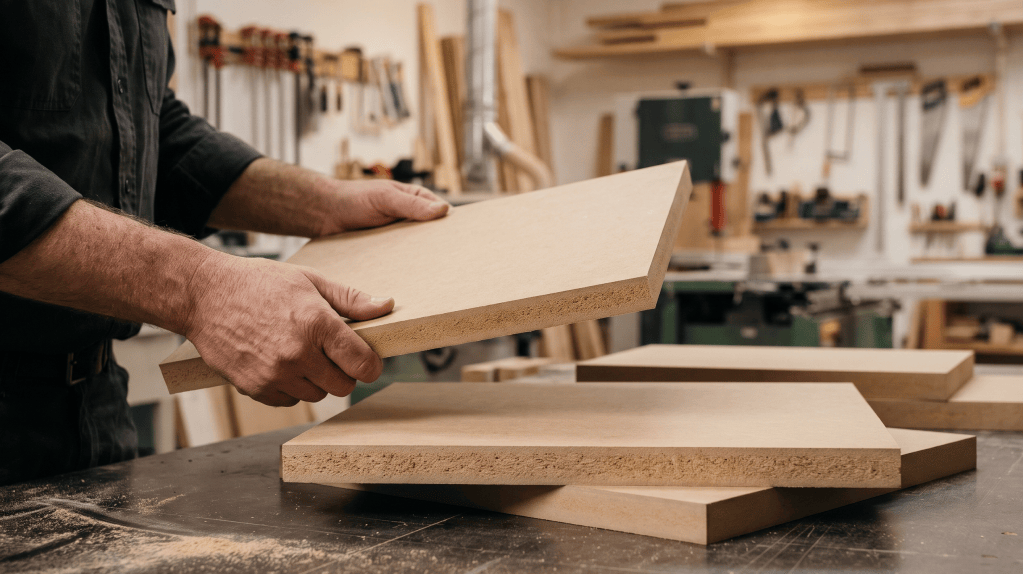
It is useful for applications where reducing furniture or panel weight is important. However, lower-density boards may have different strength and fastening characteristics, so their suitability should be checked before use.
Common applications: Decorative panels, lightweight furniture components, exhibition displays, and selected interior fittings.
What Are the Most Common Uses of MDF Boards?
Medium-density fibreboard is widely used in furniture manufacturing and interior design because of its smooth surface, uniform composition, and ability to accommodate detailed cuts and finishes. MDF can be painted, laminated, routed, or shaped into decorative components, making it suitable for both residential and commercial interiors.
However, the suitability of MDF depends on the board grade, thickness, expected load, and exposure to moisture. Here are some of its most common applications.
1. Wardrobes and Storage Cabinets
MDF is commonly used for wardrobe shutters, cabinet doors, internal partitions, and decorative storage units. Its smooth surface makes it particularly suitable for painted wardrobes with matte, glossy, or textured finishes.
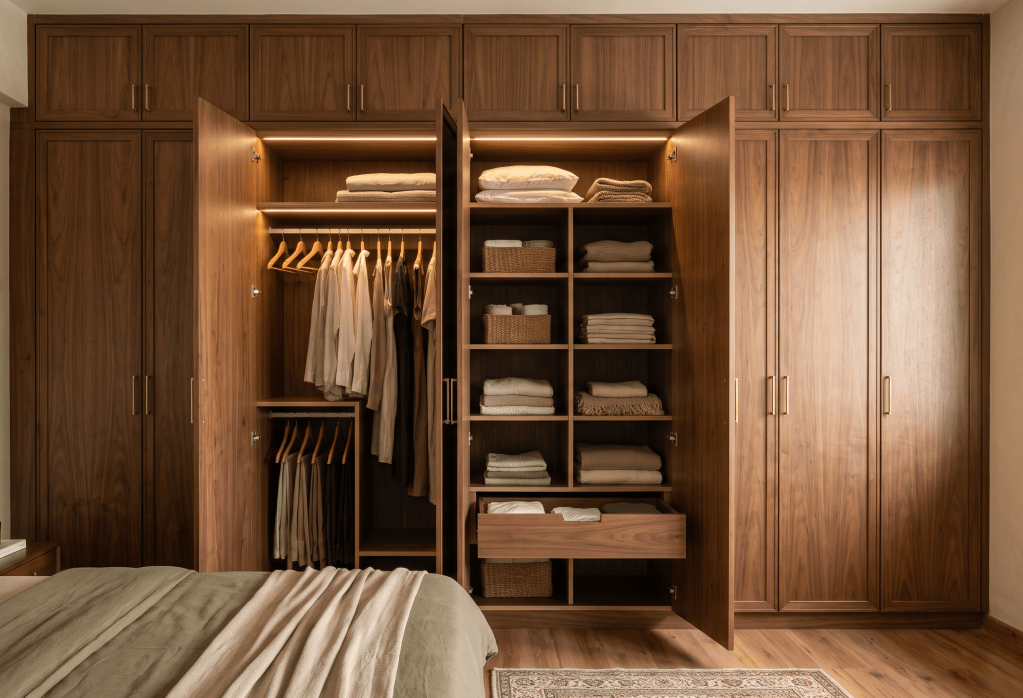
MDF also allows manufacturers to create routed patterns and decorative profiles on wardrobe shutters without the natural grain variations found in solid wood.
For wardrobe shelves and other components carrying substantial weight, the board thickness, support spacing, and load requirements must be considered.
2. TV Units and Entertainment Furniture
TV units often combine storage cabinets, open shelves, decorative panels, and concealed compartments. MDF works well for many of these components, particularly where a uniform painted or laminated finish is required.
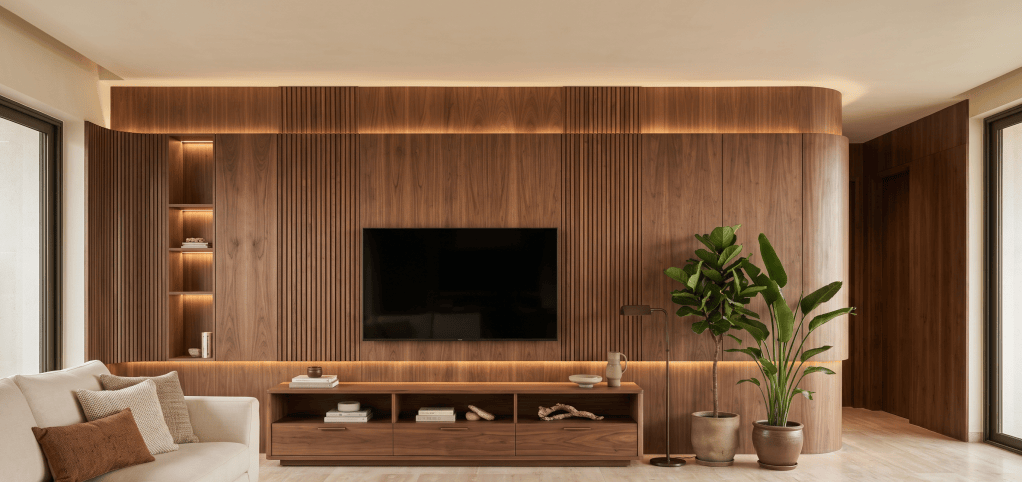
Its machinability allows carpenters to create curved edges, recessed designs, and decorative patterns.
However, shelves intended to support heavy televisions or electronic equipment require appropriate thickness and structural support to prevent bending over time.
3. Kitchen Cabinet Shutters
MDF is used for kitchen cabinet shutters, especially in modular kitchens featuring painted or routed door designs.
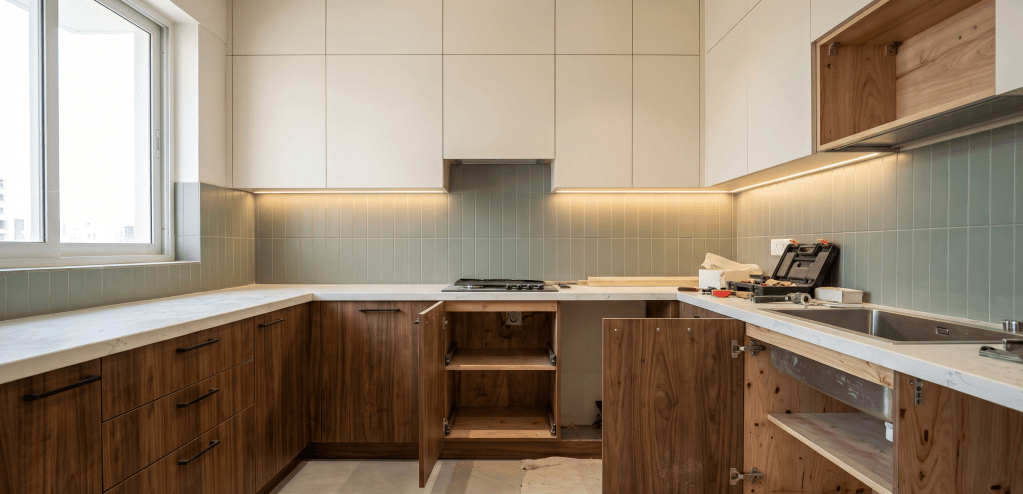
Moisture-resistant MDF may be considered for kitchen applications because it offers better resistance to humidity than standard MDF. However, cut edges, screw holes, and exposed surfaces require proper sealing.
Areas frequently exposed to standing water, plumbing leaks, or persistent dampness may require alternative materials with better water resistance.
4. Wall Panels and Decorative Mouldings
Decorative wall panelling is one of the most popular interior applications of MDF. The material can be routed into grooves, geometric patterns, fluted designs, and other decorative profiles.
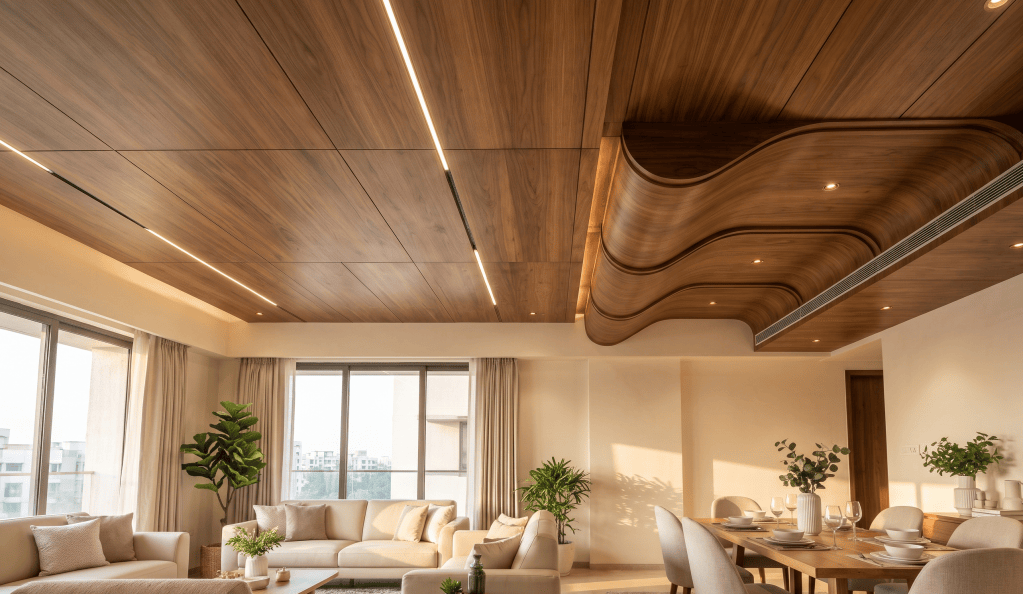
MDF is also used for wall trims, skirting boards, cornices, and painted mouldings.
Its smooth surface helps achieve consistent paint finishes across large decorative installations. However, the board grade and installation method should be selected according to the wall’s moisture conditions.
5. Office Furniture and Workstations
MDF is commonly used in office desks, storage cabinets, drawer fronts, partitions, and workstation components.
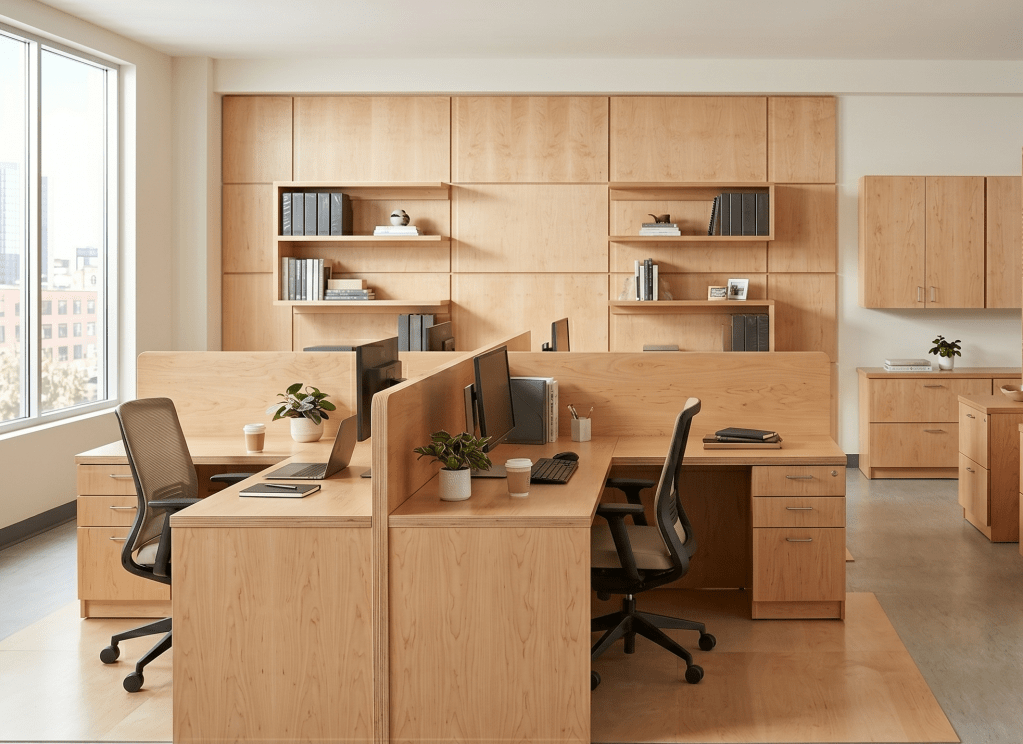
Pre-laminated MDF is particularly useful for office furniture because it provides a factory-finished decorative surface, reducing the need for additional finishing work.
For large desk surfaces and shelves, appropriate panel thickness, edge support, and reinforcement are necessary to maintain stability under regular use.
6. Retail Displays and Shop Interiors
Retail stores frequently use MDF for display counters, product stands, wall-mounted displays, and decorative fixtures.
MDF can be cut into customized shapes, making it useful for creating branded displays, exhibition stands, and temporary installations.
Painted and laminated finishes also allow retailers to maintain a consistent appearance across different fixtures. For displays that are frequently dismantled or moved, fastening durability and board weight should be considered.
7. Doors and Decorative Furniture Components
MDF is used for decorative door skins, cabinet doors, routed furniture panels, and selected interior door components.
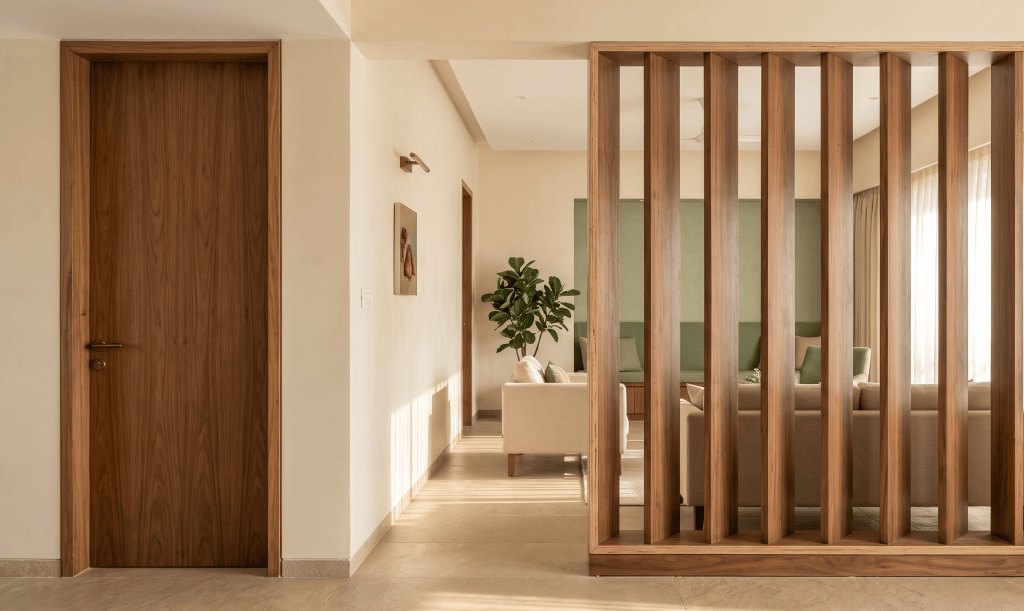
Its smooth surface makes it suitable for painted doors featuring recessed panels, grooves, or other decorative details.
However, MDF panels should not automatically be treated as substitutes for complete door assemblies. Their suitability depends on the door construction, hardware requirements, dimensions, and installation conditions.
MDF vs Plywood: Which Material Should You Choose?
MDF and plywood are two commonly used engineered wood products for furniture and interior applications. While both can be used for wardrobes, cabinets, shelves, and decorative furniture, they differ in construction, strength, moisture resistance, and finishing characteristics.
MDF is made from compressed wood fibres, whereas plywood is manufactured by bonding multiple layers of wood veneers together. This difference influences how each material performs under load, handles moisture, holds screws, and responds to cutting or finishing.
| Comparison factor | MDF | Plywood |
| Composition | Compressed wood fibres bonded with resin | Multiple layers of wood veneers bonded together |
| Surface finish | Smooth, uniform surface suitable for painting | Suitable for laminates, veneers, and painting |
| Strength | Suitable for many furniture components but less resistant to bending | Generally stronger for load-bearing furniture applications |
| Moisture resistance | Standard MDF is vulnerable to water damage | Depends on grade, such as MR, BWR, or BWP |
| Screw holding | Requires careful fastening, particularly near edges | Generally offers better screw-holding strength |
| Weight | Often heavier than comparable plywood | Typically lighter at similar thicknesses |
| Cutting and shaping | Well suited for routing and decorative profiles | Can be cut and shaped but may splinter |
| Price | Standard MDF is often more affordable | Generally costs more, depending on grade and brand |
| Common applications | Decorative panels, cabinet shutters, painted furniture | Furniture frames, cabinets, shelves, and load-bearing components |
When Should You Choose MDF?
MDF is a suitable option when the furniture design prioritizes a smooth surface, decorative detailing, and consistent finishing.
For example, painted wardrobe shutters, TV units with routed patterns, and decorative wall panels can benefit from MDF’s uniform structure. Standard MDF is generally more appropriate for dry interior spaces, while moisture-resistant variants may be considered where humidity is a concern.
MDF can also be economical for furniture components that do not require high load-bearing strength.
When Should You Choose Plywood?
Plywood is generally preferred for furniture components requiring higher strength, better screw-holding performance, or greater resistance to bending.
For example, bed frames, heavily loaded shelves, furniture carcasses, and cabinets subjected to repeated use may benefit from suitable plywood grades.
Plywood also offers several moisture-resistance grades. BWR and BWP plywood can be considered for applications where greater protection against moisture is required, provided the selected product meets the applicable specifications.
Which MDF Board Thickness Is Best for Furniture?
MDF boards are available in different thicknesses to suit various furniture and interior applications. Common options include 3mm, 6mm, 9mm, 12mm, 18mm, and 25mm, although availability varies by manufacturer.
The right MDF thickness depends on the furniture’s purpose, expected weight, dimensions, and support structure. Thinner boards are generally used for decorative panels and backing, while thicker boards are preferred for cabinet shutters, shelves, and furniture components requiring greater stiffness.
| MDF thickness | Common applications | Key considerations |
| 3mm | Decorative panels, drawer bottoms, furniture backing | Requires adequate support |
| 6mm | Cabinet backs, decorative wall panels, lightweight partitions | Suitable for applications with limited load |
| 9mm | Wall panelling, decorative furniture components, selected cabinet backs | Support and fixing method matter |
| 12mm | Cabinet components, decorative panels, lightweight shelving | Not suitable for every load-bearing application |
| 18mm | Wardrobe shutters, cabinet doors, shelves, furniture panels | Common furniture thickness; wide spans may need reinforcement |
| 25mm | Thick furniture panels, countertops, selected desk surfaces | Heavier and generally more expensive |
Before purchasing, confirm the required thickness with your carpenter or furniture manufacturer. At Digna Ply, you can discuss your furniture measurements and intended application to identify suitable MDF board thicknesses for your project.
What Are the Advantages and Disadvantages of MDF?
Medium-density fibreboard is a popular choice for furniture and interior applications because of its smooth surface, consistent quality, and suitability for decorative designs. However, MDF also has limitations, particularly when exposed to moisture, heavy loads, or repeated fastening.
Understanding the advantages and disadvantages of MDF can help you determine whether it is suitable for your furniture project.
Advantages of MDF Boards
- Smooth surface for finishing: MDF has a uniform surface without natural wood grain or knots, making it suitable for painting, laminating, and decorative finishes.
- Easy to cut and shape: Its consistent composition allows carpenters to create grooves, curved edges, and detailed patterns using appropriate woodworking tools.
- Cost-effective: Standard MDF is often less expensive than comparable plywood products, making it an economical option for decorative furniture and interior panels.
- Consistent thickness and density: MDF is manufactured under controlled conditions, providing relatively uniform dimensions and material properties across the board.
- Multiple finishing options: MDF can be painted, laminated, veneered, or covered with decorative films to achieve different furniture styles.
- Wide range of applications: MDF is used for wardrobe shutters, TV units, wall panels, office furniture, cabinets, and decorative mouldings.
Disadvantages of MDF Boards
- Susceptible to moisture damage: Standard MDF can absorb water, swell, and lose strength when exposed to excessive moisture. Even moisture-resistant variants require protection against prolonged water exposure.
- Lower bending strength than many plywood grades: MDF may sag under sustained loads, particularly when used for long shelves without adequate support.
- Weaker screw-holding performance: Screws installed near edges or repeatedly removed and reinstalled can damage the board. Suitable fasteners and pilot holes help reduce this risk.
- Relatively heavy: MDF can be heavier than plywood of similar dimensions, which may affect transportation, installation, and furniture hardware requirements.
- Edges require additional finishing: Cut MDF edges are more porous than the faces and generally need sealing before painting or other finishing.
- Produces fine dust during cutting: MDF machining generates fine wood and resin dust. Proper dust extraction, ventilation, and suitable respiratory protection are important during fabrication.
MDF works particularly well for decorative furniture, painted shutters, and interior panels. However, plywood or other engineered boards may be more appropriate for furniture requiring higher load capacity, repeated fastening, or greater moisture resistance.
The best material is not necessarily the strongest or most expensive option. It is the one whose properties match the intended application.
What Should You Check Before Buying MDF Boards?
Buying MDF requires more than comparing prices and choosing a thickness. Two boards with similar dimensions may differ in density, moisture resistance, surface quality, and manufacturing specifications. These differences can affect furniture durability, finishing quality, and overall cost.
Before purchasing MDF boards for furniture or interior applications, consider the following factors.
i) Check the MDF Grade and Intended Application
Start by identifying where and how the board will be used. Standard MDF is generally suitable for dry indoor furniture, while moisture-resistant MDF may be preferable for areas exposed to humidity.
For decorative furniture, surface quality and machinability may be priorities. For kitchen cabinets, moisture resistance and proper edge sealing become more important.
Avoid paying extra for specialised grades unless their properties are necessary for your application.
ii) Confirm the Thickness and Sheet Dimensions
MDF boards are commonly available in thicknesses ranging from 3mm to 25mm, with additional options depending on the manufacturer.
An 8 × 4 ft. sheet is a common market size, but other dimensions may be available.
Confirm the thickness required for your furniture components before placing an order. For example, an 18mm board may be suitable for many wardrobe shutters, but shelves carrying heavy loads may need additional support.
Also, calculate the number of sheets required based on your cutting plan to minimise material wastage.
iii) Check Moisture Resistance and Emission Certifications
Check the manufacturer’s technical specifications to verify the board’s moisture-resistance performance.
Products marketed as moisture-resistant or HDHMR can have different performance characteristics. Do not assume that every board carrying these descriptions is suitable for direct water exposure.
For indoor furniture, also check formaldehyde emission information. Manufacturers may provide classifications such as E1 or E0, but these labels should be assessed against the specific testing standard and certification documentation.
iv) Inspect Board Quality and Surface Finish
Before purchasing, inspect the MDF sheets for visible manufacturing or storage-related defects.
Look for:
- Surface consistency: The board should have an even surface without visible swelling, cracks, or major imperfections.
- Edge condition: Check for chipped, crushed, or damaged edges.
- Board flatness: Avoid sheets showing noticeable bending or warping.
- Thickness consistency: Confirm that the sheet matches the specified dimensions and thickness.
- Moisture damage: Check for swollen edges, discolouration, or other signs of improper storage.
For painted furniture, the quality of the MDF surface is particularly important because imperfections can become visible after finishing.
v) Compare Prices and Manufacturer Details
When comparing MDF quotations, ensure that you are evaluating boards with similar specifications.
Check the manufacturer, product grade, thickness, sheet dimensions, surface finish, and applicable warranty.
Also, confirm whether the quoted price includes GST, cutting charges, and transportation.
A cheaper MDF board may not provide the same performance as another product with better moisture resistance, density, or finishing characteristics.
The right MDF board should match your furniture requirements without adding unnecessary material costs. Before buying, share your measurements, preferred finish, and application with your carpenter or supplier to confirm the appropriate specifications.
Choose Digna Ply for Your MDF Board Requirements
At Digna Ply, we help you choose suitable boards based on your furniture design, required thickness, surface finish, and budget. Whether you’re planning a new wardrobe, renovating your kitchen, or sourcing MDF for a commercial interior project, you can discuss your requirements before making a purchase.
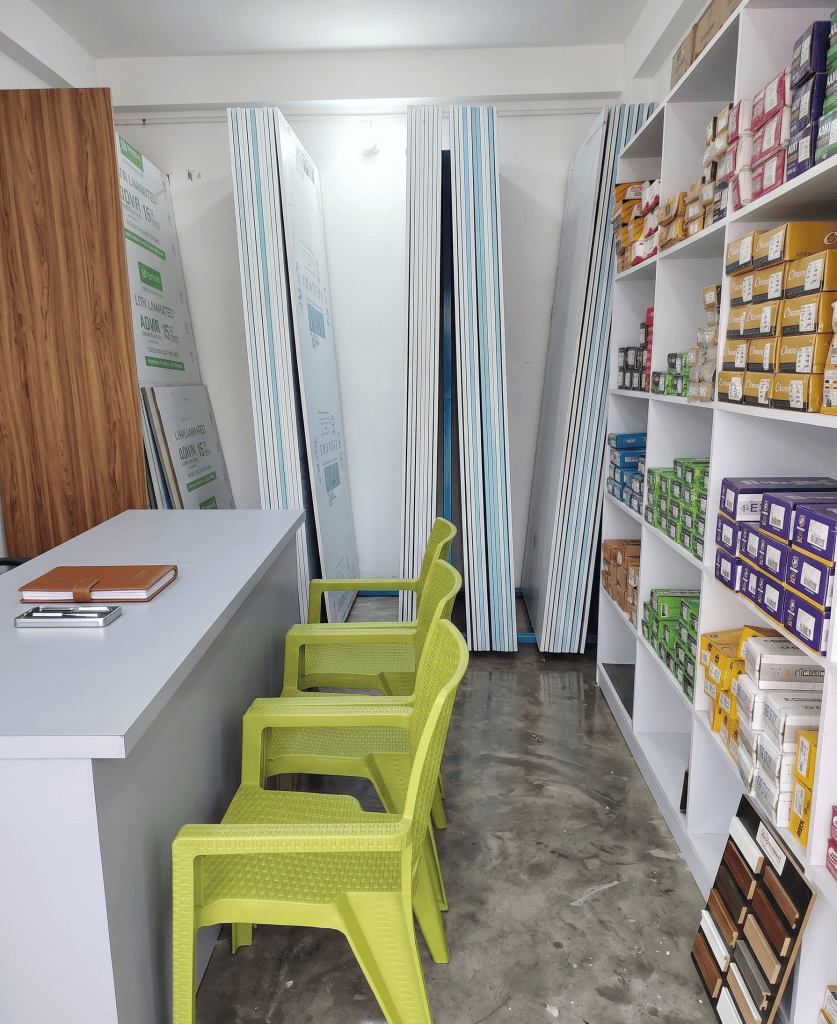
Visit Digna Ply or contact us on WhatsApp with your furniture measurements, material list, or preferred MDF specifications. We’ll help you compare suitable options and get a quotation for your project.
Frequently Asked Questions
Is MDF board good for making furniture?
Yes, MDF is suitable for wardrobes, cabinet shutters, TV units, decorative panels, and other indoor furniture. Its smooth surface makes it particularly useful for painted and routed designs. However, furniture components carrying heavy loads or exposed to moisture may require specialized MDF grades, plywood, or additional structural support.
Can MDF boards be used for kitchen cabinets?
Yes, moisture-resistant MDF can be used for kitchen cabinet shutters and selected components. Proper edge sealing and surface finishing are necessary to reduce moisture absorption. For areas exposed to frequent water contact, such as under-sink cabinets, BWP plywood or another suitable water-resistant material may be preferable.
What is the difference between MDF and HDHMR?
MDF is an engineered board made from compressed wood fibres and resin binders. HDHMR refers to high-density, high-moisture-resistance engineered panels designed for improved moisture resistance and fastening performance. HDHMR boards generally cost more than standard MDF, but actual performance depends on the manufacturer’s specifications.
Is 18mm MDF suitable for wardrobes?
Yes, 18mm MDF is commonly used for wardrobe shutters, cabinet panels, and selected shelves. However, large shutters may require additional hinges, while long shelves may need reinforcement to prevent sagging. The appropriate thickness depends on the furniture dimensions, weight, and support structure.
How much does an MDF sheet cost in India?
An 18mm standard MDF sheet measuring 8 × 4 feet may cost approximately ₹1,440 to ₹2,400, based on the indicative ranges discussed above. Prices vary by manufacturer, grade, density, and location. Moisture-resistant, HDHMR, and pre-laminated boards generally cost more. Confirm current prices and GST with your supplier before purchasing.
Can MDF boards be painted directly?
MDF can be painted, but applying paint directly without preparation may produce an uneven finish. The surface should be cleaned, lightly sanded, and primed before painting. Exposed edges require additional sealing because they absorb more paint than the board’s faces.
Is MDF safe for indoor furniture?
MDF can be suitable for indoor furniture when it meets applicable formaldehyde emission requirements and is used as intended. Check manufacturer documentation for emission classifications and the testing standards used. During cutting and sanding, proper dust extraction, ventilation, and respiratory protection are necessary to reduce exposure to fine dust.
How long does MDF furniture last?
MDF furniture can last for many years when manufactured correctly, installed with adequate support, and protected from excessive moisture. Its lifespan depends on board quality, thickness, furniture construction, usage, and maintenance. Water exposure, overloading, and repeated damage to fastening points can shorten its service life.


Leave a Reply