Both materials, MDF and plywood, are widely used in homes, offices, retail stores, and interior projects. You will find them in wardrobes, kitchen cabinets, shelves, beds, wall panels, partitions, and decorative furniture. However, they are not made the same way, and they do not perform the same way.
Medium-Density Fibreboard (MDF) is often preferred when you need a smooth painted finish, clean edges, or decorative CNC work. Plywood is usually preferred when the furniture needs better strength, screw holding, and resistance to daily wear. For example, a painted wall panel may work well with MDF, but a kitchen cabinet or heavy storage shelf will usually need plywood for better durability.
In this guide, we will compare MDF and plywood across strength, moisture resistance, finishing, workability, cost, and best use cases so you can choose the right material for your project.
What Is Medium-Density Fibreboard (MDF) and What Is Plywood?
Before comparing MDF and plywood, it is important to know how both materials are made. Their structure decides how strong they are, how they react to moisture, how well they hold screws, and where they should be used.
Medium-Density Fibreboard
MDF stands for Medium Density Fiberboard. It is made by breaking wood into fine fibers and mixing them with resin and wax. This mixture is then compressed under high heat and pressure to form smooth, dense boards.
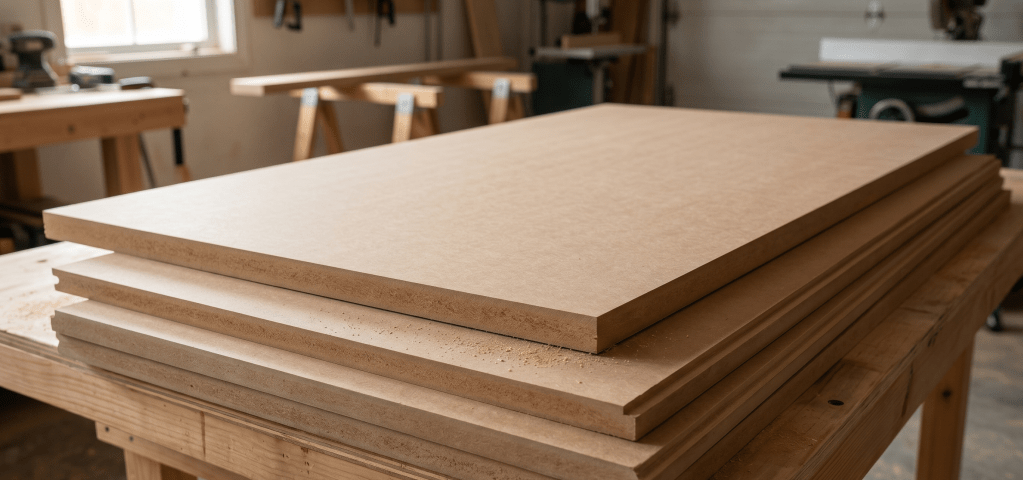
The biggest advantage of MDF is its smooth and even surface. It does not have natural wood grain, knots, or visible layers. This makes it a good choice for painted furniture, decorative panels, cabinet shutters, wall panels, and CNC-cut designs. If you want a clean painted finish without visible wood texture, MDF can work well.
However, MDF is not the best choice for every furniture application. It is heavier than plywood and does not hold screws as strongly, especially near the edges. It can also swell if exposed to water or high moisture for a long time. That is why MDF is mostly used for indoor furniture and decorative work in dry areas.
Plywood
Plywood is made by bonding thin layers of wood veneer together. These layers are placed in alternating grain directions, which gives plywood better strength, balance, and stability. This cross-layered structure is one of the main reasons plywood performs well in furniture and interior applications.
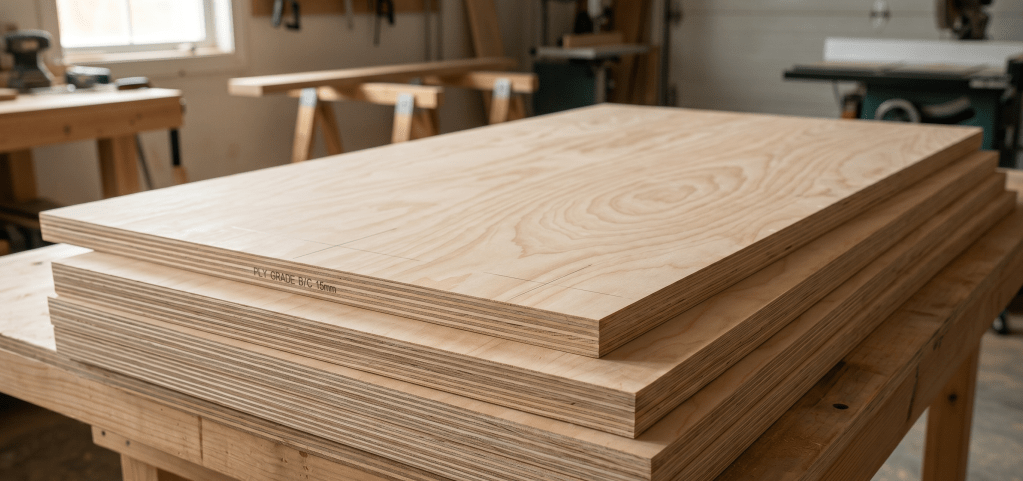
Plywood is commonly used for wardrobes, kitchen cabinets, beds, shelves, tables, partitions, and storage units. It can handle more weight than MDF and has better screw holding capacity. This makes it suitable for furniture that needs to stay strong for years.
Another major advantage of plywood is that it is available in different grades. For example, commercial plywood can be used for general indoor furniture, while BWR, BWP, and marine plywood are better suited for areas that may face moisture. This gives plywood more flexibility across different types of projects.
Key Differences Between MDF and Plywood
MDF and plywood are both engineered boards, but they are built for different purposes. MDF works well when you need a smooth surface and controlled finish. Plywood works better when strength, durability, and long-term performance matter more.
Here is a simple comparison between MDF and Plywood:
| Factor | MDF | Plywood |
| Material structure | Made from wood fibers, resin, and wax | Made from thin layers of wood veneer |
| Strength | Suitable for light to medium use | Stronger and better for heavy-use furniture |
| Screw holding | Weaker, especially near edges | Better screw holding capacity |
| Moisture resistance | Can swell when exposed to moisture | Performs better, especially in waterproof grades |
| Surface finish | Smooth and ideal for paint | Suitable for laminate, veneer, or polish |
| Weight | Usually heavier | Usually lighter and stronger |
| Cost | Generally more affordable | Usually costlier than MDF |
| Best use | Painted panels, decorative work, shutters, CNC designs | Cabinets, shelves, wardrobes, kitchens, beds, tables |
The biggest difference between MDF and plywood is their internal structure. MDF has a uniform fiber-based core, while plywood has multiple layers of wood veneer. This makes MDF smoother, but plywood stronger. If your project needs clean paint, carved designs, or decorative panels, MDF can be a practical choice. If your project needs load-bearing strength, better screw grip, and long-term use, plywood is usually the better option.
Another major difference is how both materials handle moisture. MDF can absorb water and swell if it is not properly sealed. Plywood, especially BWR, BWP, or marine-grade plywood, performs better in areas where moisture is common. This is why plywood is often preferred for kitchens, bathrooms, and high-use furniture.
Finishing also plays a big role. MDF gives a flat, smooth surface, which makes it easier to paint. Plywood has natural grain and layered construction, so it works better with laminate, veneer, or polish. In simple terms, MDF is better for appearance-focused decorative work, while plywood is better for furniture that needs strength and longer life.
MDF vs Plywood: Which Is Better for Different Uses?
The best material depends on where you plan to use it. MDF and plywood can both be used in furniture, but each one has a better fit depending on load, moisture, finish, and daily usage.
i) For Kitchen Cabinets
Plywood is usually a better choice for kitchen cabinets. Kitchens are exposed to moisture, heat, steam, oil, and regular cleaning. The cabinet boxes also need to hold weight from utensils, appliances, containers, and hardware.
For this reason, BWR, BWP, or marine-grade plywood works better than MDF in kitchens. These plywood grades offer better resistance to moisture and daily wear. MDF may still be used for painted shutters in some kitchens, but it should be properly sealed from all sides.
ii) For Wardrobes
Both MDF and plywood can be used in wardrobes, but plywood is better for the main structure. Wardrobes need to handle the weight of clothes, drawers, hangers, mirrors, and fittings. Plywood gives better screw holding and long-term stability.
MDF can be used for wardrobe shutters, decorative panels, or painted external surfaces in dry rooms. However, if the wardrobe is placed near a damp wall or in a room with high humidity, plywood is the safer choice.
iii) For Shelves and Storage Units
Plywood is better for shelves and storage units because it can carry more weight. Books, files, kitchen items, tools, and storage boxes can put steady pressure on shelves over time. MDF may bend or sag faster under heavy load, especially if the shelf is wide and unsupported.
If you are making a bookshelf, TV unit, loft storage, or heavy-duty cabinet, plywood is usually the better option.
iv) For Painted Furniture and Wall Panels
MDF works very well for painted furniture and wall panels. Its smooth surface gives a clean finish, and it does not show natural grain. This makes it useful for modern interiors where the design needs a flat, painted look.
MDF is also preferred for decorative CNC cutting because it has a uniform core. It can be shaped into patterns, grooves, and designs more easily than plywood. That is why it is commonly used for wall panels, partitions, decorative shutters, and interior accents.
v) For Bathrooms and Moisture-Prone Areas
Plywood is the better choice for bathrooms and moisture-prone areas. Bathroom vanities, under-sink cabinets, and utility storage units need a board that can handle humidity and occasional water exposure.
Marine plywood or good-quality BWP plywood is more suitable for these areas. MDF should generally be avoided in bathrooms unless it is moisture-resistant MDF and fully sealed. Even then, plywood is a more dependable option for long-term use.
Choose Digna Ply for Strong, Reliable, and Long-Lasting Plywood
Digna Ply offers plywood options for furniture, cabinets, kitchens, wardrobes, partitions, and other interior projects. Whether you are a homeowner, carpenter, contractor, architect, interior designer, or furniture maker, you can choose plywood based on the project type, thickness, grade, moisture needs, and budget.
Digna Ply can also help you avoid confusion between MDF, commercial plywood, waterproof plywood, and marine plywood. Instead of selecting a board only because it looks affordable, you can choose a material that fits the actual use case. For dry indoor furniture, one grade may work well. For kitchens, bathrooms, or moisture-prone areas, you may need a stronger and more water-resistant plywood option.
If you want furniture that looks good and lasts longer, start with the right board.
If you’re planning your next furniture or interior project, WhatsApp Digna Ply at 8881306046 to choose the right plywood for your needs.
Frequently Asked Questions
Is MDF better than plywood?
MDF is better when you need a smooth surface for painting, decorative panels, or CNC-cut designs. Plywood is better when you need strength, durability, screw holding, and better resistance to daily wear.
Which is better for kitchen cabinets, MDF or plywood?
Plywood is usually better for kitchen cabinets because kitchens face moisture, heat, weight, and regular cleaning. BWR, BWP, or marine plywood is a better choice for long-lasting kitchen cabinets.
Can MDF be used for wardrobes?
Yes, MDF can be used for wardrobe shutters, decorative panels, or painted external surfaces in dry areas. For the main wardrobe structure, plywood is usually a better choice because it holds screws better and stays more stable over time.
Does plywood last longer than MDF?
Yes, plywood usually lasts longer than MDF in most furniture applications. Its layered structure gives it better strength, better screw grip, and better resistance to bending.
Is MDF cheaper than plywood?
MDF is generally more affordable than plywood. However, plywood may offer better long-term value for furniture that needs strength, durability, and regular use.
Which board is best for painted furniture?
MDF is often preferred for painted furniture because it has a smooth and even surface. It gives a clean finish without visible wood grain or layers.
Which is better for shelves, MDF or plywood?
Plywood is better for shelves because it can carry more weight and is less likely to sag over time. MDF can work for light decorative shelves, but it is not ideal for heavy storage.
Can MDF be used in bathrooms?
MDF is not the best choice for bathrooms because it can swell when exposed to moisture. For bathroom vanities and moisture-prone areas, BWP or marine plywood is usually a safer option.


Leave a Reply