Kitchen cabinets face humidity, occasional water exposure, food and spice stains, and frequent use. The plywood you choose for cabinets affects how well the cabinet handles these conditions and how long it retains its shape and strength. Areas around a kitchen sink may need even stronger water resistance. Thickness, core quality, screw-holding capacity, calibration, and budget also need to be considered before choosing a sheet.
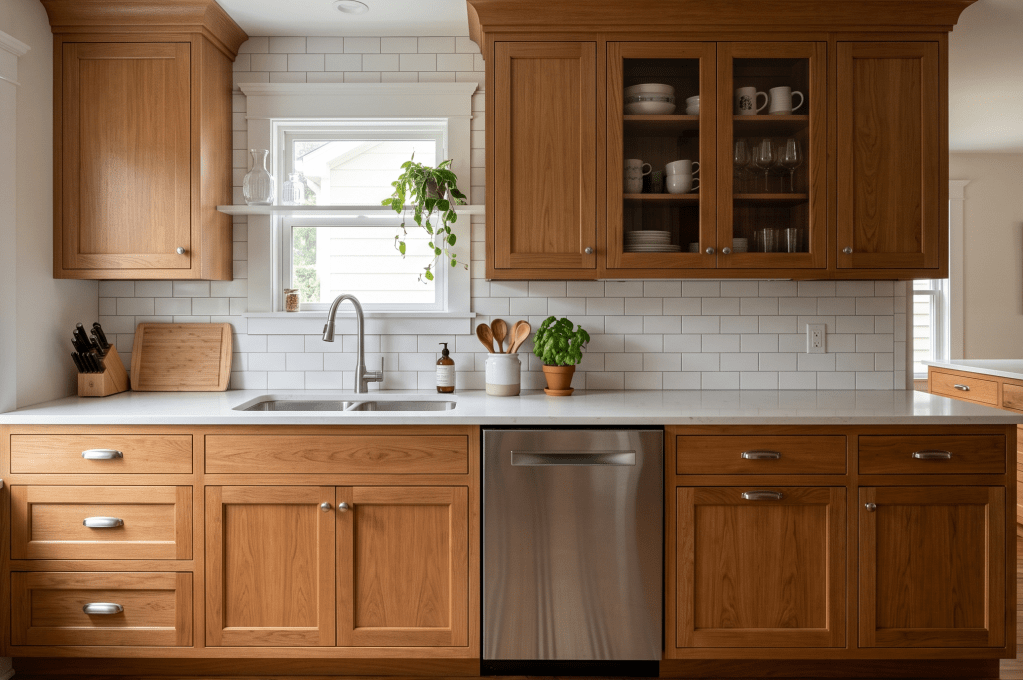
And that’s why there is no single plywood grade that is right for every cabinet. In this article, we’ll compare the different types of plywood for cabinets, their ideal applications, recommended thicknesses, water resistance, pricing, and quality checks so you can choose the right option for kitchen cabinets, wardrobes, and other storage units.
So, let’s jump right into it.
What Types of Plywood Can Be Used for Cabinets?
In India, the most common options for cabinet construction are MR, BWR, BWP, and calibrated plywood. Each serves a different purpose, so choosing a higher grade everywhere is not always necessary.
1. MR Grade Plywood
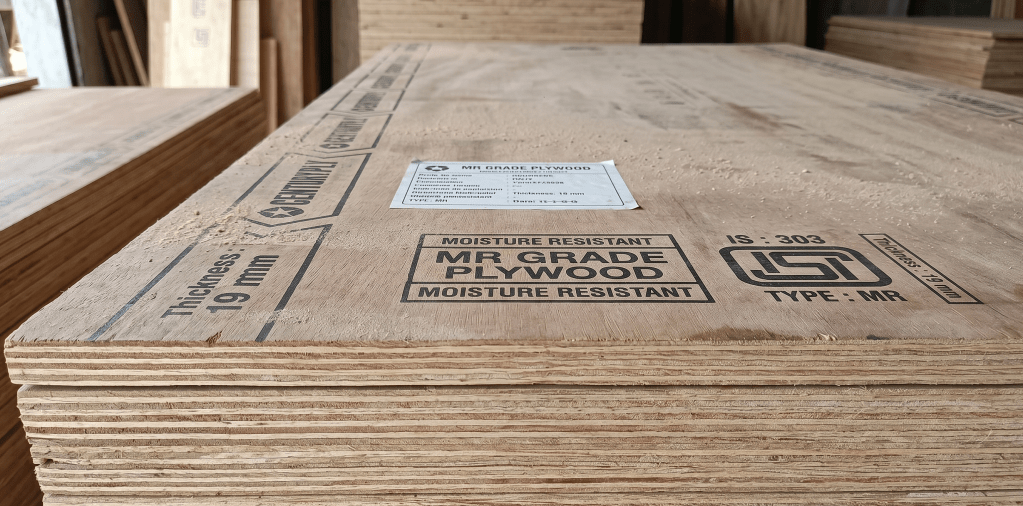
MR, or Moisture Resistant plywood, is mainly suited to dry indoor areas. It can be considered for selected overhead kitchen cabinets where moisture exposure is limited. However, it is not the best choice for sink cabinets or areas that may face leakage, standing water, or frequent dampness.
2. BWR Plywood
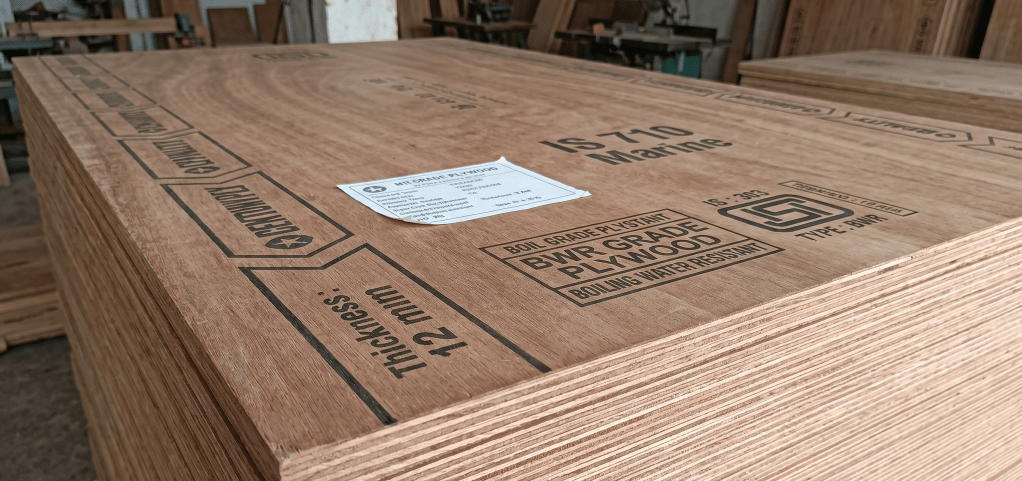
BWR stands for Boiling Water Resistant plywood. It provides better resistance to moisture than MR plywood and is therefore suitable for cabinets that may face occasional dampness or humidity. For cabinets in kitchens, utility areas, and other moderately humid spaces, BWR plywood can offer a practical balance between performance and price. However, areas with a higher possibility of direct water exposure may require BWP plywood instead.
3. BWP Plywood
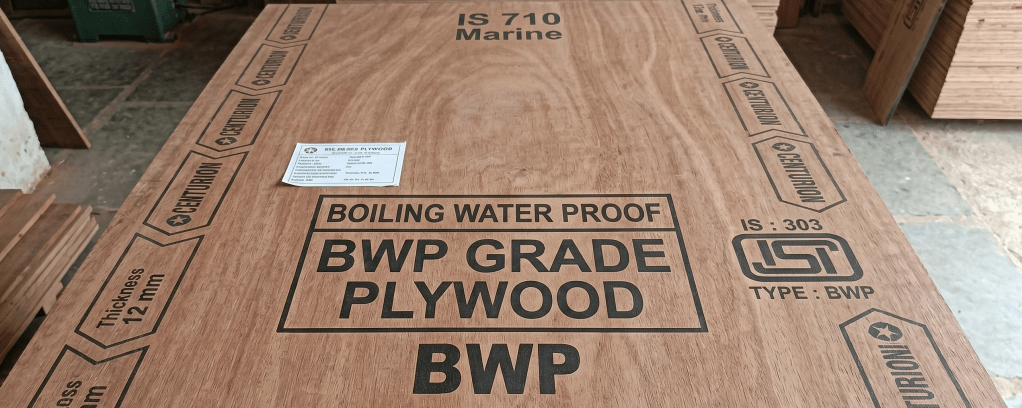
BWP, or Boiling Water Proof plywood, is designed for higher water resistance and is generally preferred for kitchen cabinets and other moisture-prone applications. It is especially useful for base cabinets, cabinets close to plumbing, and other locations where water exposure is more likely. Buyers looking for waterproof plywood for kitchen cabinets will generally find BWP-grade plywood more suitable than MR or BWR grades.
4. Calibrated Plywood
Calibrated plywood refers to plywood that has been manufactured to maintain a more uniform thickness across the sheet. Unlike MR, BWR, and BWP, calibration describes thickness consistency rather than the plywood’s water-resistance grade.
This uniformity is useful in modular cabinet manufacturing where CNC cutting, edge banding, laminates, hinges, and drawer systems require accurate dimensions. Calibrated BWP or BWR plywood is therefore commonly considered for modular kitchens and factory-made cabinets.
Which Plywood Is Best for Kitchen Cabinets?
Kitchen cabinets face more moisture than most other furniture in a home. Steam from cooking, wet utensils, plumbing leaks, sink splashes, and regular floor cleaning can all expose cabinet surfaces and edges to moisture. Because of this, the plywood used in a kitchen should be selected based on where the cabinet is placed and how likely it is to come into contact with water.
For most kitchen cabinets, BWP plywood is usually the safer choice, especially for base cabinets and areas close to the sink or plumbing. BWR plywood can work well in sections with lower moisture exposure, while HDHMR is another option commonly considered for modular kitchens because of its density and moisture resistance.
Here’s a quick comparison of BWP, BWR, and HDHMR for kitchen cabinets:-
| Criteria | BWP Plywood | BWR Plywood | HDHMR |
| Water resistance | High | Moderate to high | High |
| Structural strength | Strong and suitable for load-bearing cabinet sections | Good for general cabinet construction | Dense and rigid |
| Screw holding | Strong when good-quality hardwood-core plywood is used | Good | Good, but performance depends on board quality |
| Suitability near sink | Recommended | Better kept away from regular water exposure | Can be used in moisture-prone areas |
| Best use | Base cabinets, sink-side cabinets, shutters, and high-moisture areas | Overhead cabinets and areas with moderate moisture | Modular shutters, panels, and selected cabinet sections |
| Relative cost | Usually higher | Usually lower than BWP | Varies by brand and density |
BWP plywood is often preferred when long-term water resistance and structural strength are the main concerns. BWR can be a more economical choice for overhead cabinets or sections that stay relatively dry. HDHMR can also work well in modular cabinetry, particularly where smooth machining and consistent board density are important.
You do not necessarily need to use the same material for every cabinet in the kitchen. Use stronger water-resistant plywood in base cabinets and sink areas and choose BWR or another suitable board for sections that have much lower exposure to moisture.
How to Choose Plywood for Different Types of Cabinets
The right plywood depends heavily on where the cabinet is installed and how much moisture, load, and daily use it will face. A kitchen base cabinet, for example, has very different requirements from a bedroom wardrobe or living-room storage unit.
Here’s how to go about choosing plywood for kitchen cabinets:
| Cabinet Type | Recommended Direction |
| Kitchen base cabinets | Prefer BWP plywood because these units are more likely to face spills, floor moisture, and plumbing-related dampness. |
| Under-sink cabinets | Consider IS 710 marine-grade plywood because this is one of the highest water-exposure areas in a kitchen. |
| Kitchen overhead cabinets | BWR or BWP plywood can be used depending on humidity, steam exposure, and budget. |
| Bedroom wardrobes | MR or BWR plywood is usually sufficient if the room remains dry. |
| Bathroom storage cabinets | Use a higher water-resistant grade because humidity and splashes are common. |
| Living-room cabinets | MR or BWR plywood can work well depending on construction quality and expected load. |
| Heavy storage cabinets | Focus on 18mm structural sections, dense core construction, and strong screw-holding capacity. |
For most homes, there is no need to use the most expensive plywood grade for every cabinet. A better approach is to use BWP or marine-grade plywood where water exposure is high and use MR or BWR plywood in drier areas.
The same principle applies to thickness. Structural panels, shutters, and heavily loaded shelves may need thicker plywood, while back panels and drawer bottoms can use thinner sheets. Matching the grade and thickness to the actual cabinet requirement can help control cost without compromising durability.
What Plywood Thickness Should You Use for Cabinets?
Cabinet plywood thickness should be selected according to the role each panel plays. Structural sections need thicker plywood because they carry weight and hold hardware, while back panels and drawer bottoms can usually use thinner sheets.
Follow this thickness guide for cabinet construction:
| Cabinet Component | Common Plywood Thickness |
| Main carcass side panels | 18mm |
| Shelves | 12mm to 18mm |
| Shutters | 18mm |
| Drawer sides | 12mm |
| Drawer bottoms | 6mm to 9mm |
| Cabinet back panels | 6mm to 9mm |
18mm plywood is commonly used for the main structural parts of cabinets, including side panels, shutters, and load-bearing sections. Its thickness provides better rigidity and gives hinges, screws, drawer channels, and other hardware enough material to hold firmly.
However, 18mm is not necessary for every component. Drawer bottoms and cabinet back panels can usually be made with thinner plywood, while shelves can range from 12mm to 18mm depending on their dimensions and expected load.
Calibrated vs Non-Calibrated Plywood for Modular Cabinets
Calibrated plywood is manufactured to maintain a more uniform thickness across the entire sheet. This matters in modular cabinet manufacturing because even small variations in thickness can affect cutting accuracy, edge banding, laminate application, and the alignment of shutters and drawers.
In traditional carpenter-made furniture, minor thickness variations can often be adjusted manually during installation. Modular kitchens, however, commonly depend on CNC cutting and machine-based finishing, where dimensions need to remain consistent from one panel to another.
Here’s why calibrated plywood Is a good choice for modular cabinets:
- It provides more consistent thickness across different sections of the sheet.
- It allows CNC machines to cut cabinet components more accurately.
- It helps edge banding sit more evenly along panel edges.
- It makes it easier to align shutters, drawers, and adjoining cabinet panels.
- It can reduce finishing problems caused by uneven board thickness.
Non-calibrated plywood can still be used for conventional cabinet construction, particularly when the carpenter can make adjustments during fabrication. For factory-made or precision modular cabinets, calibrated plywood is generally the better option because consistency becomes much more important.
| It is important to remember that calibration is not a plywood grade. A sheet can be calibrated BWR or calibrated BWP plywood. You still need to choose the appropriate water-resistance grade based on where the cabinet will be installed. |
How Does Screw-Holding Capacity Affect Cabinet Life?
Cabinet durability depends not only on plywood grade and thickness but also on how firmly the plywood can hold screws over repeated use. Hinges, drawer channels, handles, hydraulic fittings, and shelf supports all depend on screws remaining securely fixed inside the board. If the core is weak or too soft, screws can gradually loosen and shutters may start sagging.
There are two types of cores, Eucalyptus and Rubberwood cores, mainly differing in density and screw-holding performance.
i) Eucalyptus-core plywood is generally denser and provides stronger screw holding. This makes it better suited to heavily used cabinet shutters, hinges, drawer channels, and other hardware that places repeated pressure on the board.
ii) Rubberwood-core plywood is comparatively softer and may provide moderate screw holding. It can still be used for furniture applications, but heavily loaded hinges may be more likely to loosen if the plywood quality or core construction is poor.
When selecting plywood for heavily used cabinets, ask the dealer about the core material and inspect the sheet edges for visible gaps. Strong screw holding can make a noticeable difference to how well hinges and other hardware remain fixed over the life of the cabinet.
E1 vs E2 Formaldehyde Emission Levels in Cabinet Plywood
When choosing plywood for indoor cabinets, do also check the plywood’s formaldehyde emission classification, especially for cabinets used in kitchens, bedrooms, and children’s rooms.
Formaldehyde can be associated with the resins and adhesives used in engineered wood products. Emission classifications such as E1 and E2 indicate different levels of formaldehyde release from the finished board.
E1 plywood is the lower-emission option and is therefore preferable for indoor cabinet applications where air quality is a concern. E2 plywood permits a higher level of emissions in comparison, making E1 the better option when buyers have a choice between the two.
When comparing plywood brands, ask the dealer or manufacturer about the emission grade and request supporting certification where available. This is particularly useful when buying large quantities of plywood for modular kitchens, wardrobes, or multiple cabinets throughout a home.
What Does Plywood for Cabinets Cost in India?
18mm plywood sheets in India commonly fall between roughly ₹3,000 and ₹5,500 for an 8×4 ft sheet, although premium waterproof products can cost more.
Here’s the expected price range by grade:-
| Plywood Grade | Approximate 2026 Price Range | Best Suited For |
| MR plywood | ₹50 to ₹100 per sq. ft. | Wardrobes and dry-area cabinets |
| BWR plywood | ₹85 to ₹160 per sq. ft. | Kitchen overhead units and moderately humid areas |
| BWP plywood | ₹130 to ₹220+ per sq. ft. | Kitchen base cabinets and moisture-prone areas |
| Marine-grade plywood | Usually toward the higher end of waterproof plywood pricing | Under-sink cabinets and high-water-exposure areas |
Several factors can move the final price up or down:
- The plywood grade has a direct impact on cost, with higher water resistance generally costing more.
- Premium brands usually cost more than local or regional manufacturers.
- Calibrated plywood may cost more because of tighter thickness tolerances.
- Core material and construction quality can affect both strength and pricing.
- Longer warranties and additional treatments can raise the price.
- GST, transportation, dealer margins, and location can change the final amount you pay.
How to Check Plywood Quality Before Buying Cabinet Ply
Check plywood before purchase rather than judging only by brand name. A quick inspection can help you identify visible core gaps, uneven thickness, poor layering, or missing certification details before the plywood is cut and installed.
i) Check the ISI Mark and Grade
Look for the relevant ISI marking printed on the plywood sheet. The source brief specifically recommends checking for IS 710 for marine-grade plywood and IS 303 for BWR and MR plywood. Also confirm that the grade printed on the sheet matches what the dealer is selling you. This becomes especially important when buying plywood for kitchens, sink cabinets, or other moisture-prone areas.
ii) Inspect the Plywood Edges
The exposed edge can tell you a lot about the internal construction of the sheet. Look at the individual layers and check whether they appear even and tightly bonded.
Avoid sheets with:
- Large visible gaps between core layers.
- Uneven or broken internal veneers.
- Noticeable separation between layers.
- Poorly filled sections inside the core.
Core gaps can weaken the sheet and may reduce screw-holding performance in cabinet hinges and hardware.
iii) Check for Warping
Place the plywood sheet on a flat surface or inspect it from the side. A good sheet should appear reasonably straight rather than visibly curved or twisted.
Warped plywood can create problems during cabinet fabrication, particularly when making shutters, long shelves, or modular units where panels need to align accurately.
iv) Confirm the Thickness
Do not assume that every sheet marked 18mm has exactly the same thickness throughout. Check the thickness at different points where possible, particularly when buying plywood for modular cabinetry.
If your project depends on CNC cutting, edge banding, or factory-made shutters, ask specifically whether the plywood is calibrated.
v) Use the Knocking Test as a basic check
The source brief suggests using a simple knocking test while inspecting plywood. Tap different areas of the sheet and listen for major changes in sound that may indicate internal voids or core gaps.
This should not be treated as the only quality test, but it can be a useful first-level check when comparing sheets at a dealer.
vi) Inspect the Face and Back Veneer
Check whether the outer surfaces are reasonably smooth and free from major cracks, peeling, or damaged sections. Surface quality becomes more important when laminates, veneers, or other finishes will be applied directly over the plywood.
Before placing a large cabinet order, it is worth checking several sheets from the same batch rather than inspecting only one sample board.
Why Choose Digna Ply for Cabinet Plywood?
At Digna Ply, we help you select plywood based on where the cabinet will be used, whether it is a kitchen base unit, wardrobe, overhead cabinet, or under-sink section.
We also help you compare options across different price ranges, so you do not have to compromise on plywood quality for important structural or moisture-prone sections. Along with plywood, you can also purchase cabinet hardware such as hinges, drawer channels, hydraulic fittings, handles, and other accessories from one place.
Planning kitchen cabinets, wardrobes, or storage units? Call or WhatsApp Digna Ply at 8881306046 to discuss the right plywood grade, thickness, and hardware for your project.
Frequently Asked Questions
Which plywood is best for kitchen cabinets in India?
BWP plywood is generally the better choice for kitchen cabinets because it offers stronger resistance to moisture than MR or BWR plywood. For under-sink sections or areas with higher water exposure, IS 710 marine-grade plywood can also be considered.
Is BWP or BWR plywood better for cabinets?
BWP plywood is better for cabinets exposed to regular moisture, while BWR plywood can work well in relatively dry or moderately humid areas. BWR may be suitable for overhead kitchen cabinets, whereas BWP is usually preferred for base cabinets and sections close to plumbing.
Can MR plywood be used for kitchen cabinets?
MR plywood can be used in selected dry areas, such as overhead cabinets placed away from the sink and steam. It should generally be avoided in base cabinets, under-sink units, and areas where direct water exposure is possible.
Is 18mm plywood enough for kitchen cabinets?
Yes. 18mm plywood is commonly used for cabinet side panels, shutters, and other structural components. Shelves may use 12mm to 18mm plywood depending on their span and expected load, while back panels and drawer bottoms can usually use thinner sheets.
Which plywood should be used under a kitchen sink?
The source brief recommends IS 710 marine-grade plywood for under-sink cabinets because this section can face plumbing leaks, standing water, and prolonged dampness.
How can I check plywood quality before buying?
Check the sheet edges for core gaps, inspect the layers, look for warping, verify the thickness, and check the relevant ISI marking. You should also confirm the plywood grade and ask whether calibrated sheets are required for your cabinet project.


Leave a Reply