If the plywood is weak, even the best laminate, veneer, polish, or hardware will not save the final product from damage.
Poor-quality plywood can bend, crack, peel, or separate at the layers. It may also have weak screw-holding capacity, which affects hinges, handles, drawer channels, and fittings over time. In moisture-prone areas like kitchens, bathrooms, and utility spaces, the wrong plywood can swell or lose shape.
Termites and borers are another concern, especially for long-term furniture. If the plywood is not properly treated, the damage may start inside the sheet before it becomes visible outside. This is why buyers should check the grade, certification, core quality, surface finish, and treatment details before choosing plywood.
A cheaper sheet may reduce the upfront cost, but it can increase repair and replacement costs later. Good plywood gives better strength, longer life, smoother finishing, and more reliable performance after installation.
In this article, we will look at how to check plywood quality using grade markings, ISI details, core gaps, surface finish, knocking test, water resistance, termite protection, and other practical buyer checks.
Check the Plywood Grade, ISI Mark, and Brand Details
Before checking the plywood physically, start with the basic product details printed on the sheet. These markings tell you what type of plywood it is, which standard it follows, and whether the product is suitable for your use.
For example, the plywood needed for a wardrobe in a dry room will not be the same as the plywood needed for a kitchen cabinet. The right grade depends on where the plywood will be used and how much moisture exposure it will face.
#1. Know the Difference Between MR, BWR, and BWP Plywood
i) MR grade plywood
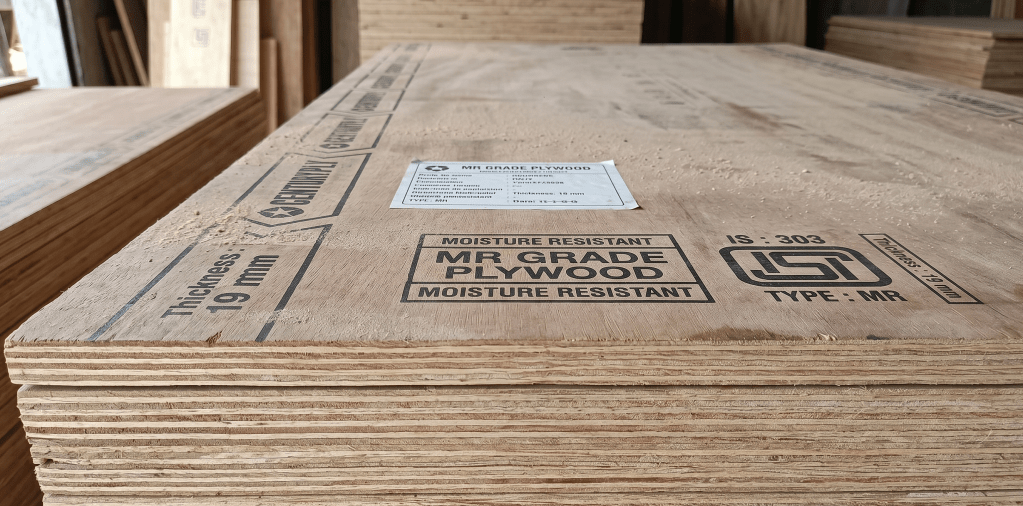
MR grade plywood stands for Moisture Resistant plywood. It is suitable for dry indoor furniture such as wardrobes, beds, shelves, study tables, and TV units. It can handle limited humidity, but it is not made for regular water exposure.
ii) BWR grade plywood
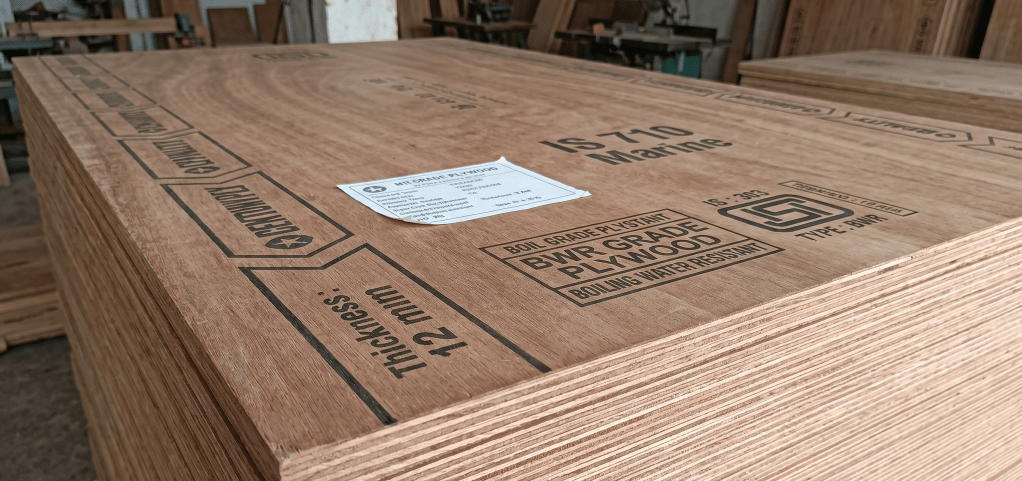
BWR grade plywood stands for Boiling Water Resistant plywood. It offers better water resistance than MR grade and is often used in areas where the furniture may face occasional moisture. It can be a better choice for kitchens, utility areas, and semi-moist spaces.
iii) BWP grade plywood
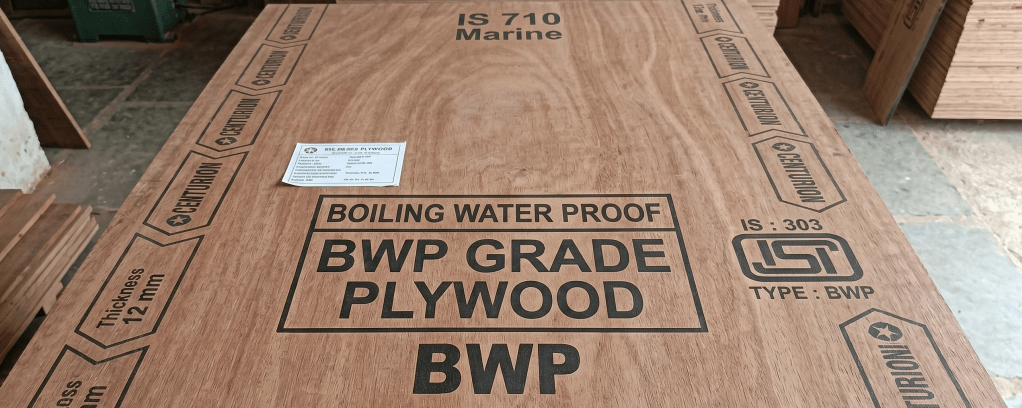
BWP grade plywood stands for Boiling Water Proof plywood. It is designed for higher water resistance and is commonly preferred for kitchens, bathroom cabinets, and other moisture-prone areas.
#2. Verify the ISI Mark and CM/L Number
A good plywood sheet should carry proper certification details. Look for the ISI mark, grade marking, and CM/L number printed on the board. These details help you confirm whether the plywood follows the relevant quality standards.
For general-purpose plywood, buyers often look for IS:303. For marine or high water-resistant plywood, IS:710 is commonly used. You should also check whether the CM/L number is clearly printed and matches the product details.
#3. Check Manufacturer and Batch Details
Do not ignore basic information like brand name, thickness, grade, batch number, and manufacturing details. These details make the product more traceable and help you avoid unmarked or duplicate material.
If a plywood sheet has unclear printing, missing grade details, or no proper manufacturer information, it is better to be cautious. Quality plywood should clearly mention what it is, who made it, and what standard it follows.
Inspect the Plywood Sheet Physically Before Purchase
Once you have checked the grade and markings, inspect the sheet physically. Many plywood quality issues can be spotted by looking at the edges, surface, thickness, and overall shape of the board.
#4. Do the Knocking Test
Tap the plywood surface lightly with your knuckles. A good sheet usually gives a solid and even sound across different areas.
If some parts sound hollow, dull, or uneven, it may indicate gaps inside the core or weak bonding between layers. This is a simple test, but it can help you avoid plywood with internal defects.
#5. Check the Edges for Core Gaps
Look closely at the side profile of the plywood sheet. The layers should appear uniform and tightly bonded.
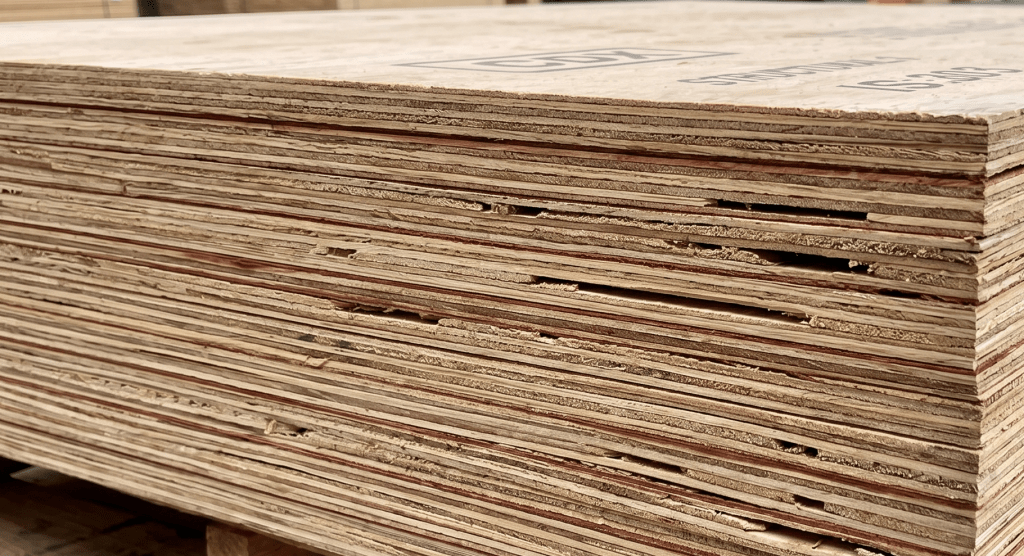
Avoid sheets with visible gaps, overlapping layers, open spaces, or uneven core lines. Core gaps can reduce strength and affect screw-holding capacity, especially in wardrobes, cabinets, shelves, and furniture joints.
#6. Look at the Face Veneer and Surface Finish
The surface should be smooth, even, and free from major cracks, bubbles, patches, open knots, or rough sanding marks. A poor surface can affect laminate pasting, veneer work, painting, and polishing.
Also check whether both sides of the plywood look properly finished. Better face veneer quality usually gives a cleaner final look and reduces finishing problems.
#7. Check for Warping or Bending
Place the plywood sheet on a flat surface or view it from the edge. A good sheet should remain straight and flat.
If the sheet is already bent, twisted, or uneven before purchase, it may create problems during cutting, fixing, or finishing. Warped plywood can also affect the alignment of shutters, drawers, panels, and shelves.
Test Strength, Water Resistance, and Termite Protection
After checking the surface and edges, you should also check whether the plywood can handle regular use. Good plywood should have strength, stable bonding, moisture resistance, and protection against termite or borer damage.
#8. Check Weight and Density
A good plywood sheet usually feels firm and compact. Higher weight can indicate better core quality and compression, but weight alone should not be the only factor.
Compare sheets of the same thickness and size. If one sheet feels unusually light, it may have low-density core material or gaps inside. Always combine this check with edge inspection, knocking test, grade marking, and brand details.
#9. Ask About Moisture Resistance
Moisture resistance is important if the plywood will be used in kitchens, bathrooms, utility areas, or spaces with high humidity. Using the wrong grade in these areas can lead to swelling, bending, or layer separation.
For dry indoor furniture, MR grade may be enough. For moisture-prone areas, BWR or BWP grade plywood is usually a better choice.
#10. Try a Basic Water Resistance Check
If you are buying BWR or BWP plywood, ask whether the product has been tested for water resistance. You can also try a small sample check by exposing a cut piece to water and observing whether the layers separate.
Good water-resistant plywood should not delaminate easily. If the layers start opening quickly, the bonding quality may be poor.
#11. Confirm Termite and Borer Resistance
Termite and borer resistance is important for long-term furniture. This is especially true for wardrobes, kitchen cabinets, storage units, and wooden interiors in areas where pest damage is common.
Ask whether the plywood has anti-termite and anti-borer treatment. A good supplier should be able to explain the treatment and recommend the right plywood based on your use case.
Get Best Quality Ply from Digna Ply
Before buying plywood, use this simple checklist to compare options and avoid poor-quality sheets.
| Quality Check | What to Look For |
| Grade | Choose MR, BWR, or BWP based on where the plywood will be used. |
| ISI Mark | Check the ISI mark and CM/L number on the sheet. |
| Brand Details | Look for brand name, thickness, grade, batch number, and manufacturing details. |
| Edge Quality | Check that the layers are uniform and tightly bonded. |
| Core Gaps | Avoid sheets with visible gaps, overlaps, or open spaces on the side. |
| Surface Finish | Look for a smooth surface without cracks, bubbles, patches, or open knots. |
| Knocking Test | Tap the sheet and listen for a solid, even sound. |
| Warping | Make sure the sheet is flat, straight, and not twisted. |
| Weight and Density | Compare sheets of the same thickness and avoid unusually light boards. |
| Water Resistance | For kitchens or wet areas, choose BWR or BWP plywood. |
| Termite Resistance | Ask for anti-termite and anti-borer treatment details. |
Do not judge plywood only by price or surface appearance. A quality sheet should have the right grade, proper certification, strong core bonding, smooth surface finish, and reliable protection for the intended use.
Digna Ply helps you choose the right plywood based on your usage, budget, thickness requirement, and moisture exposure. Whether you need plywood for dry indoor furniture or moisture-prone areas, Digna Ply can guide you with suitable options.
For plywood inquiries and product recommendations, WhatsApp Digna Ply at 8881306046.
Frequently Asked Questions
How can I check plywood quality before buying?
You can check plywood quality by looking at the grade, ISI mark, CM/L number, edge layers, surface finish, weight, and flatness. You can also do a knocking test to identify hollow areas inside the sheet.
Which plywood is best for home furniture?
For dry indoor furniture like beds, wardrobes, shelves, and TV units, MR grade plywood is commonly used. For kitchens, utility areas, or spaces with moisture exposure, BWR or BWP plywood is usually a better choice.
What is the knocking test for plywood?
The knocking test is a simple sound check. Tap the plywood sheet with your knuckles and listen to the sound. A solid and even sound usually indicates better bonding, while a hollow sound may indicate core gaps.
How do I check for core gaps in plywood?
Look at the side profile of the plywood sheet. The layers should look uniform, tightly bonded, and evenly placed. Avoid plywood with visible gaps, overlaps, or open spaces between layers.
Is heavier plywood always better?
Not always. Heavier plywood can indicate better density and compaction, but it should not be the only check. You should also check the grade, ISI mark, core quality, surface finish, and brand details.
Which plywood is better for kitchens?
BWR or BWP plywood is better for kitchens because these areas often face moisture, spills, steam, and regular cleaning. BWP plywood is usually preferred where higher water resistance is needed.
How can I know if plywood is termite resistant?
Ask the seller whether the plywood has anti-termite and anti-borer treatment. You can also check the product label or brand details for termite-resistant claims.
Where can I buy good quality plywood?
You can contact Digna Ply for plywood inquiries and product recommendations. For help choosing the right plywood, WhatsApp Digna Ply at 8881306046.


Leave a Reply