Plywood used in a kitchen has to deal with more than just the weight of cabinets and utensils. Steam from cooking, water around the sink, occasional plumbing leaks, spills, and regular cleaning all increase the chances of moisture reaching the cabinet structure. If the plywood is not suited to these conditions, it can start swelling, warping, or losing strength over time.
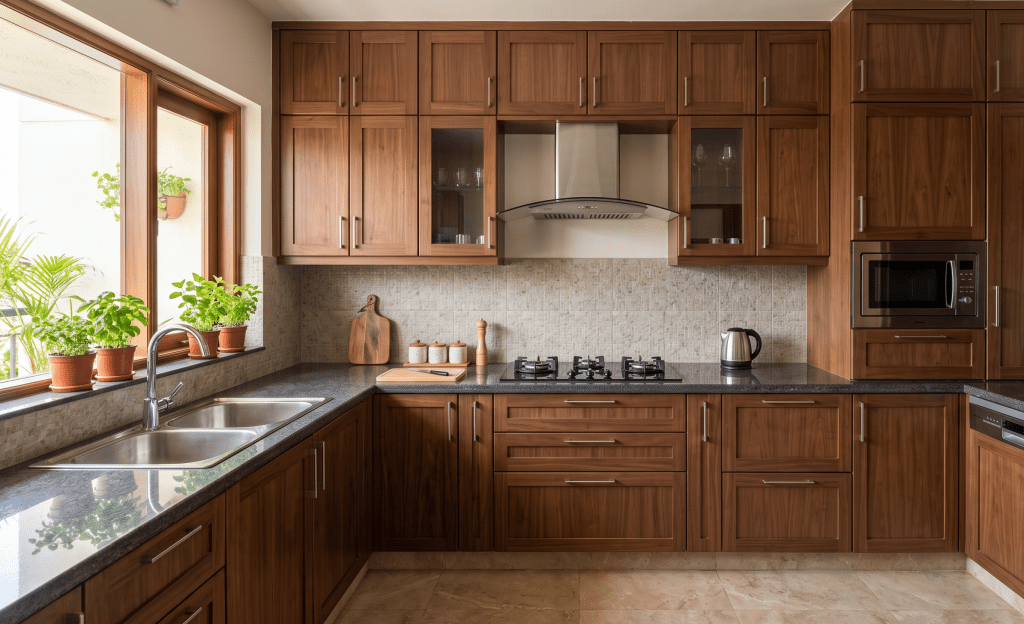
This is why BWP and BWR plywood are commonly considered for modular kitchens, while marine-grade plywood is often chosen for sections with higher water exposure. The right choice for kitchen plywood also depends on where the plywood will be used, for example, a sink, drawer, shutter, or back panel.
In this guide, we will look at the different types of plywood used in Indian kitchens and how you should choose plywood for your kitchen.
Why Does Kitchen Plywood Need Better Water Resistance?
Moisture is one of the main reasons kitchen cabinets start deteriorating earlier than expected. Water can enter through the sink area, leaking pipes, wet utensils, floor cleaning, or repeated spills. Steam from cooking also raises humidity around wall cabinets and sections close to the hob.
Once moisture gets into a low-grade board, the damage is not always limited to the surface. The board may begin to swell, the layers can separate, and laminates may start peeling away. Over time, this can also reduce the strength of hinges, screws, and other fittings attached to the cabinet.
This is why ordinary MR-grade plywood is usually not the first choice for areas that regularly face moisture. BWR and BWP plywood are better suited to kitchen use because they are made to handle higher moisture exposure, with BWP generally preferred for sections such as the sink cabinet and other areas close to plumbing.
The level of water resistance you need also depends on where the plywood is being used. A dry overhead cabinet may not need the same grade as a base unit positioned below the sink, so choosing the right plywood for each zone can help control both durability and cost.
Which Plywood Is Best for Kitchen Cabinets?
There is no single plywood grade that can be used across every part of a kitchen. In most modular kitchens, BWP and BWR plywood are the main options, while marine-grade plywood is considered for areas where water exposure is higher. The right choice depends on how much moisture a cabinet is likely to face, how much weight it needs to hold, and where it is installed.
1. BWP Plywood
BWP stands for Boiling Water Proof plywood. It is commonly used in kitchen cabinets because it is made to withstand prolonged exposure to moisture better than standard interior-grade plywood.
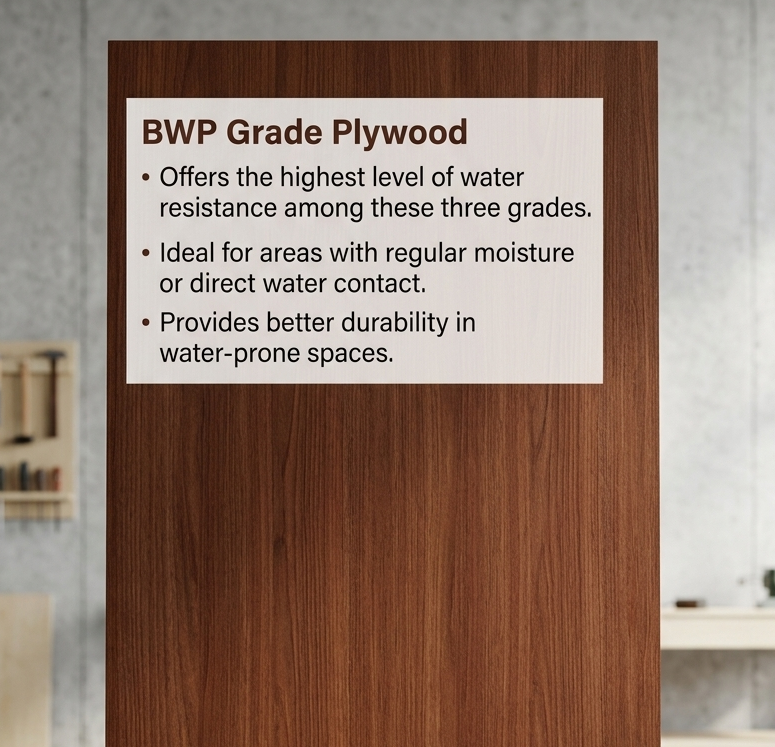
It is especially suitable for base cabinets, sink units, and sections close to water connections. Homeowners who want the same plywood grade throughout the main cabinet structure may also choose BWP for the entire kitchen, although this increases the material cost.
2. BWR Plywood
BWR stands for Boiling Water Resistant plywood. It provides better moisture resistance than regular MR plywood but is generally positioned below BWP when water exposure is a major concern.
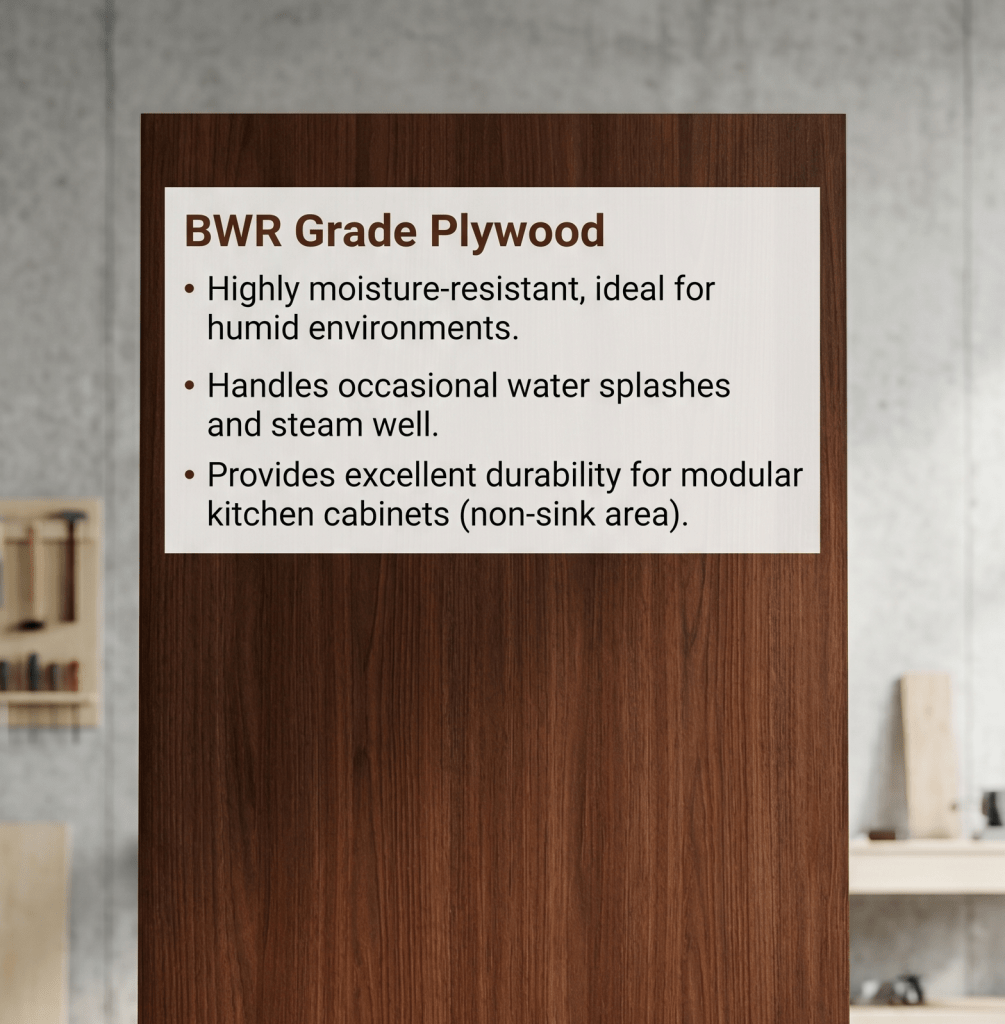
BWR plywood can work well in relatively dry kitchen areas such as overhead cabinets, loft storage, and sections away from the sink or plumbing. It can also be a practical option when the kitchen design uses different plywood grades for wet and dry areas instead of using BWP throughout.
3. Marine-Grade Plywood
Marine-grade plywood is designed for applications where resistance to water is a major requirement. In a kitchen, it can be considered for areas that have a greater chance of direct or repeated water exposure, particularly around plumbing.
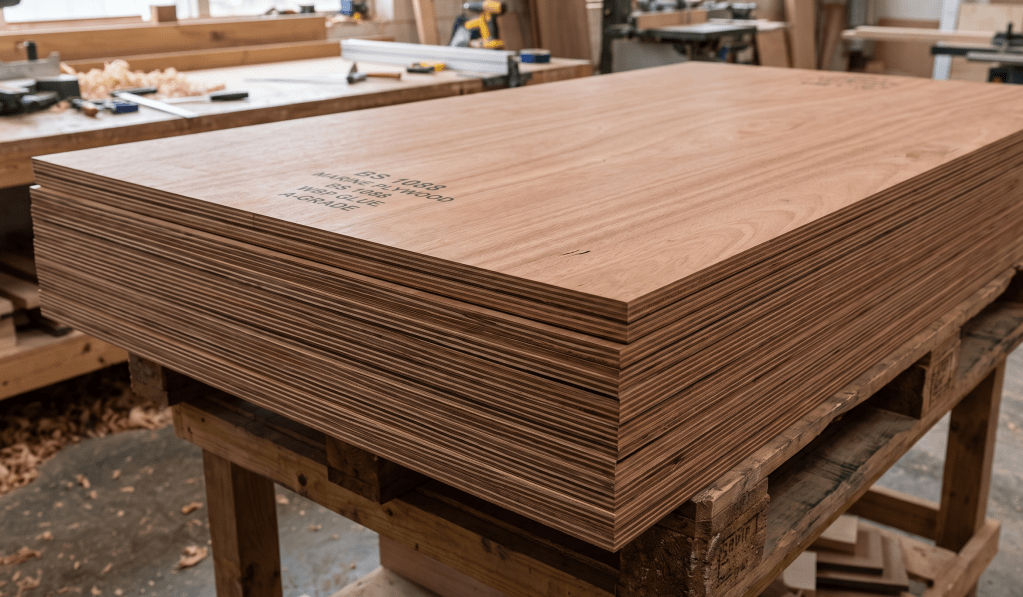
However, using marine plywood throughout the entire kitchen may not always be necessary. The additional cost makes more sense when the location and expected exposure justify it.
4. MR or Commercial Plywood
MR stands for Moisture Resistant plywood and is commonly referred to as commercial plywood. It is suitable for many indoor furniture applications, but its resistance to water is lower than BWR or BWP plywood.
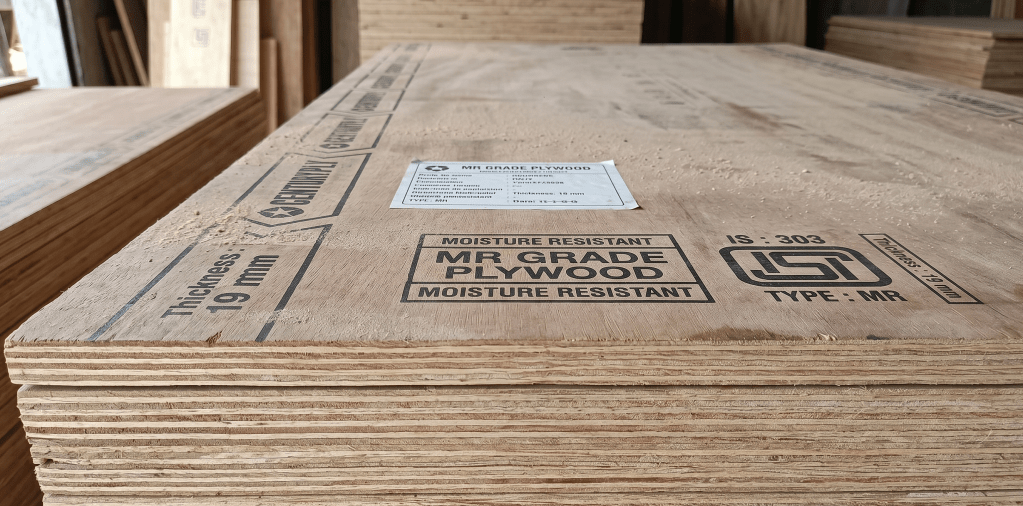
For this reason, MR plywood is generally better suited to dry furniture than moisture-prone kitchen cabinets. If it is used in a kitchen, it should be limited to areas with very low exposure to water and humidity.
BWR vs BWP Plywood for Kitchen Cabinets
BWR and BWP plywood are both made for areas where moisture resistance matters, but BWP provides a higher level of protection against water exposure. This makes the choice between them less about which one is universally better and more about where the plywood will be used in the kitchen.
| Parameter | BWP Plywood | BWR Plywood |
| Water resistance | Designed for higher and more prolonged water exposure. | Designed to handle moisture and occasional water exposure. |
| Best suited for | Sink cabinets, base units near plumbing, and other moisture-prone areas. | Overhead cabinets, lofts, and relatively dry kitchen sections. |
| Kitchen suitability | Often preferred when better water protection is the priority. | Suitable when direct water exposure is limited. |
| Cost | Usually costs more than comparable BWR plywood. | Usually more affordable than comparable BWP plywood. |
| Use across the kitchen | Can be used throughout the kitchen if the budget allows. | Better suited to selected dry or lower-risk areas. |
For most kitchens, BWP plywood makes more sense around the sink and other plumbing connections, where even a small leak can expose the cabinet to water for several hours. BWR plywood can still be a sensible choice for sections that mainly face humidity or occasional moisture rather than direct water contact.
What Plywood Thickness Should You Use in a Modular Kitchen?
Plywood thickness affects how well kitchen cabinets hold their shape, support weight, and handle regular use. Using thicker plywood everywhere can increase the cost unnecessarily, while using sheets that are too thin in load-bearing sections can make the cabinet structure less stable.
Here’s how to choose different plywood thicknesses for different parts of the kitchen: –
| Kitchen Component | Common Plywood Thickness |
| Cabinet carcass and support structure | 18mm |
| Shutters and doors | 18mm to 19mm |
| Drawer sides and internal sections | 12mm to 16mm |
| Back panels | 6mm to 8mm |
1. Cabinet Carcass
For the main cabinet carcass and support structure, 18mm plywood is commonly used. These sections carry shelves, drawers, shutters, countertops, and stored utensils, so they need enough strength to hold screws and hardware securely.
2. Kitchen Shutters
Kitchen shutters are generally made using 18mm or 19mm plywood, depending on the design, hardware, laminate, and overall cabinet construction. A consistent sheet thickness is particularly useful in modular kitchens because hinges and other fittings need accurate alignment.
3. Drawers and Internal Sections
Drawer sides and internal partitions can usually use 12mm to 16mm plywood, depending on their size and the amount of weight they are expected to carry. Heavier drawers used for pots, pans, or large utensils may need a stronger construction than smaller cutlery drawers.
4. Back Panels
Back panels generally do not carry the same load as the main carcass, so 6mm to 8mm plywood is commonly used where the cabinet design provides proper support.
How Much Does Plywood for a Modular Kitchen Cost?
The cost of kitchen plywood can vary quite a bit even when two sheets have the same thickness. The grade of plywood, type of core wood, calibration, brand, certification, and city can all affect the final rate. BWP and marine-grade plywood generally sit at the higher end because they are made for greater water resistance, while BWR plywood is usually more affordable.
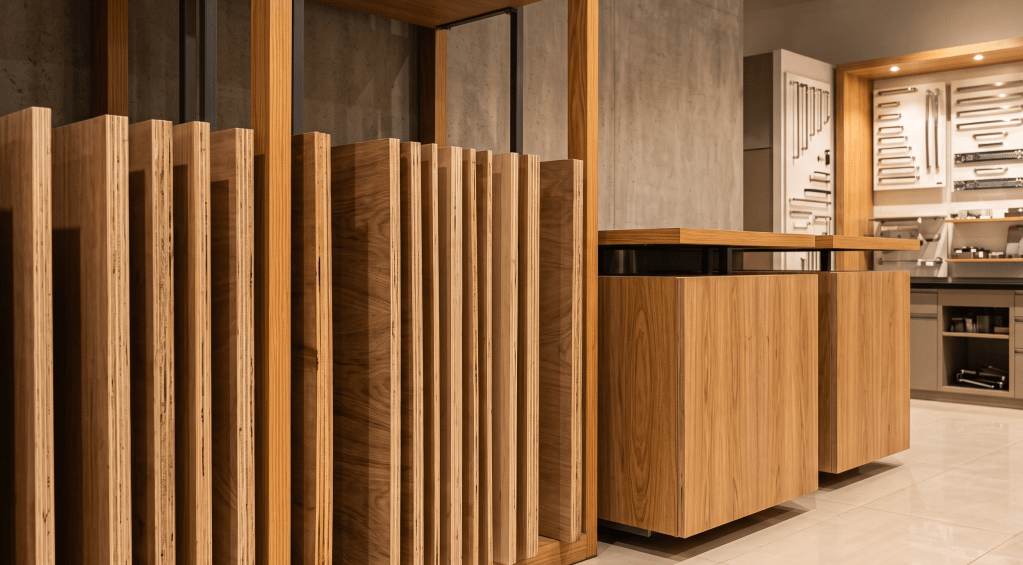
Thickness also has a direct impact on the budget. An 18mm or 19mm BWP sheet used for the main cabinet structure will cost more than thinner plywood used for drawers or back panels. Calibrated plywood may also carry a higher price because its thickness is kept more uniform, which can help with modular fittings and machine-made cabinetry.
Instead of comparing plywood only by the price per square foot, it is better to compare products within the same grade and thickness. A cheaper 18mm sheet may use a different core construction or may not have the same water-resistance certification as another product sold under the same broad category.
For budgeting, homeowners can broadly expect three price levels:
- Budget range: Usually includes basic BWR options and lower-priced plywood brands.
- Mid-range: Includes branded BWR and BWP plywood suitable for most modular kitchen requirements.
- Premium range: Includes higher-grade calibrated BWP, marine-grade plywood, and products made with premium hardwood cores.
The actual rate should always be checked with the dealer before purchase because plywood prices can change based on brand, location, sheet thickness, and order quantity.
How to Choose the Best Plywood for Kitchen Cabinets
Once you have decided the grade and thickness you need, the next step is checking whether the plywood being supplied actually matches those specifications. Two sheets sold as the same type of plywood can still differ in core quality, calibration, certification, and finish.
Here are a few checks worth making before you buy:
1. Check the ISI marking and grade
If you are buying BWP or marine-grade plywood, look for the relevant ISI marking and product standard mentioned by the manufacturer.
2. Check the CM/L number where available
This helps you verify that the certification printed on the sheet belongs to the manufacturer and product being sold.
3. Inspect the plywood edge
The exposed edge should show a reasonably uniform core without large gaps or visible separation between layers.
4. Confirm the actual thickness
A sheet sold as 18mm plywood should be checked for consistency, especially if it will be used in modular cabinets where hinges, channels, and fittings need accurate alignment.
5. Ask whether the plywood is calibrated
Calibrated plywood maintains a more consistent thickness across the sheet and is often preferred for modular kitchen work.
6. Check the surface quality
The face should be reasonably even and free from obvious manufacturing defects that may affect laminating or finishing.
7. Buy from a reliable dealer and ask for an invoice
This reduces the risk of duplicate branding or receiving a lower grade than the one quoted.
8. Read the warranty conditions
A long warranty period does not mean every type of water damage or installation issue is covered, so check what the manufacturer actually includes.
For a modular kitchen, it is also worth finalizing the plywood specification before fabrication begins. This gives the carpenter or kitchen manufacturer a clear grade and thickness to work with and makes it easier to verify the material when it arrives.
Why Choose Digna Ply for Kitchen Plywood?
Digna Ply helps you compare plywood options based on grade, thickness, core quality, and certification before you buy, so you can choose the right material for different parts of your kitchen. You can also compare options across different price ranges without relying only on the cheapest quote. Along with plywood, Digna Ply also supplies kitchen hardware such as hinges, drawer channels, handles, hydraulic fittings, and other accessories, making it easier to source both plywood and hardware from one place.
If you’re planning a new kitchen or replacing old cabinets, WhatsApp Digna Ply at 8881306046 to check suitable plywood options, availability, and pricing.
Frequently Asked Questions
Which plywood is best for kitchen cabinets in India?
BWP plywood is generally one of the better choices for kitchen cabinets because it offers higher resistance to moisture and water exposure. It is especially useful for base cabinets, sink units, and areas close to plumbing. BWR plywood can still work well in drier sections such as overhead cabinets and loft storage.
Is BWP plywood necessary for a modular kitchen?
BWP plywood is not necessary for every single cabinet, but it is strongly suited to areas where water exposure is more likely. Many homeowners use BWP plywood for base units and sink cabinets while using BWR plywood in relatively dry areas to manage the overall budget.
Is BWR plywood suitable for kitchen cabinets?
Yes, BWR plywood can be used for kitchen cabinets that are not regularly exposed to direct water. It is commonly considered for overhead cabinets, lofts, and storage units positioned away from plumbing. For areas around the sink or water connections, BWP plywood is usually preferred.
Is marine plywood better than BWP plywood for kitchens?
Marine plywood is made for demanding moisture conditions, but that does not mean every kitchen cabinet needs it. It can make sense around plumbing or in areas where repeated water exposure is a concern. For many standard modular kitchen applications, good-quality BWP plywood can provide the required level of water resistance.
Is 18mm plywood enough for kitchen cabinets?
18mm plywood is commonly used for kitchen cabinet carcasses, shelves, and other major structural sections. The exact requirement depends on cabinet size, expected load, construction method, and hardware. Thinner plywood is usually used for drawer components and back panels.
Can HDHMR be used instead of plywood in a kitchen?
HDHMR can be used for several kitchen applications, particularly shutters and decorative sections where routing or a smooth surface is useful. BWP plywood is generally preferred for main carcasses, sink units, and load-bearing sections because of its layered construction and screw-holding ability.
Which plywood should be used below the kitchen sink?
BWP or suitable marine-grade plywood is generally preferred below the kitchen sink because this area has a higher chance of leaks, spills, and repeated moisture exposure. Proper sealing of exposed edges and plumbing maintenance are also important because even water-resistant plywood should not remain continuously submerged.
How much does BWP plywood for a modular kitchen cost?
BWP plywood prices vary based on thickness, brand, core wood, calibration, certification, city, and dealer. Premium 18mm or 19mm BWP plywood usually costs more than thinner sheets and comparable BWR plywood. It is better to compare current dealer rates for the same grade and thickness rather than relying on a single fixed price.
Can MR-grade plywood be used for kitchen cabinets?
MR-grade plywood is better suited to dry interior furniture. It may work in kitchen sections with very low moisture exposure, but it is generally not the preferred option for sink cabinets, base units near plumbing, or other areas where water exposure is likely.


Leave a Reply