HDHMR and plywood are both used in home interiors because both look good after finishing, and both are available in different thicknesses and grades. But they do not perform the same way in every area.
HDHMR is often preferred for smooth shutters, routed designs, painted surfaces, and clean laminate finishes. It is denser than regular MDF and handles moisture better than many basic engineered boards.
Plywood, on the other hand, is known for strength. Its layered construction gives it better screw holding, stability, and load-bearing capacity. That is why it is commonly used for kitchen carcasses, wardrobes, beds, shelves, cabinets, and furniture that carries weight every day.
In this article, we’ll compare HDHMR vs plywood based on strength, moisture resistance, uses, termite resistance, thickness, and suitability for modular kitchens. We’ll help you choose the right board for the right part of your home.
What Is HDHMR Board?
HDHMR stands for High Density High Moisture Resistant board. It is an engineered wood board made by compressing wood fibres with resin under high pressure. “High density” means the board is compact and less soft than regular MDF. “High moisture resistant” means it can handle humid conditions better than MDF and particle board. This gives the board a dense, firm, and compact structure, which makes it stronger than regular MDF and more suitable for moisture-prone interiors.
Why HDHMR Is Used in Modern Interiors
One major reason HDHMR is used in modern interiors is its smooth surface. It works well with laminates, acrylic finishes, veneers, and painted finishes. It also supports routed designs, grooves, and decorative patterns, which makes it a good option for visible parts of modular furniture.
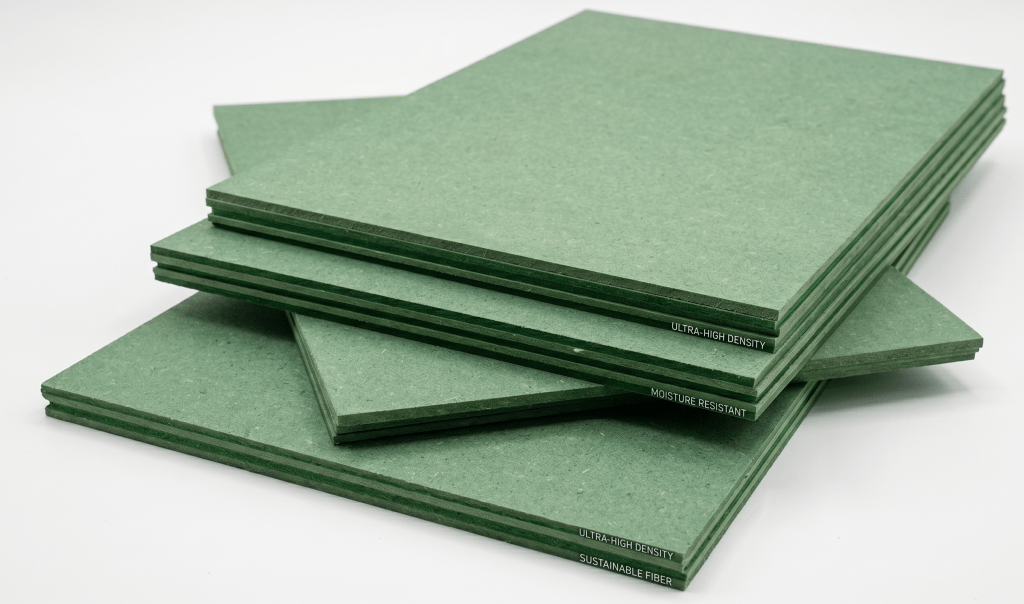
HDHMR is not a fully waterproof board. It can resist moisture better than many other engineered boards, but its edges still need proper sealing. If water enters through open edges, the board can swell over time. This matters more in kitchens, bathroom vanities, and areas where humidity or cleaning water is common.
Common HDHMR Thickness Options
HDHMR boards are available in different thicknesses, such as 6mm, 9mm, 12mm, 16mm, 18mm, and 25mm. The right thickness depends on where the board will be used.
Thinner boards are usually used for backing and decorative panels. Boards in 16mm and 18mm thickness are commonly used for kitchen shutters and wardrobe shutters. Thicker boards may be used where the design needs more stability, but the final choice should depend on the furniture type, hardware, finish, and daily use.
What Is Plywood?
Plywood is made by peeling thin sheets from logs. These sheets are called veneers. The veneers are dried, treated, glued, and pressed together to create a strong board. These layers are placed in alternating grain directions and pressed with adhesive.
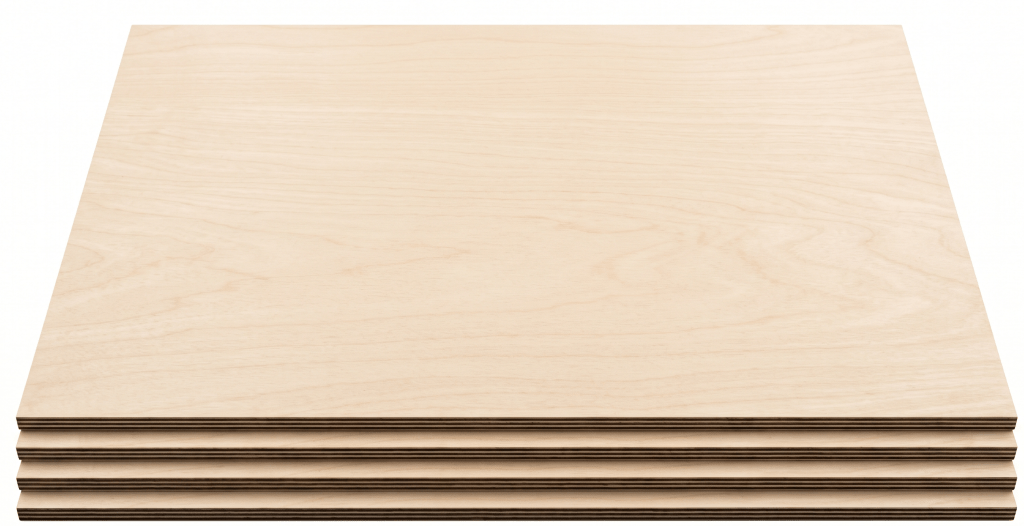
This cross-layered structure gives plywood better strength, balance, and stability than many single-layer boards. The main strength of plywood comes from its cross-grain construction. Each veneer layer is placed in a different grain direction. This helps reduce bending, warping, and cracking.
Common Types of Plywood Used in Homes
Different plywood grades are used for different areas of the home. The right choice depends on moisture exposure, load, finish, and budget.
- MR grade plywood is mainly used for dry interior areas. It works for furniture placed away from moisture, such as bedroom cabinets, wall units, and basic shelves.
- BWR plywood offers better resistance to moisture than MR-grade plywood. It can be used in kitchens, wardrobes, and furniture that may face humidity or occasional water contact.
- BWP plywood stands for Boiling Water Proof plywood. It is better suited for kitchens, under-sink cabinets, utility areas, and other moisture-prone spaces.
- Marine plywood is made for high-moisture and heavy-duty use. It is often used where the board needs stronger water resistance and better bonding quality.
- Calibrated plywood has uniform thickness across the board. It is useful for modular furniture, machine cutting, factory-made kitchens, and clean finishing work.
HDHMR vs Plywood: Key Differences
HDHMR is different from plywood in the way it is made. Plywood is built by bonding thin layers of wood veneer together, while HDHMR is made from compressed wood fibres. Because of this difference, both materials are used differently in kitchens, wardrobes, cabinets, and furniture. HDHMR is preferred for smooth surfaces, routed designs, and visible panels. Plywood is preferred where the furniture needs strength, screw holding, and long-term support.
Here is a simple comparison between HDHMR and Plywood:-
| Factor | HDHMR Board | Plywood |
| Material type | Engineered fibre board | Wood veneer board |
| Strength | Good for shutters and panels | Better for heavy furniture |
| Moisture resistance | Better than MDF and particle board | Depends on grade |
| Screw holding | Good for light to medium use | Usually stronger |
| Surface finish | Smooth and uniform | Needs more surface preparation |
| Routing and cutting | Very good for decorative designs | Good, but less smooth than HDHMR |
| Termite resistance | Depends on brand and treatment | Depends on grade and treatment |
| Kitchen use | Good for shutters and visible panels | Better for carcass and load-bearing units |
| Best suited for | Shutters, panels, routed designs | Cabinets, wardrobes, beds, shelves |
Now, let’s compare HDHMR and Plywood head on:-
1. Strength and Load-Bearing Capacity
Plywood has an advantage when strength matters. Its layered veneer structure gives it better holding power and stability, especially in furniture that carries daily weight. This is why plywood is commonly used for kitchen carcasses, wardrobe bodies, beds, shelves, tables, and storage cabinets.
HDHMR also has good density, but it is not the first choice for heavy furniture. It works better for shutters, decorative panels, and cabinet fronts. These parts need a smooth finish and clean appearance more than heavy load-bearing strength.
2. Moisture Resistance
HDHMR handles moisture better than MDF and particle board. This makes it useful for kitchen shutters, wardrobe shutters, and panels in humid interiors. However, it is still not fully waterproof. Its edges must be sealed properly to stop water from entering the board.
Plywood’s moisture resistance depends on the grade. MR plywood is meant for dry interiors. BWR plywood can handle moderate moisture. BWP plywood is better for kitchens, under-sink areas, utility cabinets, and spaces where water exposure is more common.
3. Screw Holding and Hardware Support
Plywood usually offers better screw holding than HDHMR. This matters when furniture needs hinges, channels, handles, drawer fittings, and heavy-duty hardware. In kitchen carcasses and wardrobe bodies, stronger screw grip helps the furniture stay stable over time.
HDHMR can hold hardware well in lighter applications, especially shutters and panels. But for furniture that will carry more weight or face frequent movement, plywood is usually the safer option.
4. Surface Finish and Design Flexibility
HDHMR has a very smooth and uniform surface. This makes it a good choice for painted finishes, laminate finishes, acrylic finishes, and routed designs. If you want grooves, patterns, or clean decorative work on shutters, HDHMR can give a neater finish.
Plywood can also be finished with laminate, veneer, or paint, but it may need more surface preparation. The surface quality depends on the plywood grade and face veneer. Good-quality plywood can look excellent after finishing, but HDHMR is usually easier to work with for decorative surfaces.
5. Termite and Borer Resistance
Both HDHMR and plywood can be made termite-resistant, but this depends on the brand, treatment, and quality. You should not assume that every HDHMR board or plywood sheet is automatically termite-proof.
For long-term use, ask for treated boards or termite-resistant plywood. This is more important in areas like kitchens, wardrobes, storage units, and furniture placed near walls or damp corners.
What Are the Different Uses of HDHMR and Plywood?
HDHMR and plywood should not be used as direct replacements in every part of a home. HDHMR works better for visible surfaces and decorative parts. Plywood works better for the main furniture structure.
Where Should You Use HDHMR?
HDHMR is a good choice for areas where the finish matters more than heavy load-bearing strength. It has a smooth surface, so it works well for laminate finishes, painted finishes, acrylic finishes, and routed patterns.
You can use HDHMR for kitchen shutters, wardrobe shutters, cabinet fronts, wall panels, and decorative furniture surfaces. It is also useful for routed designs, grooves, and modern shutter patterns where the surface needs to look clean after finishing.
In kitchens, HDHMR can work well for shutters and visible panels. These parts do not carry the full weight of the kitchen. They mainly need a good finish, stable surface, and better moisture resistance than regular MDF.
Where Should You Use Plywood?
Plywood is better for furniture parts that need strength and support. Its layered veneer structure gives it better screw holding and load-bearing capacity. This makes it more reliable for the main body of furniture.
You can use plywood for kitchen carcasses, wardrobe bodies, beds, tables, shelves, storage cabinets, partitions, and heavy-use furniture. These areas need to hold weight, fittings, and hardware for years.
For example, a kitchen carcass carries utensils, appliances, groceries, drawers, hinges, and channels. A wardrobe body carries clothes, shelves, drawers, shutters, and fittings. In both cases, plywood is usually the safer choice.
Plywood is also better when the furniture needs strong screw grip. Hinges, handles, drawer channels, and other fittings stay better when fixed into good-quality plywood.
How should you choose between HDHMR and Plywood?
For most homes, the answer is not one material for everything. A kitchen, wardrobe, bathroom vanity, and bed do not have the same requirements. Some parts need finish, while others need strength. That is why HDHMR and plywood are often used together in modular interiors.
Choose HDHMR If You Need a Smooth and Finished Surface
HDHMR is a good choice when the visible surface matters. It works well for kitchen shutters, wardrobe shutters, cabinet fronts, wall panels, and decorative furniture surfaces. Its smooth texture makes it suitable for laminate, acrylic, veneer, and painted finishes.
It is also useful when the design includes grooves, patterns, or routing. Since HDHMR has a dense and uniform structure, it gives a cleaner routed finish than many regular boards. This makes it suitable for modern shutter designs and decorative panels.
Choose HDHMR if the furniture part does not need to carry heavy weight. It is better suited for shutters and panels than for the main body of furniture. In kitchens and humid areas, proper edge sealing is still needed to protect the board from swelling.
Choose Plywood If Strength and Screw Holding Matter More
Plywood is the better choice when the furniture needs strength, screw grip, and long-term stability. It works well for kitchen carcasses, wardrobe bodies, beds, shelves, storage units, tables, and cabinets. These parts carry weight every day, so they need a stronger base material.
Plywood also holds screws and hardware better than HDHMR in most load-bearing applications. This matters for hinges, drawer channels, handles, shelves, and fittings. If these fittings become loose over time, the furniture can lose stability and become harder to use.
For kitchens, BWP plywood is usually preferred for the main structure, especially near sinks, wet counters, and utility areas. It handles moisture and load better than regular commercial plywood. For dry furniture areas, good-quality MR or BWR plywood may also be enough, depending on usage.
Get the Right Material for Your Home With Digna Ply
At Digna Ply, you can find plywood, HDHMR, BWP plywood, and other board options for different home interior needs. Instead of choosing only by price or thickness, you can select the board based on usage, location, finish, and durability.
Before buying, it is always better to ask a few simple questions:
- Will the board be used in a dry or wet area?
- Will it carry heavy weight?
- Will it hold hinges, channels, or fittings?
- Will it be used as a visible shutter or a hidden structure?
The answers will help you avoid using the wrong board in the wrong place. WhatsApp Digna Ply at 8881306046 and get help choosing the right board for your project.
Frequently Asked Questions
Is HDHMR better than plywood?
HDHMR is not always better than plywood. It is better for shutters, routed designs, wall panels, cabinet fronts, and smooth finished surfaces. It gives a cleaner surface for laminates, paint, acrylic, and decorative patterns.
Is HDHMR good for modular kitchens?
Yes, HDHMR can be used in modular kitchens, especially for shutters and visible panels. It has a smooth surface, handles humidity better than MDF, and works well for modern finishes. But HDHMR should not be used everywhere in the kitchen. For the main kitchen body, under-sink area, and base units, BWP plywood is usually a safer choice because it handles load and moisture better.
Which is better for kitchen cabinets: HDHMR or plywood?
For kitchen cabinet shutters, HDHMR can work well because it gives a neat finish and supports routed designs. It is a good option for the front-facing parts of the cabinet. For cabinet carcasses, shelves, and under-sink sections, plywood is usually better. These parts carry utensils, groceries, appliances, hinges, drawer channels, and daily load. That is where plywood’s strength and screw holding make a difference.
Is HDHMR waterproof?
HDHMR is moisture-resistant, not fully waterproof. It can handle humidity better than MDF and particle board, but it should not be exposed to standing water or constant leakage.
HDHMR or Plywood: Which is better for under-sink cabinets?
BWP plywood is usually the best choice for under-sink cabinets. This area faces moisture, cleaning water, plumbing leakage, and daily use, so the material needs both water resistance and strength. HDHMR is not the ideal choice for under-sink cabinets. It can be used in humid areas with proper sealing, but BWP plywood is safer for wet and load-heavy sections.


Leave a Reply