A wardrobe in a bedroom does not need the same plywood as a kitchen cabinet. A bathroom door cannot be made with the same plywood used for a dry wall panel. Similarly, premium furniture needs a cleaner surface than hidden partitions or temporary work.
That is why learning about plywood grades helps you make a better buying decision.
In this guide, we’ll explain the major plywood grades, including MR, BWR, BWP, marine plywood, and surface grades like A, B, C, and D. We will also cover how to choose the right plywood grade for furniture, kitchens, offices, bathrooms, and other interior projects.
What Are Plywood Grades?
Plywood grades are quality classifications that help buyers understand how a plywood sheet should be used. These grades are usually based on the surface finish, bonding strength, core quality, and moisture resistance of the sheet.
In simple terms, plywood grading answers three important questions:
Q1: How good does the surface look?
Some plywood sheets have a smooth, clean face that is suitable for visible furniture. Others may have knots, patches, or rough areas because they are meant for hidden or structural use.
Q2: How well is the plywood bonded?
The adhesive used between the layers decides how the sheet performs in dry, humid, or wet conditions. This is why plywood is commonly sold as MR, BWR, BWP, or marine grade.
Q3: Where can the plywood be used?
A sheet used for a bedroom wardrobe has different requirements from one used in a kitchen, bathroom, office, or semi-outdoor space.
For example, a smooth cabinet-grade plywood may be ideal for modular furniture because the surface needs to look clean after lamination or polishing. On the other hand, moisture-resistant or waterproof plywood is more suitable for kitchens and bathrooms because those areas face regular exposure to humidity and water.
Why Plywood Grades Matter Before You Buy
Plywood grades matter because every plywood sheet is not made for the same job. Some sheets are designed for dry indoor furniture. Some are made to handle moisture. Some are selected mainly for their smooth surface, while others are chosen for strength and utility.
Here’s how plywood grades affect their usage:-
1. Strength and Load-Bearing Needs
Furniture such as beds, cabinets, office tables, wall units, and storage shelves needs plywood that can handle regular weight and movement. A weak plywood sheet may sag in the middle, especially when used for long shelves or wide panels.
2. Moisture Resistance
Moisture is one of the biggest reasons plywood fails early. Kitchens, bathrooms, utility areas, and semi-open spaces face regular humidity, water splashes, and cleaning. Using regular interior plywood in these areas can lead to swelling, bubbling, or layer separation. This is why moisture-prone spaces need better grades such as BWR, BWP, or marine plywood, depending on the level of water exposure.
3. Surface Finish
The surface grade of plywood decides how clean and smooth the final finish will look. If the plywood is being used for visible furniture, wall panels, wardrobes, or decorative work, the surface should be clean enough for laminate, veneer, polish, or paint. For hidden work, such as partitions, packing, or temporary structures, surface appearance may not be as important. In those cases, a utility-grade plywood may be enough.
4. Budget Efficiency
Choosing the highest grade for every project is not always the smartest decision. Premium plywood may be necessary for kitchens, bathrooms, or high-end furniture, but it may not be needed for dry hidden areas.
Common Plywood Grades Based on Bonding Strength
One of the easiest ways to choose plywood is by checking its bonding grade. This tells you how well the layers are joined together and how the sheet will perform in dry, humid, or wet conditions.
In India, here are 4 common plywood grades based on bonding strength:
1. MR Grade Plywood
MR stands for Moisture Resistant. It is also commonly known as commercial plywood.
MR grade plywood is suitable for dry indoor areas where there is no direct water exposure. It can handle normal indoor humidity, but it is not made for kitchens, bathrooms, or wet areas.
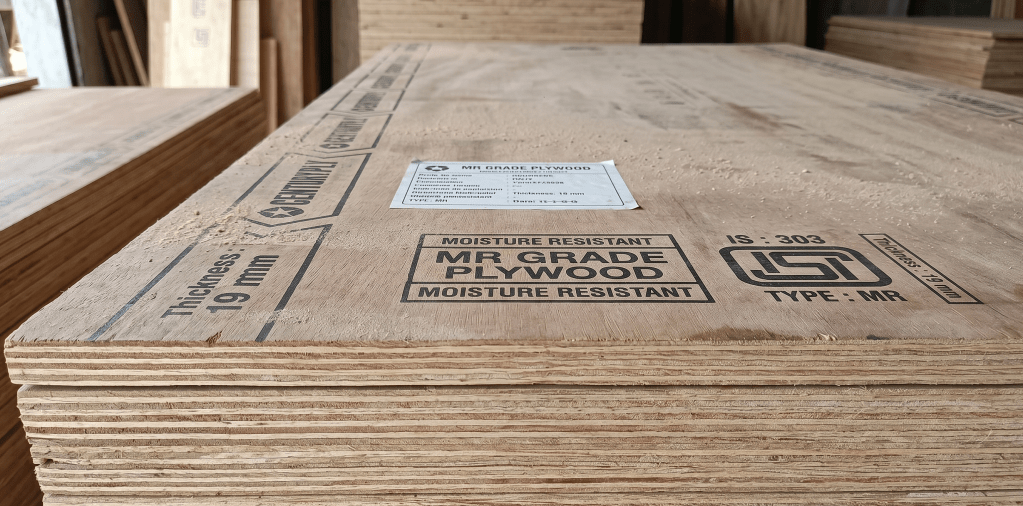
MR plywood is commonly used for bedroom wardrobes, study tables, wall panels, shelves, TV units, and other low-moisture furniture. It is a practical choice when you want decent strength at a reasonable price. MR plywood should be used only in spaces where the sheet will stay dry. If it is exposed to regular water or heavy humidity, it may start swelling or losing strength over time.
2. BWR Grade Plywood
BWR stands for Boiling Water Resistant. It offers better moisture resistance than MR grade plywood and is suitable for areas that may face humidity, occasional water contact, or regular cleaning.
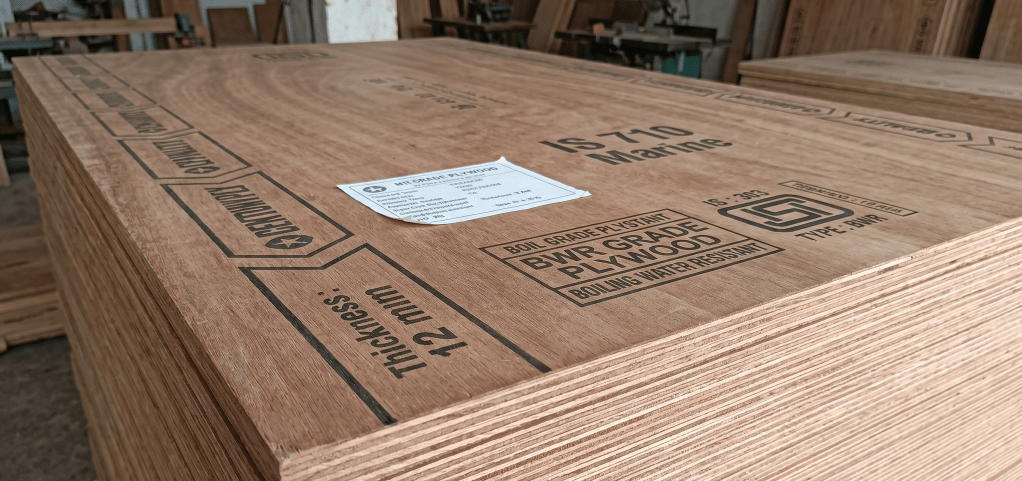
BWR plywood is commonly used for kitchen cabinets, office furniture, bathroom storage units, utility cabinets, and semi-moist interior spaces. It gives better durability than MR plywood without moving into the higher cost range of marine plywood.
This makes BWR plywood a good middle option for many homes and offices. It works well when the area is not fully wet but still needs better protection against moisture.
3. BWP Grade Plywood
BWP stands for Boiling Water Proof. It is made for stronger water resistance and better durability in moisture-prone areas.
BWP plywood can handle more demanding conditions than MR and BWR plywood. It is commonly used for kitchen shutters, bathroom doors, under-sink cabinets, high-moisture furniture, and semi-outdoor applications where stronger water resistance is needed.
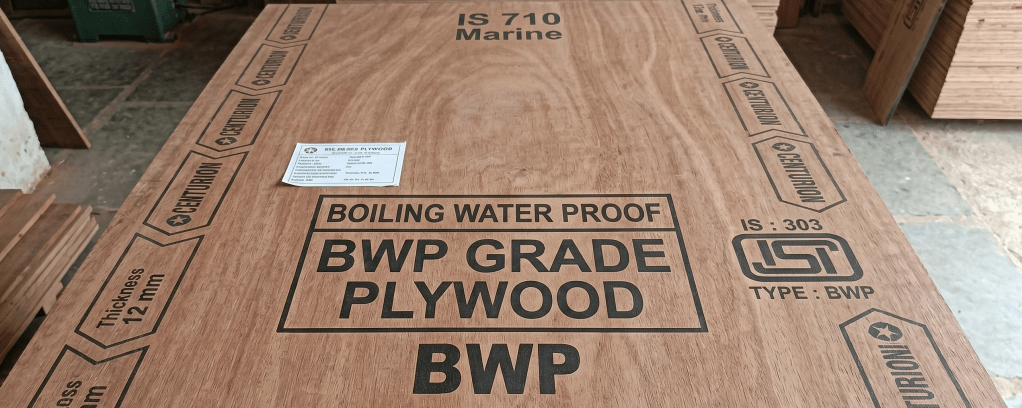
This grade is often preferred for projects where long-term durability matters more than short-term savings. It is especially useful in spaces where plywood may regularly come in contact with water, steam, or damp surfaces.
4. Marine Grade Plywood
Marine-grade plywood is designed for heavy water exposure and demanding applications. It is made with high-quality bonding and better core construction, which helps reduce gaps inside the sheet.
Marine plywood is commonly used in boats, exterior furniture, premium kitchen work, bathroom-heavy applications, and spaces with repeated water contact. It offers strong performance in wet conditions, but it is not required for every home furniture project.
For most indoor furniture, MR or BWR plywood may be enough. For kitchens, bathrooms, and water-prone spaces, BWP or marine plywood can be a better choice depending on usage and budget.
Here’s a quick comparison of MR, BWR, BWP, and Marine Plywood:-
| Plywood Grade | Best Used For | Moisture Resistance | Typical Use |
| MR Grade | Dry interiors | Low to moderate | Wardrobes, shelves, wall panels |
| BWR Grade | Moisture-prone interiors | Good | Kitchens, utility areas, office furniture |
| BWP Grade | High-moisture areas | Very good | Bathroom doors, under-sink units, kitchen shutters |
| Marine Grade | Heavy water exposure | Highest | Boats, exterior use, premium wet-area work |
Surface-Based Plywood Grades: A, B, C, and D Explained
Apart from bonding strength, plywood is also graded based on surface quality. This tells you how clean, smooth, and defect-free the outer veneer of the plywood is.
This type of grading is useful when plywood will be visible after installation or when it needs laminate, veneer, polish, or paint. A cleaner surface gives a better finish, while a rougher surface is usually used for hidden or low-cost work.
Here are 4 surface based plywood grades:-
1. A-Grade Plywood
A-grade plywood has the smoothest and cleanest surface. It usually has very few visible defects, which makes it suitable for premium furniture and decorative applications.
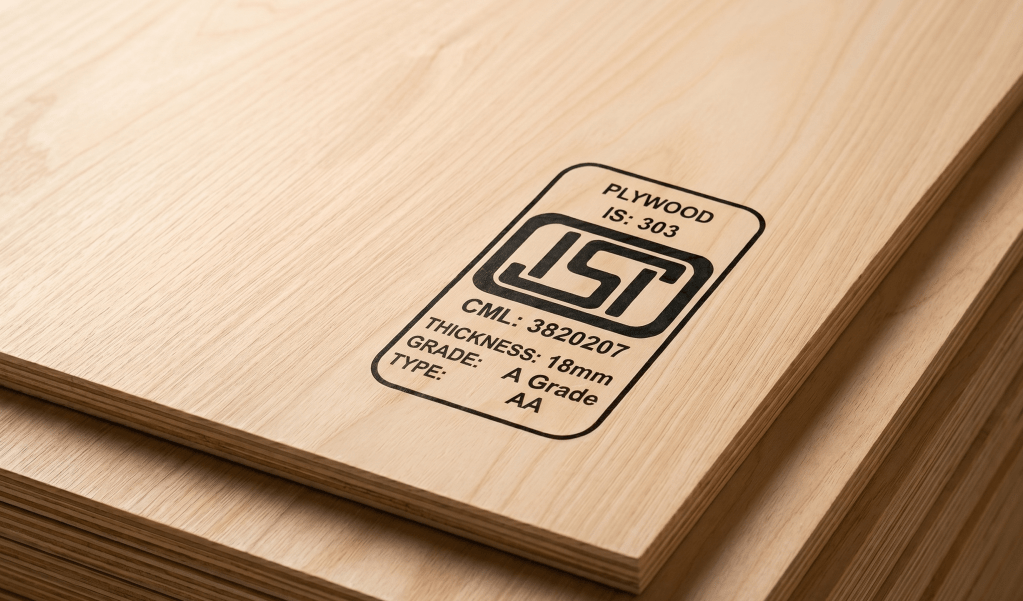
This grade is commonly used for visible cabinets, wall panels, furniture fronts, painted furniture, and polished surfaces. Since the face quality is better, it gives carpenters and interior contractors a cleaner base to work with.
A grade plywood is usually more expensive than lower surface grades. But for visible work, the extra cost can be justified because the final finish looks neater.
2. B Grade Plywood
B-grade plywood has a good surface but may have small repairs, minor patches, or slight natural marks. It is not as clean as A-grade plywood, but it still works well for many furniture applications.
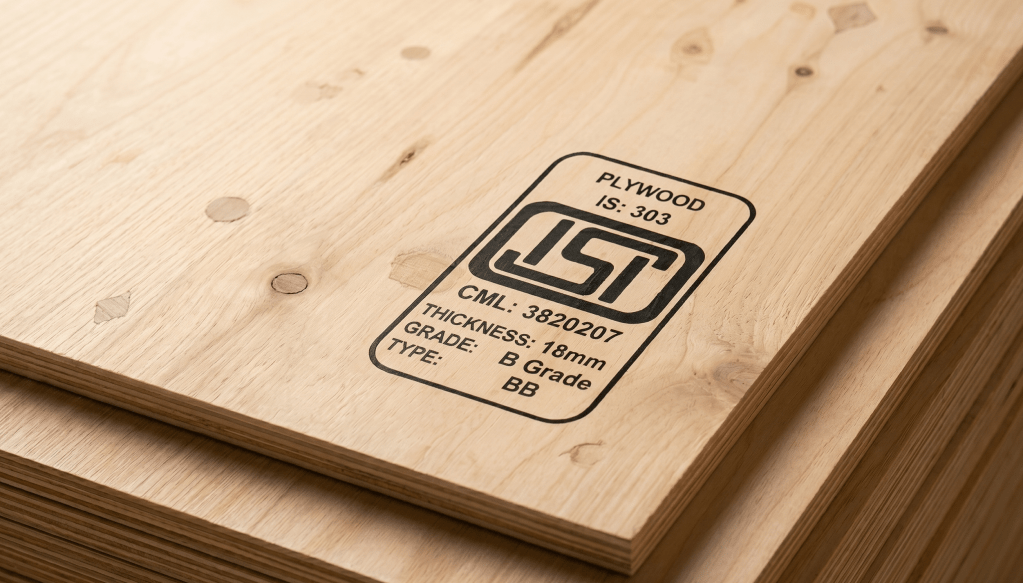
This grade is suitable for wardrobes, cabinets, shelves, partitions, and furniture where the surface will be covered with laminate or veneer. It gives a good balance between finish quality and cost.
B-grade plywood is often preferred when the project needs a decent finish but does not require the highest surface quality.
3. C-Grade Plywood
C-grade plywood may have visible knots, patches, small gaps, or surface irregularities. It is mostly used where appearance is not the main priority.
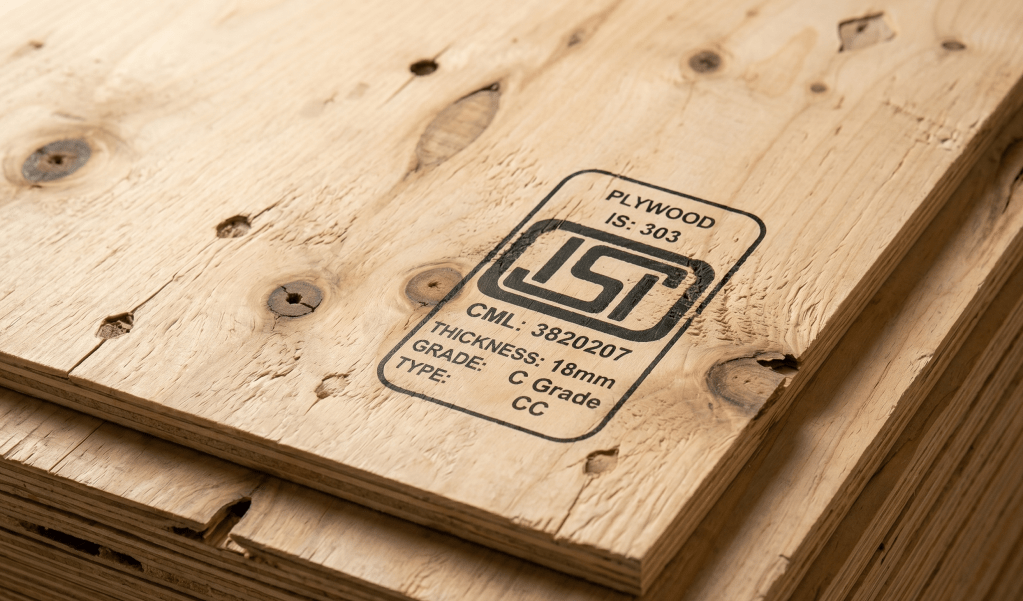
This grade can work for hidden furniture parts, backing panels, packaging, temporary structures, and areas that will not be directly visible. It may still offer functional strength, but the surface may need more work if a clean finish is expected.
4. D-Grade Plywood
D-grade plywood has the lowest surface quality among these grades. It may have larger knots, visible defects, open patches, and rougher areas.
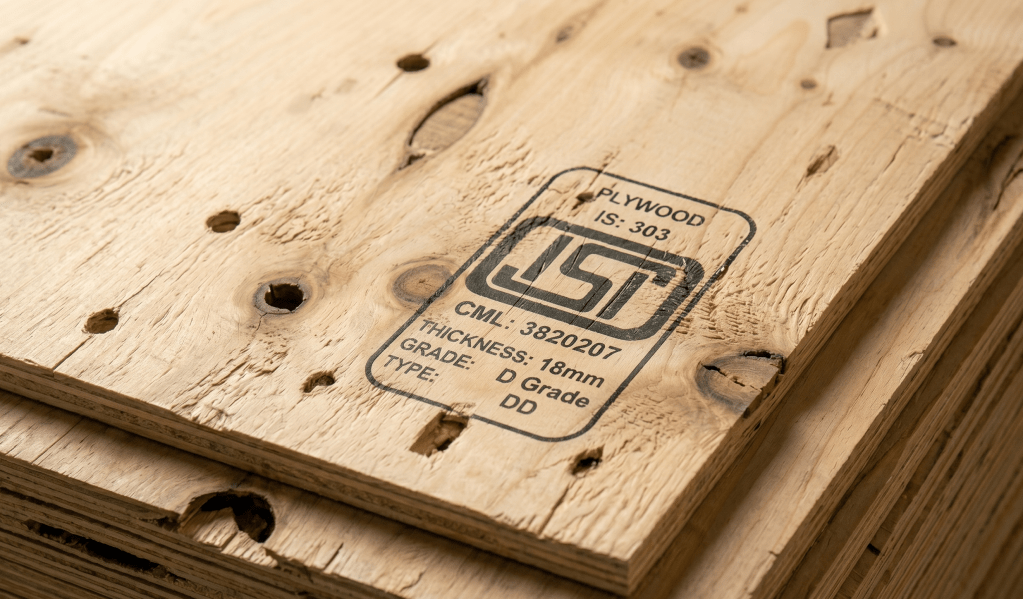
This grade is generally used for temporary work, hidden applications, packing material, or low-cost utility projects. It is not the right choice for visible furniture, premium interiors, or areas where finish quality matters.
Here’s a quick comparison of A, B, C, and D surface grades:-
| Surface Grade | Surface Quality | Best Suited For |
| A Grade | Smooth and clean | Premium furniture, visible panels, painted or polished surfaces |
| B Grade | Good surface with minor marks | Cabinets, wardrobes, shelves, laminated furniture |
| C Grade | Visible knots or patches | Hidden parts, backing panels, utility work |
| D Grade | Rough surface with larger defects | Temporary work, packing, low-cost hidden applications |
Interior vs Exterior Plywood Grades
Plywood should also be selected based on where it will be used. A sheet used inside a bedroom does not face the same conditions as one used in a kitchen, bathroom, balcony, or semi-open area.
This is where the difference between interior and exterior plywood becomes important. Interior plywood is made for dry indoor spaces, while exterior plywood is made to handle moisture, weather changes, and rougher usage:-
1. Interior Plywood
Interior plywood is used in spaces where there is little or no direct contact with water. It is suitable for bedroom furniture, living room units, shelves, wardrobes, wall panels, study tables, and other dry indoor applications.
MR grade plywood is one of the most common options for interior furniture. It can handle normal indoor humidity, but it should not be used in places where water exposure is frequent.
For example, MR plywood may work well for a bedroom wardrobe, but it may not be the right choice for an under-sink kitchen cabinet.
2. Exterior Plywood
Exterior plywood is made for areas that face moisture, heat, humidity, or occasional water contact. It has stronger bonding than regular interior plywood, which helps the layers stay intact for longer.
BWR, BWP, and marine plywood are usually preferred for exterior or moisture-prone applications. These grades are commonly used for kitchen cabinets, bathroom doors, utility cabinets, outdoor furniture, and semi-exposed areas.
Exterior plywood is not always needed for every project. But in areas where water damage is likely, choosing a better grade can help avoid swelling, peeling, and early replacement.
Specialty Plywood Grades for Different Applications
Apart from standard bonding and surface grades, plywood is also sold by application. These specialty grades make selection easier because they are designed for specific furniture, interior, or construction needs:-
1. Cabinet Grade Plywood
Cabinet-grade plywood is used where both strength and surface finish matter. It has a cleaner face, better core quality, and a smoother surface compared to regular utility plywood.
This type of plywood is commonly used for modular kitchens, wardrobes, cabinets, storage units, office furniture, and premium interior work. Since cabinets are opened, closed, cleaned, and used daily, the plywood needs to hold screws well and stay stable over time.
Cabinet-grade plywood is also easier to finish with laminate, veneer, or polish. A smoother surface helps the final furniture look neater and more professional.
2. Hardwood Plywood
Hardwood plywood is made using hardwood veneers such as birch, oak, maple, eucalyptus, or other hardwood species. It is usually preferred where strength, surface quality, and durability are important.
Hardwood plywood is commonly used for furniture, wall panels, decorative interiors, cabinets, doors, and premium woodwork. It can offer better screw holding, better surface finish, and stronger performance compared to low-grade plywood.
However, not every hardwood plywood sheet is automatically high quality. Buyers should still check the bonding grade, core quality, thickness, and seller reliability before purchase.
3. Sanded Plywood
Sanded plywood has a smoother surface because it is pre-sanded during manufacturing. This reduces the amount of surface preparation needed before finishing.
It is useful for furniture, decorative panels, shelves, painted surfaces, and areas where the plywood face will remain visible or semi-visible. Since the surface is smoother, carpenters can work faster with laminate, veneer, polish, or paint.
Sanded plywood is a good choice when appearance matters, but the project does not always need the highest premium grade.
4. Commercial Plywood
Commercial plywood is one of the most commonly used plywood types for everyday interior furniture. In most cases, it refers to MR grade plywood used for dry indoor applications.
It is commonly used for wardrobes, shelves, TV units, partitions, study tables, and general home or office furniture. It is budget-friendly and practical for areas where there is no regular water exposure.
Commercial plywood is not the right choice for kitchens, bathrooms, balconies, or damp spaces. For those areas, BWR, BWP, or marine plywood is a safer option.
How to Choose the Right Plywood Grade for Your Project
The best plywood grade depends on where the plywood will be used, how much moisture it will face, how visible the surface will be, and how much weight it needs to carry. A single grade cannot be ideal for every project.
Here’s a quick checklist to choose plywood grades for your projects: –
| Application | Recommended Grade | Why It Works |
| Bedroom wardrobes | MR or BWR plywood | Suitable for dry interiors and daily use |
| Kitchen cabinets | BWR or BWP plywood | Handles moisture, steam, and regular cleaning better |
| Bathroom doors | BWP or marine plywood | Performs better in high-moisture areas |
| Office furniture | MR or BWR plywood | Balances strength, finish, and cost |
| Premium furniture | BWP, hardwood, or cabinet-grade plywood | Offers better finish and durability |
| Wall panels | MR, BWR, or sanded plywood | Works well depending on finish and moisture exposure |
| Outdoor or semi-outdoor use | BWP or marine plywood | Better suited for weather and moisture exposure |
Follow these steps while choosing a plywood grade for your project:-
1. Match the Grade with the Room
Start by checking where the plywood will be installed. For dry rooms such as bedrooms, living rooms, and study areas, MR or BWR plywood is usually enough for most furniture.
For kitchens, bathrooms, balconies, and utility areas, it is better to choose BWR, BWP, or marine plywood. These areas face more humidity and water contact, so regular interior plywood may not last long.
2. Check Whether the Surface Will Be Visible
If the plywood will be covered with laminate, veneer, or paint, the surface quality still matters. A smoother sheet gives a cleaner final look and reduces finishing effort.
For visible furniture, cabinet-grade hardwood plywood, A-grade, or B-grade plywood can be a better choice. For hidden work, backing panels, or temporary structures, lower surface grades may be enough.
3. Consider Strength and Screw Holding
Furniture that carries weight needs plywood with a strong core. Beds, shelves, kitchen cabinets, wardrobes, and office tables should not be made only by checking the surface.
Good plywood should hold screws properly, stay stable, and resist bending over time. This is especially important for long shelves, wide cabinet shutters, and furniture that is opened or moved often.
4. Do Not Choose Only by Price
Price is important, but it should not be the only deciding factor. A cheaper plywood sheet may save money at the time of purchase, but it can lead to repair or replacement costs later.
The smarter approach is to spend more where performance matters. Use better grades in kitchens, bathrooms, and high-use furniture, and choose practical grades for dry or hidden areas.
Mistakes You Should Avoid While Selecting Plywood Grades
Many buyers compare only price, thickness, or surface look, but plywood performance depends on more than that. A sheet may look strong from the outside, but weak bonding or poor core quality can create problems after installation. Here are some common mistakes to avoid:-
1. Don’t Choose Plywood Only by Price
Low-cost plywood can look attractive at first, especially when the project involves many sheets. But the cheapest option is not always the most cost-effective option.
If the plywood starts bending, swelling, or separating after a few months, the repair cost can be much higher than the initial saving. This is why price should be compared along with grade, bonding, thickness, and application.
For hidden dry areas, a budget-friendly plywood may work well. But for kitchens, bathrooms, doors, and high-use furniture, it is better to choose a stronger grade.
2. Don’t Use MR Plywood in Moisture-Prone Areas
MR plywood is suitable for dry interiors, but it is not made for regular water contact. Using it in kitchens, bathrooms, balconies, or under-sink units can reduce the life of the furniture.
In moisture-prone areas, BWR, BWP, or marine plywood is a better choice. These grades offer stronger bonding and better resistance to swelling, peeling, and layer separation.
This mistake is common because MR plywood is often called commercial plywood. Buyers may assume it is suitable for all general uses, but that is not correct.
3. Don’t Ignore Core Quality
The outer surface of plywood can be smooth, but the inner layers may still have gaps, overlaps, or weak bonding. These core issues can affect screw holding, strength, and long-term stability.
Before buying plywood, check the edge of the sheet. A good plywood sheet should have uniform layers, fewer gaps, and a solid core. If the edge looks uneven or hollow, the sheet may not perform well under load.
Core quality matters most for beds, wardrobes, shelves, cabinets, and office furniture because these pieces need strength from inside, not just a clean surface.
4. Don’t Miss Checking Certification and Seller Reliability
Plywood grades should not be accepted only by name. Buyers should check for proper markings, grade details, thickness, brand information, and certification where applicable.
For example, ISI-marked plywood gives better confidence because it follows defined quality standards. But buyers should still purchase from a reliable seller who can guide them based on actual use.
Get the Right Plywood Grade from Digna Ply
At Digna Ply, we help customers choose plywood according to the project, whether it is for wardrobes, kitchen cabinets, office furniture, bathroom doors, wall panels, or premium interior work.
Digna Ply offers plywood options for different budgets and applications, including commercial plywood, BWR plywood, BWP plywood, marine plywood, and furniture-grade plywood. Our goal is to help you select the right sheet without overspending or compromising on quality.
Before buying plywood, you can discuss your project requirements, usage area, moisture exposure, and finishing needs with us. This helps you choose a grade that suits your work and lasts longer after installation.
For plywood inquiries, WhatsApp Digna Ply at 8881306046.
Frequently Asked Questions
Which plywood grade is best for furniture?
The best plywood grade for furniture depends on where the furniture will be used. For dry indoor furniture such as wardrobes, shelves, study tables, and TV units, MR or BWR plywood can work well. For kitchens, bathrooms, and moisture-prone furniture, BWR, BWP, or marine plywood is a better choice.
Is BWP plywood better than BWR plywood?
Yes, BWP plywood offers stronger water resistance than BWR plywood. BWR plywood is suitable for areas with humidity or occasional moisture, while BWP plywood is better for spaces that face more water exposure, such as bathrooms, under-sink cabinets, and high-moisture kitchen areas.
Which plywood is best for kitchens?
BWR or BWP plywood is usually recommended for kitchens. Kitchens face steam, cleaning water, spills, and humidity, so regular MR plywood may not last as long. For premium kitchens or areas near the sink, BWP or marine plywood can offer better durability.
Is marine plywood required for home furniture?
Marine plywood is not required for every home furniture project. For bedroom furniture, living room units, and dry interior spaces, MR or BWR plywood may be enough. Marine plywood is more useful for areas with heavy moisture, repeated water contact, or demanding applications.
What is the difference between MR, BWR, and BWP plywood?
MR plywood is made for dry interiors, BWR plywood is made for better moisture resistance, and BWP plywood is made for stronger water resistance. MR is suitable for wardrobes and indoor furniture, BWR works well for kitchens and utility areas, and BWP is better for bathrooms, under-sink units, and damp spaces.
How can I check plywood quality before buying?
You can check plywood quality by looking at the sheet’s edge, surface finish, thickness, weight, grade marking, and brand details. A good plywood sheet should have uniform layers, fewer core gaps, proper bonding, and a clean surface based on the grade you are buying.
What plywood grade should I use for office furniture?
For office furniture, MR or BWR plywood is usually a practical choice. MR plywood can work for dry office areas, while BWR plywood is better for furniture that faces heavier use, cleaning, or mild moisture exposure. For premium office interiors, cabinet grade or hardwood plywood can also be considered.


Leave a Reply