A wardrobe, kitchen cabinet, bathroom vanity, and under-sink unit do not face the same conditions. Some areas stay dry, some face regular moisture, and some may come in direct contact with water. That is why plywood is available in different grades such as MR, BWR, and BWP.
The problem is that many buyers hear terms like “commercial plywood,” “water-resistant plywood,” and “marine plywood” but are not sure what they actually mean. Using MR plywood in a wet area can lead to swelling, bending, or early damage. At the same time, using premium BWP plywood everywhere may increase your furniture cost without adding much benefit. This guide will help you compare BWP vs BWR vs MR plywood, understand where each grade works best, and choose the right plywood for your home or project.
What Are MR, BWR, and BWP Plywood?
MR stands for Moisture Resistant, BWR stands for Boiling Water Resistant, and BWP stands for Boiling Water Proof. Each grade is designed for a different level of moisture and water exposure.
i) MR Grade Plywood
MR (Moisture Resistant) plywood is also commonly called commercial plywood. It is suitable for indoor furniture that does not come in direct contact with water.
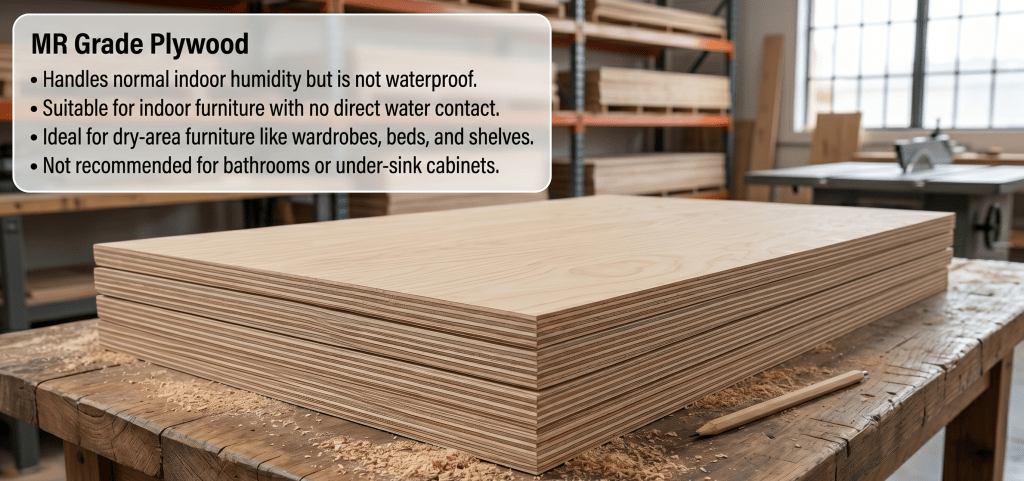
MR plywood is generally used for wardrobes, beds, shelves, wall panels, study tables, and other dry-area furniture. It can handle normal indoor humidity, but it is not waterproof. So, it should not be used for under-sink cabinets, bathroom furniture, or areas where water exposure is frequent.
ii) BWR Grade Plywood
BWR (Boiling Water Resistant) plywood offers better water resistance than MR plywood and is suitable for areas that may face occasional moisture.
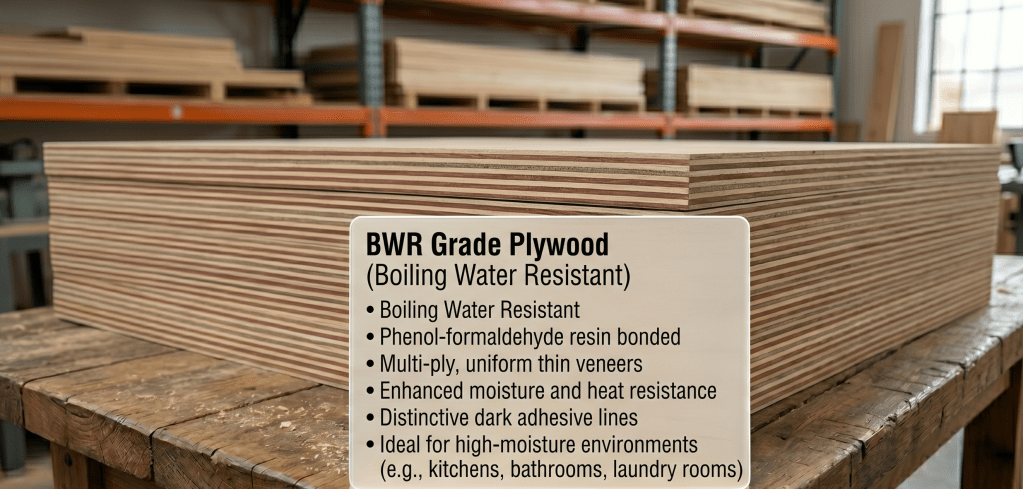
BWR plywood is commonly used for kitchen cabinets, utility furniture, partitions, and semi-moist areas. It can handle humidity and limited water exposure better than MR plywood. However, it is still not the same as fully waterproof plywood.
iii) BWP Grade Plywood
BWP (Boiling Water) plywood is also known as marine-grade plywood and offers the highest level of water resistance among these three grades.
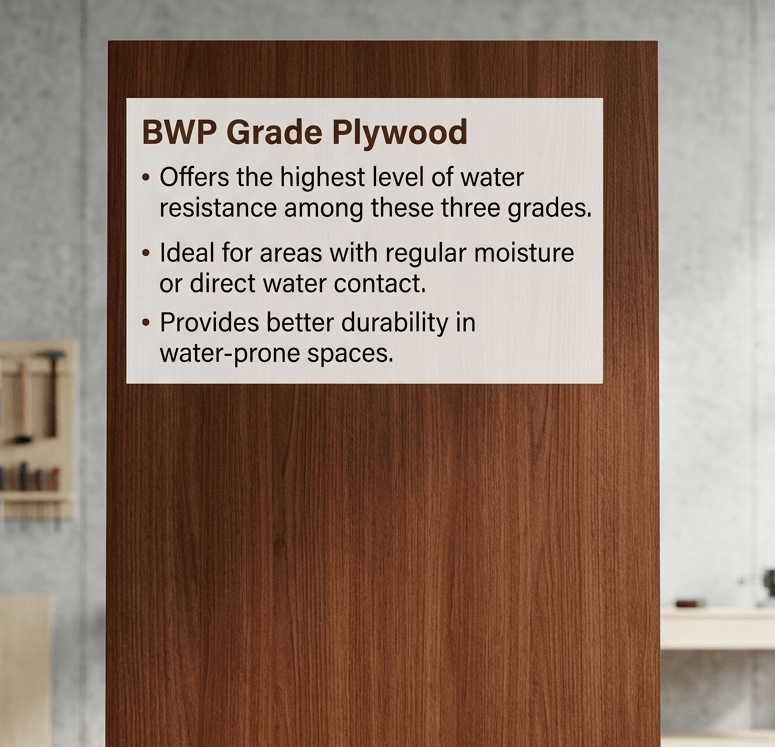
BWP plywood is best suited for areas that face regular moisture or direct water contact. It is commonly used for under-sink cabinets, bathroom vanities, kitchen areas near water points, and outdoor or semi-outdoor furniture. It usually costs more than MR and BWR plywood, but it gives better durability in water-prone spaces.
BWP vs BWR vs MR Plywood: Key Differences
MR, BWR, and BWP plywood differ mainly in water resistance, usage, durability, and price. MR plywood is suitable for dry indoor spaces, BWR plywood works better in areas with occasional moisture, and BWP plywood is made for places where water exposure is high.
Here is a simple comparison to help you choose the right grade:-
| Factor | MR Plywood | BWR Plywood | BWP Plywood |
| Nature | Moisture Resistant | Boiling Water Resistant | Boiling Water Proof |
| Common Name | Commercial plywood | Water-resistant plywood | Marine-grade plywood |
| Water Resistance | Low to moderate | Good | Very high |
| Common Standard | IS 303 | IS 303 | IS 710 |
| Best Used For | Wardrobes, beds, shelves, wall panels | Kitchen cabinets, utility areas, semi-moist spaces | Under-sink cabinets, bathroom vanities, outdoor furniture |
| Durability | Good for dry indoor use | Better than MR in moist areas | Best for water-prone spaces |
| Cost | Most affordable | Mid-range | Premium |
| Recommended For | Budget-friendly indoor furniture | Areas with occasional moisture | Long-lasting furniture in wet areas |
The right plywood is not always the most expensive one. For example, MR plywood can work well for bedroom wardrobes because there is no direct water exposure. BWR plywood is a better choice for kitchen cabinets that may face humidity or occasional spills. BWP plywood is best for under-sink cabinets, bathroom furniture, and outdoor spaces where water damage is a real risk.
So, instead of choosing one grade for the entire project, it is better to match the plywood grade with the location. This helps you balance cost, performance, and furniture life.
Which Plywood Grade Should You Use for Different Areas?
The best plywood grade depends on where the furniture will be placed. A dry bedroom, a humid kitchen, and a bathroom vanity do not need the same plywood. Choosing plywood by room and usage helps you avoid both overspending and early furniture damage.
For Wardrobes, Beds, and Bedroom Furniture
MR plywood is usually suitable for wardrobes, beds, dressing tables, bookshelves, and other bedroom furniture. These areas generally stay dry and do not face direct water exposure.
Since MR plywood is more affordable than BWR and BWP, it can be a practical choice for indoor furniture. However, make sure the plywood is good quality, properly finished, and protected with laminate, veneer, or paint. This helps improve its life and appearance.
For Kitchen Cabinets
Kitchen cabinets need better water resistance because they face steam, spills, and regular cleaning. For most kitchen cabinets, BWR plywood is a good choice because it handles moisture better than MR plywood.
However, the under-sink area should ideally use BWP plywood. This section faces higher chances of leakage, water seepage, and dampness. Using BWP plywood in such areas can help reduce swelling, bending, and long-term damage.
For Bathroom Vanities
Bathroom furniture should be made with BWP plywood. Bathrooms have high humidity, frequent water splashes, and limited ventilation in many homes.
Using MR or low-grade plywood in bathroom vanities can lead to damage faster. BWP plywood offers better protection in such conditions and is better suited for furniture that needs to survive regular moisture exposure.
For Outdoor or Semi-Outdoor Furniture
For balconies, terraces, exterior partitions, and semi-open furniture, BWP plywood is the safer option. Outdoor and semi-outdoor areas may face rain, heat, humidity, and temperature changes.
BWR plywood can work in some covered areas, but BWP plywood is better when the furniture needs stronger water resistance and longer life. For exposed furniture, proper finishing is also necessary, even when using BWP plywood.
How to Identify Good Quality Plywood Before Buying
Poor-quality plywood may look fine from the outside, but it can have core gaps, uneven thickness, weak bonding, or wrong grade marking. These issues can affect furniture strength and life.
Here are a few things you should check before buying plywood.
i) Check the Grade and ISI Mark
Good plywood should clearly mention its grade. For example, MR and BWR plywood usually fall under the IS 303 standard, while BWP plywood follows the IS 710 standard.
Always check the ISI mark, grade name, and manufacturer details on the plywood sheet. If the seller is claiming that a sheet is BWP or marine-grade plywood, ask for proper marking or certification. This helps you avoid paying a premium price for wrongly labelled plywood.
ii) Inspect the Edges for Core Gaps
The edges of plywood can tell you a lot about its quality. Look closely at the side of the sheet. Good plywood should have a uniform core with minimal gaps.
If you see too many empty spaces, overlaps, or uneven layers, the plywood may not be strong enough. Core gaps can reduce screw-holding strength and may lead to bending or damage over time.
iii) Check the Thickness
Plywood thickness should be consistent across the sheet. If a sheet is sold as 18 mm plywood, it should not feel uneven or noticeably thinner in some areas.
Uneven thickness can create problems during furniture making. It can affect alignment, finishing, and overall strength.
iv) Ask About Termite and Borer Resistance
Termite and borer damage can reduce the life of plywood furniture. Before buying, ask whether the plywood has been treated for termite and borer resistance.
This is especially important for wardrobes, kitchen cabinets, storage units, and furniture used in areas where pest issues are common.
v) Buy from a Trusted Supplier
Fake or low-quality plywood can be difficult to identify for regular buyers. That is why buying from a trusted supplier matters.
A reliable plywood supplier can guide you on the right grade, explain the difference between MR, BWR, and BWP, and help you select plywood based on actual usage. This reduces the chances of buying the wrong product for your furniture.
Get Expert Help Choosing the Right Plywood from Digna Ply
Using premium BWP plywood everywhere may increase your budget unnecessarily. On the other hand, using MR plywood in moisture-prone areas can lead to swelling, bending, and early damage. The goal is not to buy the most expensive plywood. The goal is to buy the plywood that fits the use case.
At Digna Ply, we help you choose plywood based on your furniture type, room conditions, water exposure, and budget. Whether you need plywood for wardrobes, modular kitchens, bathroom vanities, partitions, shelves, or commercial interiors, our team can guide you toward the right grade.
For plywood inquiries, bulk orders, or help choosing the right plywood, WhatsApp Digna Ply at 881306046.
Frequently Asked Questions
What is the main difference between MR, BWR, and BWP plywood?
The main difference is water resistance. MR plywood is suitable for dry indoor furniture, BWR plywood is better for areas with occasional moisture, and BWP plywood is best for spaces with high water exposure.
Is MR plywood waterproof?
No, MR plywood is not waterproof. MR stands for Moisture Resistant, which means it can handle normal indoor humidity but not direct water contact. It is better suited for wardrobes, beds, shelves, and other dry-area furniture.
Which plywood is best for kitchen cabinets?
BWR plywood is a good choice for most kitchen cabinets because it handles moisture better than MR plywood. For under-sink cabinets or areas close to water points, BWP plywood is a better option.
Is BWP plywood better than BWR plywood?
Yes, BWP plywood offers higher water resistance than BWR plywood. However, that does not mean BWP is needed everywhere. BWR works well for semi-moist areas, while BWP is better for bathrooms, under-sink areas, and outdoor or semi-outdoor furniture.
Can I use MR plywood for wardrobes?
Yes, MR plywood can be used for wardrobes, beds, shelves, and other indoor furniture placed in dry areas. It is a practical option when there is no direct water exposure.
Which plywood grade is best for bathroom furniture?
BWP plywood is best for bathroom furniture because bathrooms face regular humidity, water splashes, and damp conditions. It gives better protection against swelling and water-related damage.
How do I know if plywood is genuine?
Check the grade marking, ISI mark, manufacturer details, thickness, and sheet edges. Good plywood should have uniform layers, minimal core gaps, and proper certification. Buying from a trusted supplier also reduces the risk of fake or wrongly labelled plywood.


Leave a Reply