Most construction decisions still begin with one question: How much will it cost today?
But a building keeps costing money long after the construction work ends. Poor material choices lead to repairs. Bad ventilation increases electricity bills. Low-quality interior materials swell, bend, or break faster. Unplanned work creates waste, delays, and repeat purchases.
Sustainable construction looks at the full life of a building, not just the first bill. It focuses on using materials, systems, and designs that last longer, consume less energy, waste fewer resources, and create healthier spaces.
Homes, offices, showrooms, schools, hotels, and commercial projects all need better planning, stronger materials, and lower maintenance costs. Sustainability goes beyond solar panels or premium green buildings to everyday decisions such as choosing the right plywood, reducing material wastage, improving airflow, using energy-efficient systems, and building spaces that do not need constant repair.
What Is Sustainable Construction?
Sustainable construction means planning, building, and maintaining spaces in a way that reduces waste, saves resources, and improves long-term performance. It is a complete approach to construction where every major decision is evaluated for durability, energy use, environmental impact, and maintenance needs.
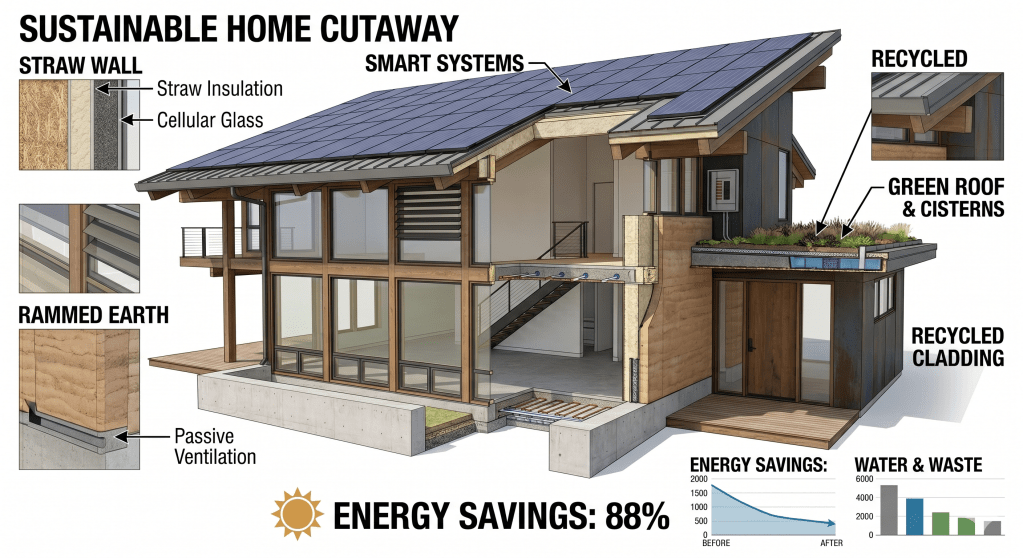
A sustainably built space uses resources more carefully. It avoids unnecessary material wastage, reduces dependence on energy-heavy systems, and uses materials that perform well. for years.
Sustainable construction usually depends on a few practical principles.
1. Efficient Use of Resources
Every construction project uses materials, water, electricity, labour, and transport. Sustainable construction focuses on using these resources wisely. This can include accurate material planning, better storage at the site, reduced cutting waste, and choosing materials that suit the exact use case.
2. Lower Energy and Water Consumption
A building should not depend completely on artificial lighting, cooling, or ventilation. Good design can improve airflow, bring in more natural light, reduce heat gain, and lower electricity use. Water-saving fixtures, rainwater harvesting, and better plumbing layouts also help reduce wastage.
3. Durable Material Selection
A material that fails early creates more waste and more cost. Sustainable construction gives importance to materials that can handle the expected load, moisture, usage, and maintenance conditions. For example, plywood used in a kitchen, bathroom vanity, or office workstation should be selected according to moisture exposure and daily usage.
4. Waste Reduction During Construction
A large amount of construction waste comes from poor planning, wrong measurements, damaged materials, and rework. Sustainable construction reduces this through better site management, careful procurement, reuse of leftover materials, and responsible disposal.
5. Better Indoor Comfort
A sustainable building should also be comfortable for people using it. This includes better air quality, controlled moisture, natural light, safer materials, and spaces that do not feel too hot, damp, or poorly ventilated.
Why Sustainable Construction Matters Today
Construction shapes how people live and work for decades. A building may take months to complete, but its impact continues for years through electricity use, water consumption, maintenance, repairs, and material replacement.
Traditional construction often focuses on speed and upfront cost. That can create problems later. Poorly planned buildings need more cooling. Weak materials need frequent replacement. Excess material ends up as waste. Bad ventilation affects comfort. Over time, these issues increase both cost and environmental damage.
Sustainable construction matters because it solves these problems at the planning stage. It encourages builders, architects, contractors, and property owners to ask better questions before work begins:
- Will this material last in this condition?
- Can this design reduce heat and energy use?
- Can we reduce wastage during installation?
- Can this space stay comfortable with lower maintenance?
- Can the material be reused, recycled, or safely disposed of later?
Key Benefits of Sustainable Construction
Sustainable construction is often discussed as an environmental choice. But for most property owners, the benefits are also practical. A well-planned building can reduce repair costs, improve comfort, save energy, and keep the space usable for a longer period.
The real value comes from thinking beyond the construction stage. A building should not become expensive to maintain after a few years. It should perform well through daily use, changing weather, moisture exposure, and normal wear and tear.
1. Lower Long-Term Costs
A cheaper material or design decision may reduce the initial budget, but it can increase future expenses. Poor-quality boards may need replacement. Bad insulation may increase cooling costs. Weak fittings may require frequent repair.
Sustainable construction helps control these recurring costs. It gives importance to better planning, durable materials, and efficient systems. The upfront cost may not always be the lowest, but the total cost over time is often more sensible.
2. Better Energy Efficiency
Energy-efficient buildings use less electricity without compromising comfort. This can be achieved through better ventilation, proper window placement, insulation, natural light, LED lighting, and efficient cooling systems.
For Indian homes and commercial spaces, this is especially important. A building that traps heat will depend more on fans and air conditioning. A space with poor natural light will need artificial lighting throughout the day. Smart design reduces this dependence from the beginning.
3. Healthier Indoor Spaces
People spend a large part of their day indoors. That makes air quality, ventilation, moisture control, and material safety important.
Sustainable construction encourages better airflow, reduced dampness, and safer material choices. This helps create spaces that feel more comfortable and less suffocating. In offices, schools, clinics, hotels, and homes, better indoor comfort directly improves the experience of people using the space.
4. Reduced Waste and Better Resource Use
Construction waste often comes from inaccurate planning, poor storage, wrong measurements, and unnecessary rework. Sustainable construction reduces waste by improving how materials are selected, ordered, handled, and installed.
Even small decisions make a difference. Correct plywood sizing can reduce cutting waste. Better storage can prevent material damage. Using suitable materials for each area can reduce future replacement. Waste reduction starts before the work begins.
5. Higher Property Value
A building that is durable, energy-efficient, and easier to maintain has better long-term appeal. Buyers, tenants, business owners, and institutions are becoming more aware of running costs and material quality.
A sustainable building does not only look good during handover. It continues to offer comfort, lower maintenance needs, and better usability over time. That makes it more attractive in the market.
Sustainable Building Materials Used in Modern Construction
Sustainable construction depends heavily on material selection. A building may have an efficient design, but if the materials fail early, create too much waste, or need frequent replacement, the project loses much of its long-term value.
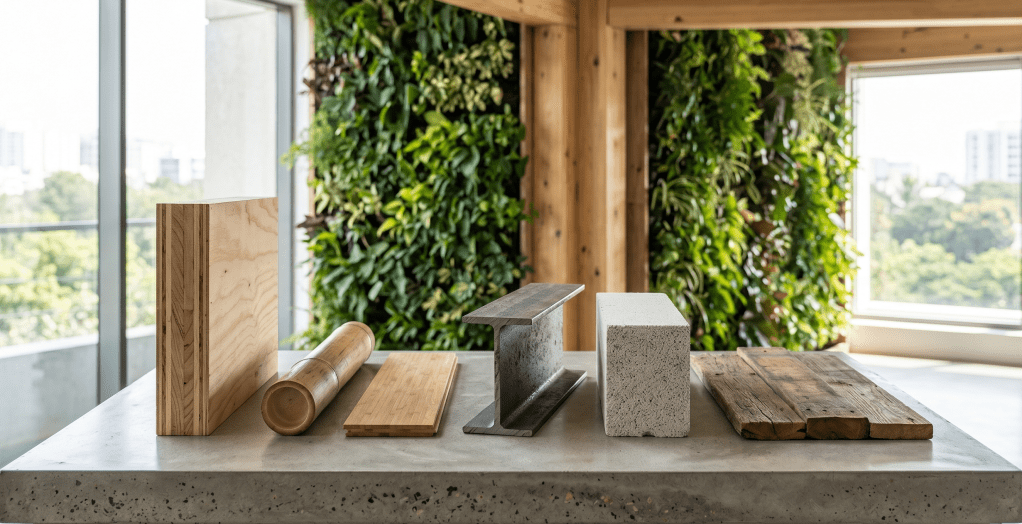
Here are materials used in sustainable construction:-
1. Engineered Wood and Plywood
Plywood is widely used in interiors because it is strong, versatile, and suitable for furniture, cabinets, wall panels, partitions, doors, shelves, and workstations. When good-quality plywood is selected for the right use case, it can last for years and reduce the need for frequent replacement.
For example, moisture-resistant plywood can be used in areas with moderate exposure to humidity. BWR and BWP-grade plywood are better suited for spaces where water resistance matters more. Using the wrong grade may save money at the start, but it can lead to swelling, bending, and repair work later.
This makes plywood selection an important part of sustainable interiors. A durable board means less waste, fewer replacements, and better long-term performance.
2. Bamboo
Bamboo is considered a strong renewable material because it grows faster than many types of timber. It is used in flooring, wall panels, furniture, partitions, and decorative applications.
Its strength, lightweight nature, and natural look make it useful for projects that want a warmer design while reducing dependence on slower-growing wood. However, bamboo must be treated and processed properly to protect it from moisture, pests, and wear.
3. Recycled Steel and Metal
Steel is used heavily in construction, but producing new steel consumes a lot of energy. Recycled steel reduces the need for fresh raw material extraction and can be used in structural work, roofing, frames, railings, and fixtures.
The advantage of metal is its long life and recyclability. If handled properly, steel and other metals can be reused or recycled at the end of a building’s life.
4. Low-Carbon Concrete
Concrete is one of the most used construction materials, but cement production adds heavily to carbon emissions. Low-carbon concrete aims to reduce this impact by changing the mix, using supplementary materials, or improving production methods.
Materials such as fly ash, slag, and other industrial by-products are sometimes used to reduce the cement content in concrete. This helps lower the environmental impact while maintaining required strength when the mix is designed correctly.
5. Fly Ash Bricks and AAC Blocks
Fly ash bricks and AAC blocks are common alternatives to traditional clay bricks in many Indian construction projects.
Fly ash bricks use industrial by-products and can reduce the use of topsoil. AAC blocks are lightweight, easy to handle, and provide better thermal insulation than many traditional wall materials. This can help reduce heat transfer and improve energy efficiency in buildings.
6. Recycled and Reclaimed Materials
Recycled and reclaimed materials help reduce waste by giving existing materials another use. These can include reclaimed wood, recycled tiles, recycled aggregates, reused doors, old metal fixtures, and salvaged stone.
Such materials are especially useful in renovation, adaptive reuse, cafés, offices, boutique hotels, and design-led interiors. They reduce the need for new materials and can add character to a space when used thoughtfully.
Sustainable Construction Practices That Make a Difference
A more responsible project starts before the first material reaches the site. The layout, drawings, material list, vendor selection, labour planning, and installation process all affect waste, cost, and long-term performance.
1. Smart Design and Space Planning
Good design reduces unnecessary material use. When the layout is planned properly, there is less cutting waste, fewer changes during execution, and better use of available space.
For example, a well-planned kitchen can reduce plywood wastage during cabinet making. A smart office layout can reduce the need for extra partitions, wiring changes, and repeated furniture work. Better planning also helps contractors order the right quantity of materials instead of buying too much or too little.
2. Water Conservation Systems
Water-saving systems are becoming more important in both residential and commercial buildings. Simple choices like low-flow taps, efficient flush systems, rainwater harvesting, and better plumbing layouts can reduce water wastage.
In larger projects, greywater reuse can also help. Water from sinks or washing areas can be treated and reused for landscaping, flushing, or cleaning, depending on the system used. This reduces dependence on fresh water for every activity.
3. Energy-Efficient Design
Energy-efficient construction reduces electricity use without making the space uncomfortable. This starts with design decisions such as window placement, shading, ventilation, insulation, and natural lighting.
A room that receives enough daylight does not need lights during most of the day. A well-ventilated space feels less trapped and reduces dependence on air conditioning. In Indian weather, heat control is especially important because poorly designed buildings can become expensive to cool.
4. Construction Waste Management
Construction waste often increases because of avoidable mistakes. Wrong measurements, damaged sheets, poor cutting, over-ordering, broken tiles, and rework can quickly add to the project cost.
Better waste management includes:
- Ordering materials according to final drawings
- Storing plywood, boards, tiles, and fixtures safely
- Reusing leftover material wherever possible
- Separating recyclable waste from mixed debris
- Reducing last-minute design changes
A clean and planned site usually wastes less material and finishes work faster.
5. Local Material Sourcing
Using locally available materials can reduce transport costs, delivery delays, and fuel use. It also helps contractors get replacements or additional material faster when needed.
Local sourcing is especially useful for plywood, hardware, bricks, stone, sand, fixtures, and interior materials. For many Indian projects, choosing a reliable local supplier can reduce both execution risk and material wastage.
Common Myths About Sustainable Construction
Sustainable construction is often misunderstood. Many people assume it is expensive, complicated, or useful only for large projects. In reality, most sustainable choices are practical decisions that improve durability, reduce waste, and lower future costs.
A building does not become sustainable because one “green” feature is added to it. It becomes sustainable when the design, materials, execution, and maintenance are planned properly.
Myth 1: Sustainable Construction Is Always Expensive
Sustainable construction may cost more in some areas, but it does not always make the full project expensive. The better way to judge cost is to look at the full life of the building.
A low-cost material that fails in three years is not truly economical. A poorly ventilated space that increases electricity bills every month is not economical either. Sustainable construction focuses on reducing these hidden costs.
Better plywood, efficient lighting, proper ventilation, water-saving systems, and reduced material wastage can all help control long-term expenses.
Myth 2: Sustainable Materials Are Not Durable
Some people think sustainable materials are weaker than conventional materials. That is not true when the right material is selected for the right application.
For example, bamboo can be strong when treated properly. AAC blocks can improve thermal performance. Good-quality plywood can last for years when matched with the correct grade and usage area.
The problem is not sustainability. The problem is poor selection, poor treatment, or poor installation.
Myth 3: Sustainability Is Only for Large Projects
Sustainable construction is not limited to airports, malls, corporate offices, or certified green buildings. Small homes, shops, clinics, cafés, schools, and offices can also follow sustainable practices.
Even a small project can reduce waste, use durable materials, improve airflow, save water, and choose energy-efficient fixtures. These decisions may look small during construction, but they affect comfort, maintenance, and running costs for years.
Future of Sustainable Construction in India
The next phase of construction in India will focus more on energy efficiency, water savings, waste control, and longer material life. Solar systems, better insulation, natural ventilation, rainwater harvesting, and low-maintenance interiors will become more common in both residential and commercial projects.
For Indian buildings, sustainability will not always mean expensive technology. In many cases, it will come from practical choices:
- Planning rooms for better airflow and daylight.
- Choosing the right plywood grade for each interior use.
- Reducing cutting waste during furniture work.
- Using water-saving fixtures.
- Selecting materials that can handle local weather conditions.
- Working with reliable suppliers who guide customers properly.
Sustainable construction will grow because it solves real problems. It helps reduce waste, lowers running costs, improves comfort, and keeps buildings useful for longer. As more people understand this, sustainability will become a standard part of good construction rather than a separate feature.
Get Quality Plywood for Sustainable Interiors with Digna Ply
At Digna Ply, you can get plywood and hardware options for different interior needs, including home furniture, modular kitchens, office interiors, showrooms, and commercial spaces. The focus is simple: help customers choose materials that last longer, perform better, and reduce wastage over time.
For plywood and hardware inquiries, WhatsApp Digna Ply at 8881306046.
Frequently Asked Questions
What is sustainable construction?
Sustainable construction is a way of planning and building that reduces waste, saves resources, improves energy efficiency, and increases the life of a building. It focuses on better design, durable materials, responsible construction practices, and lower long-term maintenance.
Why is sustainable construction important?
Sustainable construction is important because buildings consume materials, water, and electricity for many years. Poor planning can lead to higher bills, more repairs, and more waste. A sustainable approach helps reduce these problems from the beginning.
Which materials are used in sustainable construction?
Common sustainable construction materials include bamboo, recycled steel, fly ash bricks, AAC blocks, low-carbon concrete, reclaimed wood, recycled aggregates, and good-quality engineered wood products such as plywood. The right material depends on the area, usage, budget, and durability requirement.
Is plywood a sustainable construction material?
Plywood can support sustainable interiors when it is selected correctly and used for the right purpose. Good-quality plywood lasts longer, reduces frequent replacement, and creates less material waste over time. The grade should match the application, especially in moisture-prone areas.
How can homeowners use sustainable materials in interiors?
Homeowners can start by choosing durable plywood, reliable hardware, energy-efficient lighting, low-maintenance laminates, water-saving fixtures, and materials suited to local weather conditions. Even small decisions can reduce repair work and increase the life of the interior.
Is sustainable construction more expensive?
Sustainable construction is not always more expensive. Some materials or systems may cost more upfront, but they can reduce electricity bills, repair costs, water use, and replacement expenses over time. The full cost should be judged across the life of the building, not only during construction.
What is the difference between green building and sustainable construction?
Green building usually refers to buildings designed to reduce environmental impact through energy efficiency, water savings, and responsible materials. Sustainable construction is broader. It includes design, sourcing, construction methods, material life, waste reduction, maintenance, and end-of-life planning.


Leave a Reply